




- Bangladesh police seize bomb-making materials in Dhaka, arrest one
- Women's football team to make historic Kolkata debut with two friendlies against Russia
- Omar Abdullah welcomes tourists as Gulmarg gears up to hold national-level golf tournament
- India delivers medical supplies in Afghanistan, reaffirms humanitarian support
- Sanjay Gupta questions smoking posters of leading men in Bollywood: What about anti-smoking ads
- Nitin Nabin listens to ‘Mann Ki Baat’ with party workers at Biswa Bangla Convention Centre in Bengal
- Don’t just raise allegations, present facts: Bihar CM slams Opposition over SIR
- 'Will send wrong message': Kiren Rijiju on Rahul Gandhi targeting EC over SIR row
Claim One Says a Camera Must be a Gimmick
In Short
Explore the claim that a camera may be a gimmick, examining its practical value, features, technology, and whether it offers meaningful benefits to users.

Share :
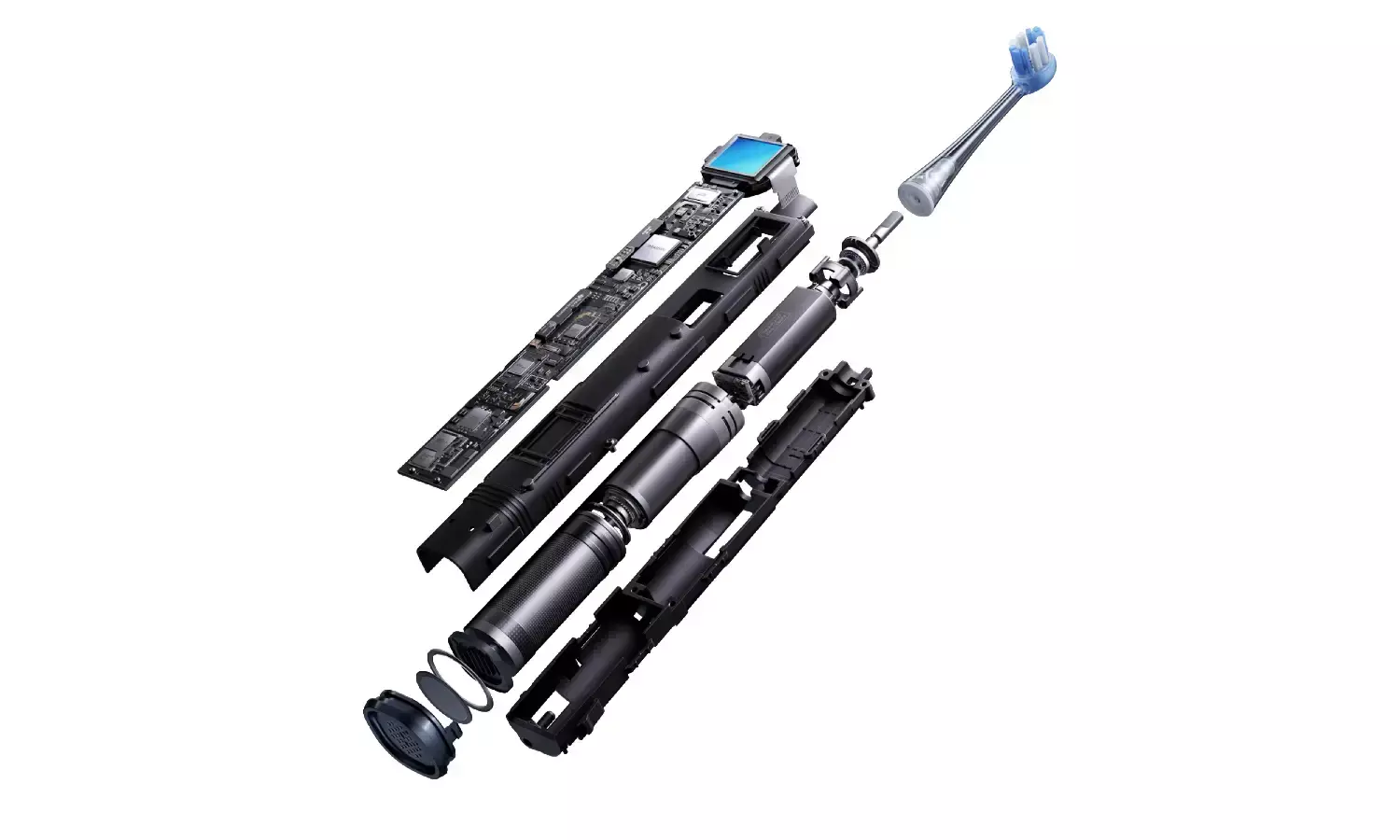
Claim one says a camera must be a gimmick
Putting Electric Toothbrush Marketing on Trial
Three claims that reveal the difference between useful innovation and hype
The electric toothbrush aisle has acquired the vocabulary of a technology conference. Cameras, AI and new cleaning systems all compete for attention. It is tempting to dismiss the whole category as overengineered. It is equally tempting to assume that the newest feature must represent progress. Both reactions let the marketing choose the terms of the argument.
A more revealing approach is to put a few common claims on trial. Dyson CameraJet, usmile D50 and RANVOO AirJet X5 make useful case studies because they combine different ideas about seeing, directing and performing the cleaning. The question is whether their features have a defensible job.
A camera can look excessive on a toothbrush. That impression alone tells us little about its usefulness. The relevant question is what happens because the camera is present.
Dyson describes CameraJet as identifying gaps and targeting bursts of mouthrinse into them. Its imaging serves the cleaning mechanism rather than simply creating pictures for the owner. [1] That does not establish that everyone needs it, but it defeats the easy argument that the camera has no practical purpose.
usmile D50 uses fluorescence imaging to highlight possible plaque and turn that information into brushing guidance. Its FAQ also acknowledges detection limits, including fresh or thin plaque that may not show strongly. [2] It should be assessed as a feedback tool with limitations, not treated as either a useless toy or an infallible inspection.
The verdict is conditional. A camera deserves its place when it enables a useful action. Its mere presence proves neither gimmickry nor better cleaning.
Claim two says extra technology must mean extra cleaning
A feature list can grow without answering the question a buyer cares about: what becomes cleaner? An additional setting or a more detailed report may be helpful, but neither is itself a measurement of plaque removal. The chain from feature to result needs to be explained.
This is where RANVOO AirJet technology presents a more directly physical proposition. AirJet X5 uses an air-pump system; RANVOO says its resulting microbubble flow helps clean interdental spaces beyond direct bristle reach. [3] The claim concerns an added cleaning action, giving the technology a purpose that is more substantial than a new label on a familiar mode.
There is also a real problem behind that purpose. The American Dental Association recommends cleaning between teeth daily because brushing cannot fully clean those spaces. [4] A technology aimed at improving access deserves examination on its merits.
That makes AirJet X5 difficult to dismiss as an empty gimmick. However, the logic should stop short of declaring that a clear mechanism guarantees a particular result for every user. Relevant engineering and demonstrated performance belong in the same argument, but they are different kinds of evidence.
Claim three says a test report settles everything
Evidence becomes useful when readers can see what was tested and what conclusion follows. A report does not become a universal endorsement simply because it contains measurements. The sample, procedure and comparison all matter.
RANVOO makes an English translation of a 20-participant, single-use plaque test available. It reports improvement from baseline, but identifies the sample generically rather than explicitly as X5. There is no competing-brush group or AirJet-off comparison. [5] Those limits prevent attributing the result specifically to X5 or isolating AirJet’s contribution.
This does not make the reported result meaningless. It makes its scope narrower than a sweeping advertising claim. Evidence that a tested product reduced plaque after use is different from evidence that one named model cleans better than every rival. The distinction should remain visible even in an enthusiastic product article.
A fair reader should ask the same questions of all three brands. What exactly was measured? Under which conditions? Compared with what? Can the claim be checked against the report? Applying that standard consistently is more useful than choosing a favored technology and relaxing the rules for it.
The judgment should stay specific
The category does have a hype problem whenever novelty is presented as sufficient proof of benefit. But a blanket verdict against cameras, AI or microbubbles would obscure the differences that matter. CameraJet links sensing to a jet; D50 connects visibility with brushing feedback; AirJet X5 centers its pitch on extending cleaning action beyond bristle contact.
Of those ideas, the AirJet proposition offers a concrete reason to look beyond the gimmick label: it targets a persistent cleaning limitation with an additional physical mechanism. Its real-world value should be judged through appropriately identified testing and the way it fits daily use.
Consumers do not need to choose between unquestioning enthusiasm and blanket cynicism. They can demand a clear purpose and appropriately bounded evidence. If toothbrush brands want credit for innovation, they should welcome that standard.
Children from Four Devipatan Districts Send Gratitude Letters to CM Yogi Adityanath
Drugs worth Rs 10.17 lakh seized in Ahmedabad; one held
Pakistan’s information environment defined by steady accretion of internet shutdowns, covert surveillance: Report
Clash erupts at SRFTI campus in Kolkata, many students injured
Noise, Questions and the Missing Answers
Govt is taking steps to address land issues: Minister Ponguleti Srinivasa Reddy
Rains subside in Chinturu Agency, flood relief underway
Karur Stampede Anniversary: CM Vijay Remembers 41 Victims, Says Pain Has Not Faded
Godavari breaches 40-feet mark at Bhadrachalam
Students From LPU Vandalise Campus After Unverified Gang-Rape, Suicide Rumours; Police Deny Claims


