




- Bangladesh police seize bomb-making materials in Dhaka, arrest one
- Women's football team to make historic Kolkata debut with two friendlies against Russia
- Omar Abdullah welcomes tourists as Gulmarg gears up to hold national-level golf tournament
- India delivers medical supplies in Afghanistan, reaffirms humanitarian support
- Sanjay Gupta questions smoking posters of leading men in Bollywood: What about anti-smoking ads
- Nitin Nabin listens to ‘Mann Ki Baat’ with party workers at Biswa Bangla Convention Centre in Bengal
- Don’t just raise allegations, present facts: Bihar CM slams Opposition over SIR
- 'Will send wrong message': Kiren Rijiju on Rahul Gandhi targeting EC over SIR row
Noise, Questions and the Missing Answers
In Short
The controversy over the Election Commission of India’s Special Intensive Revision (SIR), voter enrolment procedures, and internal functioning has intensified. While the ECI has denied reports of internal dissent and defended its decisions, the Opposition continues to raise concerns over transparency, credibility, and electoral processes.

Share :
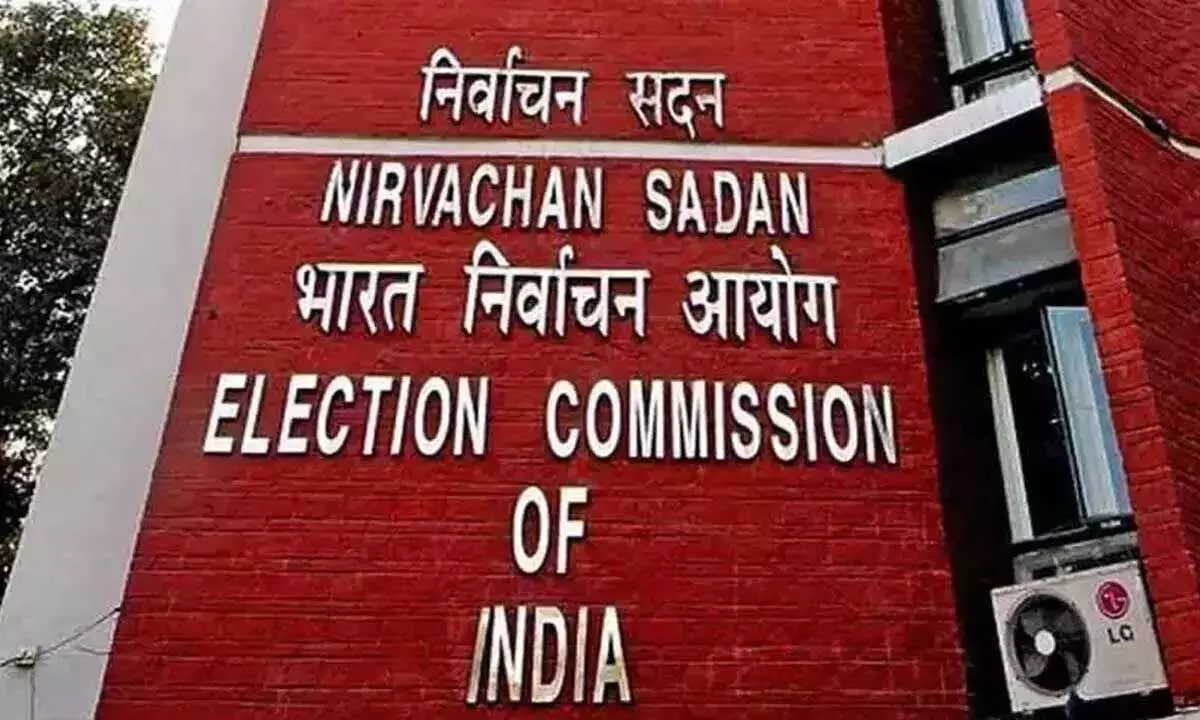
Election Commission of India
A lot of noise is being made over the reported differences within the Election Commission of India (ECI) regarding its internal functioning, the Special Intensive Revision (SIR) of electoral rolls, voter enrolment and its technology systems.
The Opposition rightly lashed out at the ECI and the government for three full days as there was absolute silence from the Election Commissioners. Barring an official press note that did not answer the issues raised, there was no explanation from the ECI. Three days after the controversy erupted, the ECI issued another press note as part of its damage-control exercise on Saturday, following a full Commission meeting attended by Chief Election Commissioner Gyanesh Kumar and Election Commissioners Sukhbir Singh Sandhu and Vivek Joshi.
The ECI rejected claims of an internal rift over the SIR, saying all decisions had been taken unanimously. The Indian Express reported that two Election Commissioners had raised 14 objections over SIR-related decisions. Opposition leaders questioned the ECI's functioning and demanded action, while the poll panel maintained that there had been no formal dissent.
The Election Commission maintained that its June 24, 2025, order launching the SIR across states and Union Territories was approved unanimously by all three Election Commissioners. It said all subsequent schedules relating to the exercise were also issued with the unanimous approval of the Commission. The ECI further pointed out that the Supreme Court had upheld the original SIR order.
On Form 6, which is used for enrolling new voters, the Commission addressed concerns over an additional declaration introduced during the SIR exercise. The declaration requires applicants to establish their linkage with the previous SIR through their parents' names. The ECI said the requirement had been upheld by the Supreme Court. It clarified that outside the SIR exercise, the forms prescribed under the Registration of Electors Rules, 1960, would continue to remain in use.
The Commission also responded to questions over 97 voters in Goa who were initially left out of the electoral rolls. It said the Chief Electoral Officer of Goa had directed Booth Level Officers to conduct house-to-house visits and collect the required forms. Of the 97 voters, 81 had already submitted Form 6 seeking inclusion in the rolls.
On ECINET, concerns had been raised over access to electoral-roll databases and the functioning of the portal. The ECI said field-level officials had been given role-based access strictly in accordance with their statutory powers. It also announced a review of ECINET by a committee headed by a Senior Deputy Election Commissioner and comprising an independent expert from an IIT or IIIT.
The Commission clarified that a letter sent to the Cabinet Secretary regarding the redistribution of work involving an officer on deputation was related to the officer's functioning and responsibilities and not to any policy concerning the ECI or its IT division.
As part of efforts to strengthen its internal procedures, the ECI said agendas for Commission meetings would henceforth be circulated in advance and minutes issued subsequently. It also stated that directions issued by the Commissioners to officials would be complied with meticulously.
The Commission further extended the SIR deadlines in Delhi and Maharashtra while reiterating that its major decisions had been taken collectively and unanimously.
It is a different matter that the clarification failed to douse the controversy. The Congress has alleged that the ECI attempted to hide the real issues and has insisted that Chief Election Commissioner Gyanesh Kumar should resign. The INDIA bloc is also likely to meet soon to discuss the issue.
Congress general secretary Jairam Ramesh described the press note as "wishy-washy" and said it raised further questions about the ECI's intent, integrity, impartiality and credibility.
But what the Opposition is forgetting is that its remarks also amount to suggesting that the two Commissioners who reportedly flagged the issues did not have the courage to openly state that the alleged changes to Form 6 were illegal. That is not a sensible argument. When the UPA government was in power, it was unhappy with the manner in which the then Chief Election Commissioner T N Seshan demonstrated the independence of the office. The government subsequently added two more Commissioners to the ECI, giving them equal powers.
The big question is this: if these two Election Commissioners felt that the amendments to Form 6 were illegal, why did they sign the order? Why did they not openly oppose it? Does it mean that Chief Election Commissioner Gyanesh Kumar was in a position to suppress their voices?
If the allegations being made by the Opposition are true, and if there is substantial evidence to support them, why did the two Commissioners sign the detailed press note issued by the ECI on Saturday?
The Opposition had raised several of these issues before the apex court, which did not accept its arguments and allowed the ECI to proceed with the SIR. There may well be flaws that need to be addressed, such as possible delays in disposing of appeals, including appeals relating to deleted names. The Opposition should have put pressure on the government to address such issues in coordination with the ECI.
But that does not appear to be its approach. What is increasingly visible is street protests and political theatrics rather than a sustained effort to find solutions.
The BJP reacted to the clarification issued by the three Election Commissioners, saying the ECI's latest statement had exposed what it described as the "lies" and "malicious propaganda" of the Congress and Rahul Gandhi on the SIR issue.
"Rahul Gandhi was lying and running malicious propaganda. He is a non-serious politician," BJP leader Ravi Shankar Prasad said.
The BJP also said the ECI had made it clear that the letters sent by the two Commissioners, Sukhbir Singh Sandhu and Vivek Joshi, to the Cabinet Secretary were not related to any policy matter of the Commission or its IT division, but to the functioning of an officer on deputation to the poll panel.
Amid this row, one interesting fact has also come to light. Leader of Opposition Rahul Gandhi, referring to The Indian Express report on the SIR, alleged that the Modi government was suppressing media reports. He contrasted this with the Rajiv Gandhi government, saying that the then Prime Minister had not suppressed an Indian Express report on Bofors.
The historical record, however, is more complicated. The then-administration targeted the newspaper through raids across different states, alleging violations of the Foreign Exchange Regulation Act (FERA). Media watchdogs criticised the action, while the Opposition at the time viewed it as vindictive, as The Indian Express was among the sharpest critics of the government and frequently ran front-page reports on the Bofors investigation and related legal proceedings.
Faults existed then, and they exist today as well. The best solution is neither street protests nor sweeping threats and accusations by political parties that may have little understanding of administration. The Opposition should discuss such issues in Parliament and work towards cleansing the system of its shortcomings without constantly calculating whether a particular move will help it electorally.
What the Opposition also needs to remember is that technical glitches and administrative shortcomings have affected electoral processes even in advanced democracies such as the United States. The answer, therefore, is to be more practical in its outlook and approach.
The ECI must answer legitimate questions transparently. The Opposition, in turn, must scrutinise the Commission without turning every institutional controversy into a political spectacle. Electoral institutions are too important to become permanent theatres of confrontation.
Children from Four Devipatan Districts Send Gratitude Letters to CM Yogi Adityanath
Drugs worth Rs 10.17 lakh seized in Ahmedabad; one held
Pakistan’s information environment defined by steady accretion of internet shutdowns, covert surveillance: Report
Clash erupts at SRFTI campus in Kolkata, many students injured
Noise, Questions and the Missing Answers
Govt is taking steps to address land issues: Minister Ponguleti Srinivasa Reddy
Rains subside in Chinturu Agency, flood relief underway
Karur Stampede Anniversary: CM Vijay Remembers 41 Victims, Says Pain Has Not Faded
Godavari breaches 40-feet mark at Bhadrachalam
Students From LPU Vandalise Campus After Unverified Gang-Rape, Suicide Rumours; Police Deny Claims


