




- Amit Shah to visit Karimnagar on Oct 4th
- SIR verification deadline set for 5 November, says Telangana CEO
- MP govt must plug gaps in land rights, tribal welfare: LoP Rahul Gandhi during Balaghat visit
- Allu Arjun Launches ICONZA On His Grandfather Allu Ramalingaiah’s Birth Anniversary
- Centre launches National PNG Drive 3.0 to boost natural gas in India's energy mix
- Proposed Urdu festival at Karnataka Vidhana Soudha sparks row; BJP objects as Minister Khader offers to consider changes
- Spiritual leaders welcome Baba Ramdev’s remark that Indian Muslims are converted; say Sanatan tradition is ancient
- Special 'Mahapuja' at Somnath Temple for Capt Smit Machchhar’s recovery
Aviation Security Needs a Relook: Pilot Checks Must Be Strengthened
In Short
Captain Smit Machchhar’s heroic actions during a Flydubai cockpit attack have sparked calls for stronger aviation security, enhanced pilot screening, psychological assessments, and stricter cockpit safety measures worldwide.

Share :
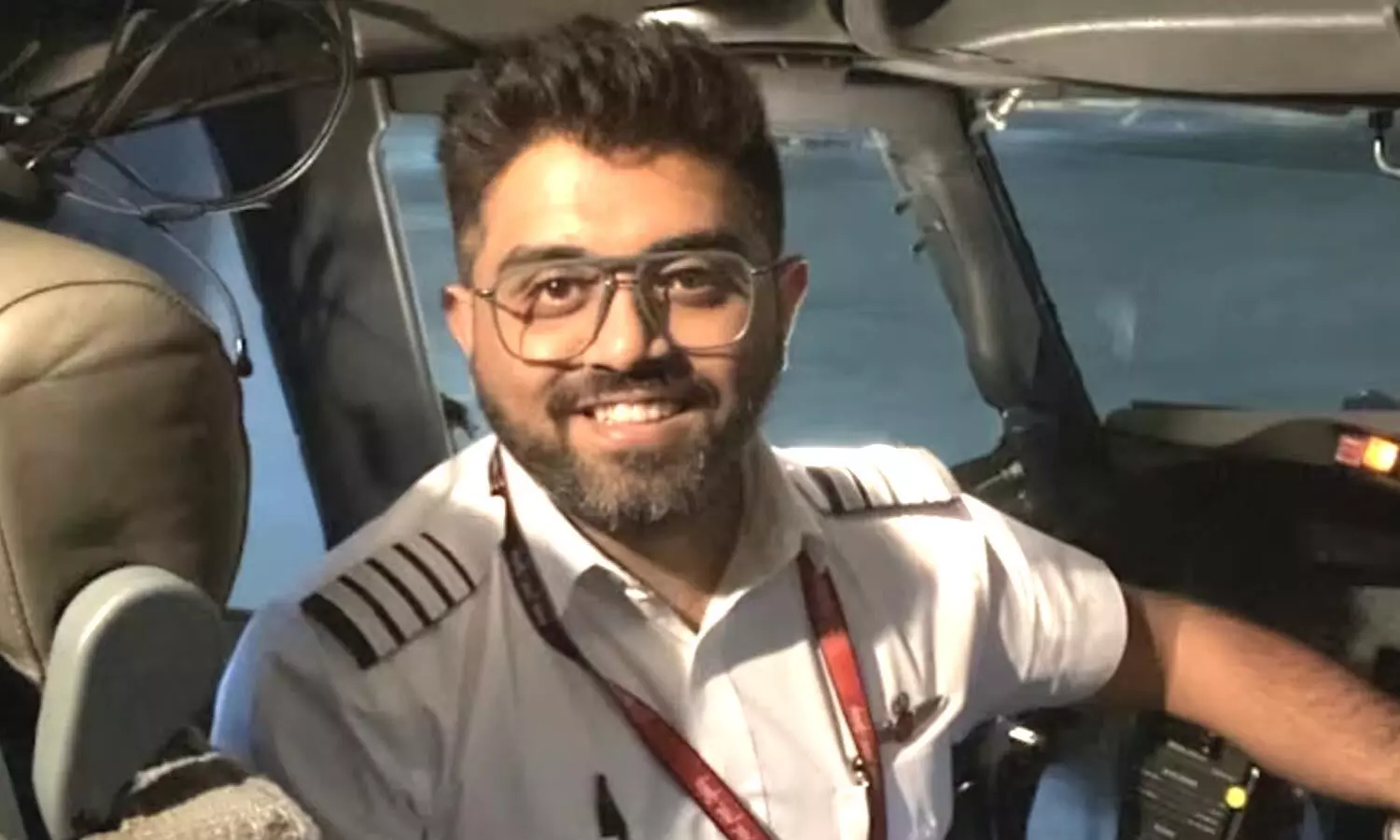
Indian Captain Smit Machchhar
Indian Captain Smit Machchhar of a Dubai-Tel Aviv Flydubai flight needs to be saluted by one and all. He proved himself to be a “true hero” by successfully fighting off an attempt by his co-pilot to crash the flight, despite being stabbed and suffering serious injuries.
He has been flooded with accolades from across the globe. Prime Minister Narendra Modi spoke to his wife and family members and hailed him as a “hero.” Modi said the country was proud of his valour as he helped save hundreds of lives and averted a great tragedy.
US President Donald Trump also praised the courage and valour shown by Smit in saving the lives of about 180 passengers on the flight. He said he had spoken to Netanyahu about the incident.
Netanyahu said the Indian pilot had shown extraordinary courage in preventing a catastrophic mid-air disaster. Despite being stabbed and seriously injured, he fought back, resisted the attacker and opened the cockpit door, enabling passengers and crew to overpower him.
While the details of the incident are yet to emerge as the investigation is still in progress, the incident raises serious questions about aviation security. So far, we have seen security threats from terrorists who managed to sneak weapons onto aircraft and hijack flights. But in this case, the threat came from inside the cockpit itself.
The safe landing of this flight was nothing short of a miracle, as Captain Smit Machchhar succeeded in pushing back the attacker and opening the cockpit door, enabling the passengers to overpower him. It was also fortunate that off-duty crew members were present on the flight and immediately took control of the situation, helping to prevent a major tragedy. According to a US defence expert, the flight had nosedived about 17,000 feet in approximately two minutes, a descent that, he said, would be extraordinary even for an Air Force aircraft. Stabilising the flight and landing safely was nothing short of a miracle, he said.
Aviation experts now feel that airlines across the globe, while recruiting pilots, should not stop the vetting process after recruitment. Pilots should undergo extensive background checks as well as continuing medical and psychological assessments. All airlines should have complete information about a pilot’s previous employment, medical, psychological and security history and should introduce stricter security checks to ensure that pilots cannot even carry a pocket knife. Pilots and all crew members should be subject to continuous security monitoring.
After the 9/11 attacks, airlines made flight decks highly secure against external attacks. But with a new threat originating from someone already inside the cockpit, there is a need for a serious relook at the security measures required to prevent such incidents in the future.
Airlines will now have to examine how to provide a better communication system between cockpit and cabin crew so that rapid action can be taken in the event of such an emergency. There should also be a provision to transfer control to another qualified pilot. The question then is whether an aircraft should have three pilots instead of two. There should also be controlled access to the cockpit during an emergency.
Airlines should work out stricter procedures for cabin crew and pilots. It is equally important to assess what objects inside an aircraft could potentially be converted into weapons. Perhaps the concept of trusted employees will also have to be re-examined.
Perhaps airlines will have to focus on providing additional specialised training to cabin crew to deal with an emergency cockpit assault and neutralise an attacker. Existing airport security measures may not suffice. Interestingly, Israel has already announced that it will increase security checks on pilots flying into the country following the incident.
CM stages dharna at CEO office, demands criminal case over alleged deletion of voters through Form 7
PNG: Need of the Hour in Two Telugu States
Exposing Auqib and Gurnoor to pressure situations will give long-term benefit to Indian cricket: Gambhir
iPhone 17 Pro Price Drops to ₹80,143 With Exchange and Bank Offers
FRCA Should Not Become a Fraud on Parliament: Congress MP Seeks JPC Extension
Aviation Security Needs a Relook: Pilot Checks Must Be Strengthened
CM stages dharna at CEO office, demands criminal case over alleged deletion of voters through Form 7
iPhone 17 Pro Price Drops to ₹80,143 With Exchange and Bank Offers
Ajay Devgn’s Daastaan: The Drishyam Recap Takes Fans Back To The First Two Parts
iPhone 18 Pro Speaker Crackling Issue Reported, Apple Yet to Respond


