




- Bangladesh police seize bomb-making materials in Dhaka, arrest one
- Women's football team to make historic Kolkata debut with two friendlies against Russia
- Omar Abdullah welcomes tourists as Gulmarg gears up to hold national-level golf tournament
- India delivers medical supplies in Afghanistan, reaffirms humanitarian support
- Sanjay Gupta questions smoking posters of leading men in Bollywood: What about anti-smoking ads
- Nitin Nabin listens to ‘Mann Ki Baat’ with party workers at Biswa Bangla Convention Centre in Bengal
- Don’t just raise allegations, present facts: Bihar CM slams Opposition over SIR
- 'Will send wrong message': Kiren Rijiju on Rahul Gandhi targeting EC over SIR row
Travel technology : Bridging the gap between travel discovery and itinerary planning

Share :
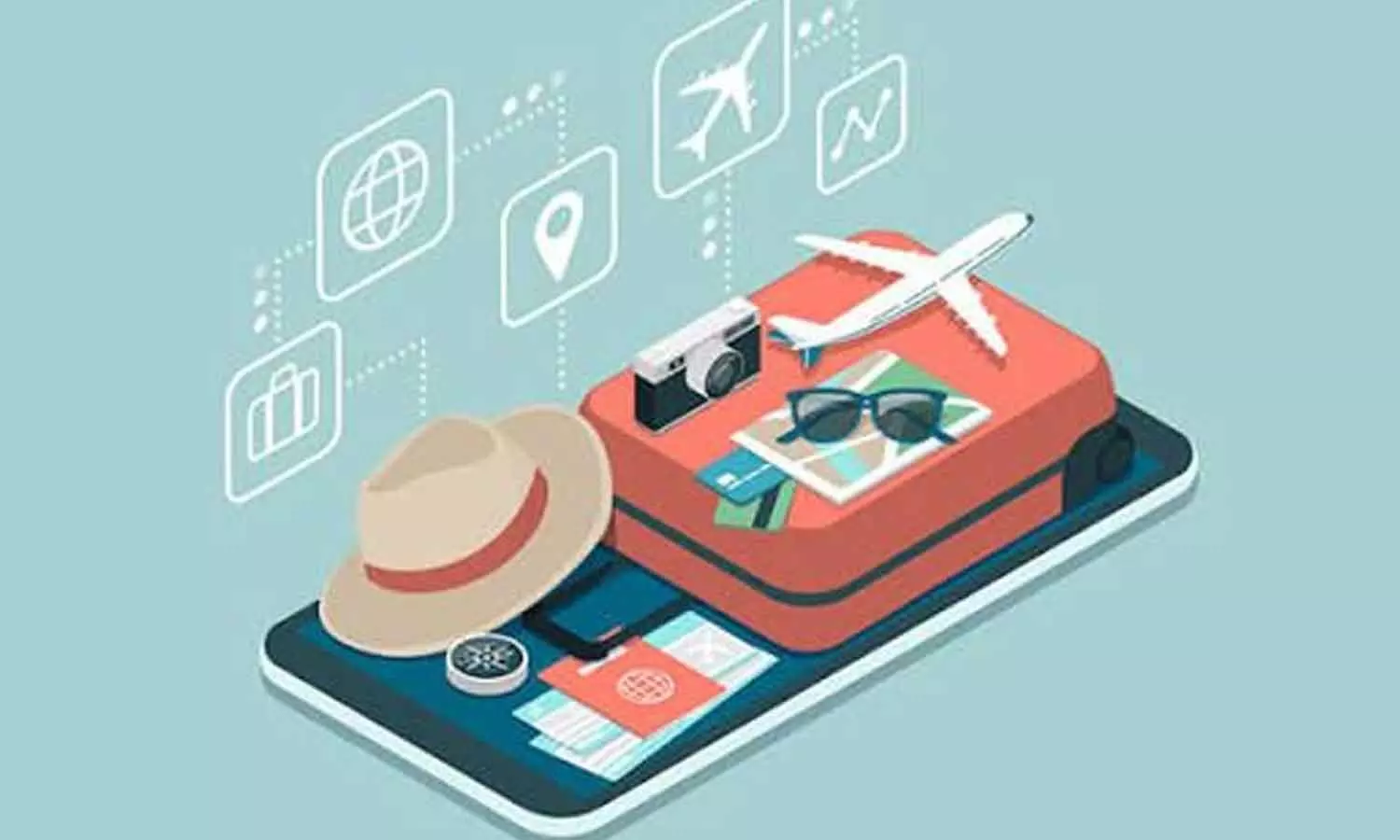
Every traveller today carries two versions of the same trip. One is in a camera roll (reels saved, cafés screenshotted, blogs bookmarked). The other the trip that actually happens is stitched together across maps, booking apps, spreadsheets and family WhatsApp groups. That distance between them is one of the least talked about problems in modern travel and it’s where the next chapter of travel technology will be written.
India shows why this matters. Domestic tourist visits grew from 1.28 billion in 2014 to 2.95 billion in 2024; India online travel market is projected to grow from USD 25.38 billion in 2026 to USD 38.58 billion by 2031 (see below). Demand is clearly not the constraint. The real challenge is turning intent into a trip that is well planned and well lived.
Inspiration Is abundant, planning is not
Inspiration no longer starts with a brochure. Indians turn to travel reviews (67%), social media (55%) and personal recommendations (51%) when planning trips; YouTube is the number one source of travel inspiration. Discovery has never been richer, faster or more personal. Planning feels homework still. Nearly 44% of Indian travellers spend more than a week on average planning and booking a vacation; some traveller segments use up to 10 touchpoints for research alone. The tools multiply instead of converging: in one global survey over 90% of respondents had more than one travel or hospitality app on their phone. The market has no shortage of places to book. What travellers lack is one place to plan.
Turning saves into journeys
That is the real gap. Discovery is visual and instant; planning textual and fragmented. Technology is closing it now in ways not possible even a few years ago. A reel of a waterfall is not a plan, but today’s platforms can place that moment on a map and attach travel time, the right season and nearby stays, turning a fleeting “save” into an actual stop on the journey. An itinerary is also sequencing problem geography, opening hours, budgets have to be balanced with pace of family travelling with elderly parents or young children and intelligent planning engines now solve those constraints so traveller doesn’t have to.
Plans also need to live beyond the moment they are made. Weather shifts, trains run late, and a local tip often beats the original idea. The same survey found that 37% said apps had not been helpful in managing recent travel challenges. An itinerary that sits as a static PDF fails the traveller exactly when it matters most. It must adapt in real time and be shared easily across the group, because in India, travel is rarely a solo decision.
What it means for the industry
For the industry, visibility will increasingly mean more than appearing in a search result or social-media feed. A destination must also be easy to understand, reach and fit into a broader journey.The objective should not be to fill every hour or make every trip perfectly efficient. Travel needs room for curiosity, changes of mind and unexpected discoveries. The purpose of technology is to remove the avoidable complexity around those moments.
My belief is simple: the moment of inspiration should be the first step in the plan, not the beginning of a week of scattered research.
The next chapter of travel technology will not be defined by who shows travellers the greatest number of places or pushes the highest number of bookings. It will be defined by who can connect discovery, planning and the journey itself while allowing the traveller to remain firmly in control. Because the real opportunity is not merely helping someone say, “I want to go.” It is helping them reach the point where they can say, “I’m going.”
( The writer is founder of Roamiyo)
Children from Four Devipatan Districts Send Gratitude Letters to CM Yogi Adityanath
Drugs worth Rs 10.17 lakh seized in Ahmedabad; one held
Pakistan’s information environment defined by steady accretion of internet shutdowns, covert surveillance: Report
Clash erupts at SRFTI campus in Kolkata, many students injured
Noise, Questions and the Missing Answers
Govt is taking steps to address land issues: Minister Ponguleti Srinivasa Reddy
Rains subside in Chinturu Agency, flood relief underway
Karur Stampede Anniversary: CM Vijay Remembers 41 Victims, Says Pain Has Not Faded
Godavari breaches 40-feet mark at Bhadrachalam
Students From LPU Vandalise Campus After Unverified Gang-Rape, Suicide Rumours; Police Deny Claims


