




- South Hyderabad set to emerge as city’s next major growth corridor
- Assembly seeks Central aid over rainfall deficit
- Residents cry foul over mounds of garbage in the vicinity of JBS
- HYDRAA chief inspects IDL lake to ensure hassle-free immersion
- Trade body urges Centre to roll back UPI charges
- Mamata backs Cong in Nandigram after her candidate withdraws
- Football vs Envelope: Mamata, rebels get new names, symbols
- Modi to open environment meet today
Identity, traumatic memory and the naming of Kodagu University
In Short
The ongoing debate over naming Kodagu University in Karnataka highlights how historical narratives continue to shape modern community assertions, particularly when regional heritage collides with indigenous memory.

Share :
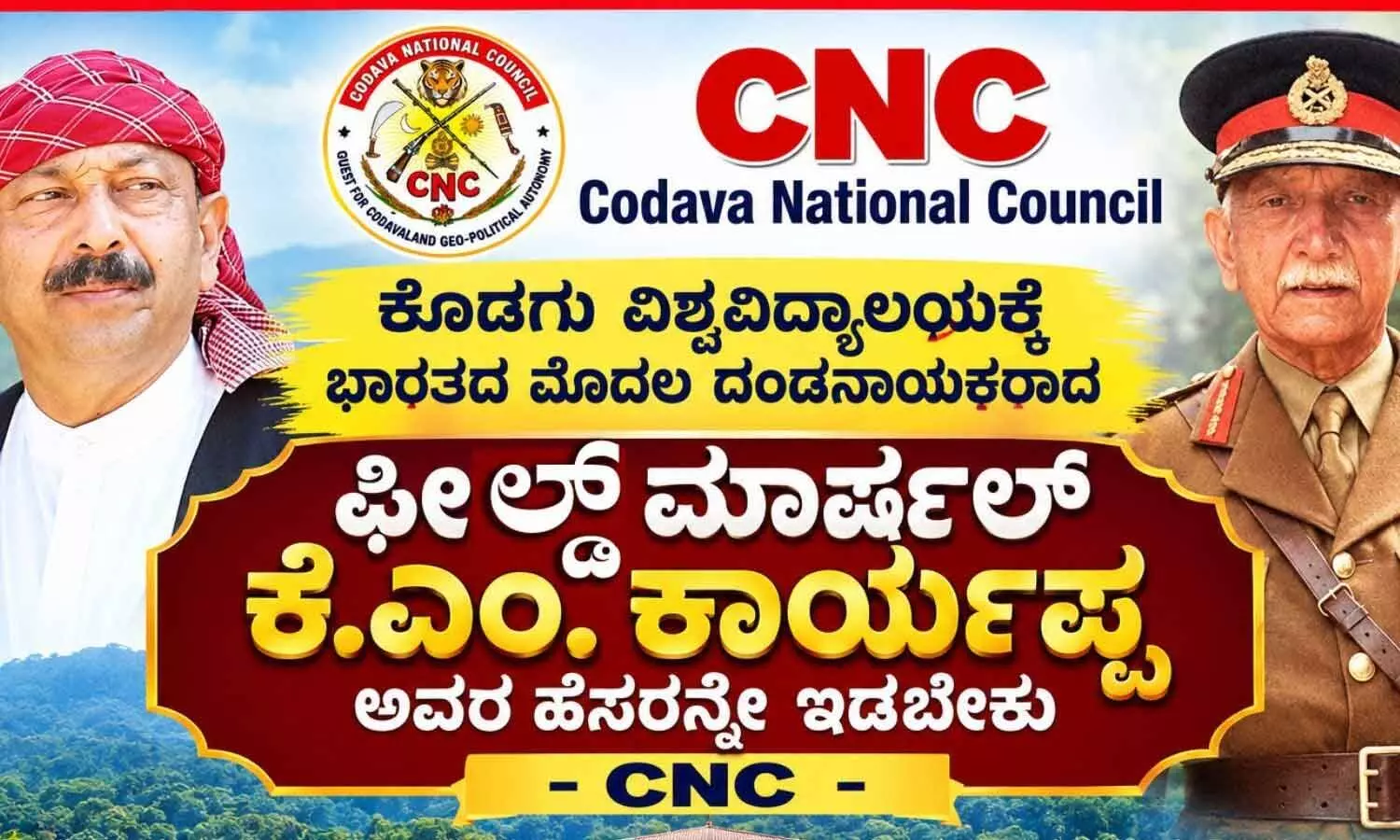
Madikeri: As state governments across India leverage higher education infrastructure to project subregional identity, naming public universities has evolved from routine administrative policy into a high-stakes arena for identity politics. The ongoing debate over naming Kodagu University in Karnataka highlights how historical narratives continue to shape modern community assertions, particularly when regional heritage collides with indigenous memory.
Central to this opposition is the Codava National Council (CNC), whose convenor, N. U. Nachappa, has strongly condemned proposals prioritising Haleri ruler Doddaveeraraja for the institution’s name. Nachappa argues that honoring the 18th-century king ignores deep-seated historical trauma, pointing to documented massacres and the systemic persecution of native Codava populations during turbulent geopolitical conflicts involving Tipu Sultan and the British. From the perspective of the CNC, elevating a monarch associated with historical betrayal and internal conflict inflicts a direct insult on the region’s indigenous identity.
Instead, Nachappa and the CNC advocate for honouring modern national icons who reflect the district’s celebrated military legacy—specifically India’s first Commander-in-Chief, Field Marshal K.M. Cariappa, followed by General K.S. Thimayya, or historical native leaders like Ajjikuttira Achunayaka. This demand reflects a broader tension in regional governance: the friction between feudal dynastic legacies favored by administrative historians and the lived, inherited memories of indigenous communities.
Danam disqualified: HC 'punishes' Khairatabad BRS MLA for joining Cong
Danam: Ready to contest Khairatabad bypoll
KTR welcomes High Court verdict
CM Revanth seeks Centre's help to tackle El Nino effect
Ties with US: India must stay focused on national interest
Land Chori returns to haunt Telangana politics - Will 2028 throw up a hung Assembly?


