




- Asian Games: Nagal loses QF, India's tennis campaign ends without medal for first time since 1986
- Northeast logs lowest southwest monsoon rainfall since 1901: IMD
- India's office space absorption surges 8 pc to record 66.4 million sq ft in Jan–Sep: Report
- Adani Green Energy expands battery storage capacity to 6.63 GWh in just 14 months
- Wi-Fi 5 vs. Wi-Fi 6: Is It Really Time to Upgrade Your Router?
- YS Jagan praises Flydubai Pilot Captain Smit Machhar
- G20 trade meet exposes fault lines over global rules
- Brazil pushes WTO reform, opposes coercive tariffs
From coding to critical thinking: What future engineers need to learn
In Short
For the next generation of engineers, knowing how to code will remain valuable. But being able to think, question, understand and adapt will be equally important.

Share :
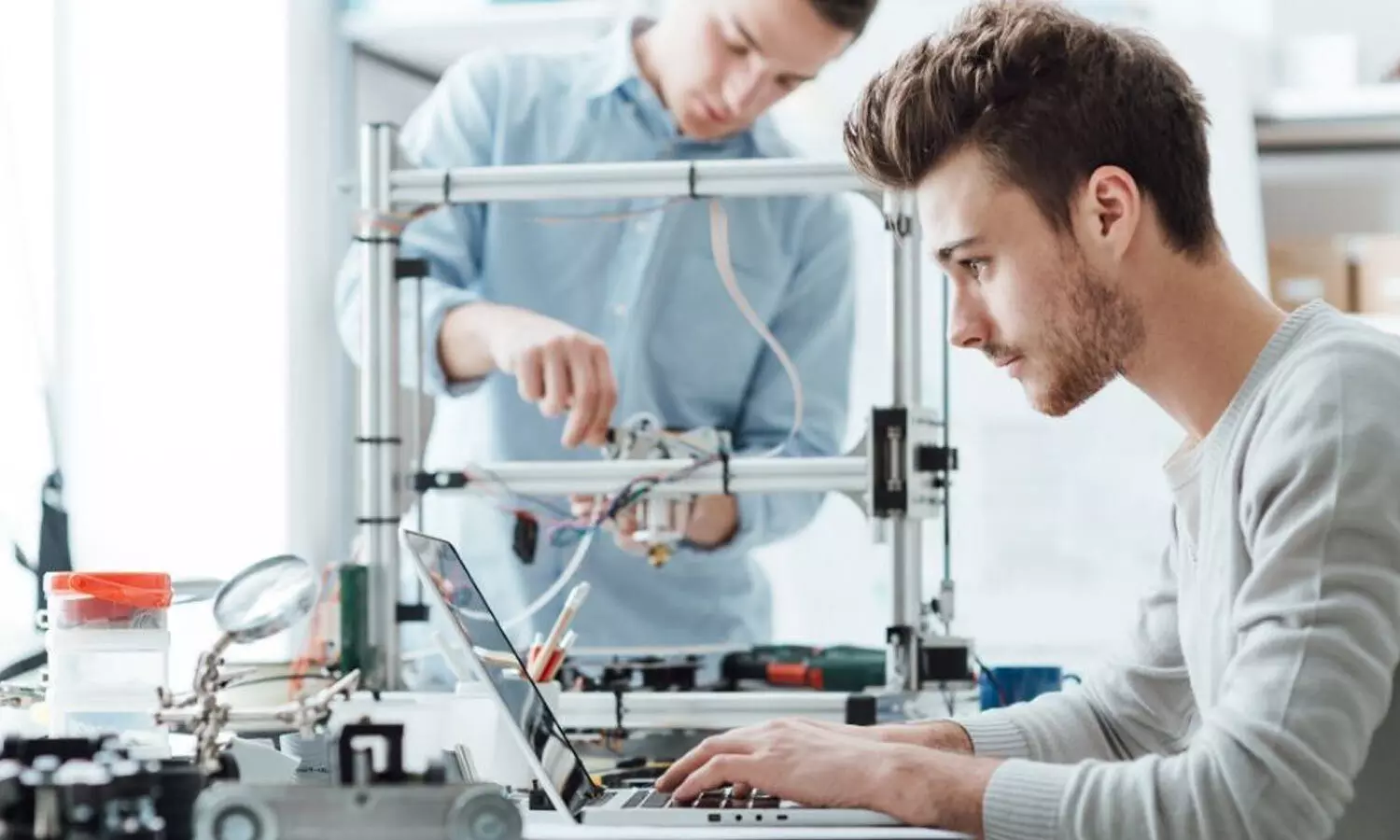
From coding to critical thinking: What future engineers need to learn
Engineering has always been about solving problems. But the way engineers solve problems is changing. Technology is evolving quickly, and tools such as artificial intelligence are becoming part of everyday engineering work. This does not make engineering skills less important. Instead, it changes what those skills need to include.
For the next generation of engineers, knowing how to code will remain valuable. But being able to think, question, understand and adapt will be equally important.
Coding Is Just the Beginning
Coding has traditionally been one of the most important skills for engineering students, particularly as technology has become central to almost every industry. However, as AI-powered tools become capable of supporting coding and other technical tasks, engineers will need to look beyond writing code.
The real value lies in understanding what needs to be built, why it is needed and how it can solve a particular problem. Technology should be treated as a tool to achieve an outcome, rather than the outcome itself.
This shift means students need to focus on building a strong foundation in problem-solving alongside their technical skills.
Learning to Ask the Right Questions
One of the most important skills an engineer can develop is the ability to ask the right questions. Before looking for a solution, engineers need to understand the problem. What is causing it? Who is affected by it? What information is available? What information is missing? Are there different ways to solve it? This requires curiosity and research. Engineers need to be comfortable gathering information, examining different possibilities and making decisions based on what they learn.
Critical thinking becomes particularly important when there is no single correct answer. Instead of simply following an existing approach, future engineers will need to assess whether that approach is still the right one. Creative thinking and collaborating across borders further enhances this ability to get diverse perspectives, something an AI ecosystem may not be very effective yet.
Understanding the World Behind the Technology
Technical knowledge becomes more valuable when it is combined with an understanding of the field in which it is being applied.
An engineer working in healthcare, for example, needs to understand the needs of patients, doctors and healthcare systems alongside the technology being developed. Similarly, engineers working in manufacturing, mobility or energy need to understand the challenges and priorities of those sectors. Equally important here is also the understanding of how the technology works. This is almost always rooted in the fundamental engineering principles. For example, an AI system is a composite of foundational principles drawn from mathematics, data, network communications and hardware system areas.
Domain knowledge helps engineers move from building something that works to creating something that is genuinely useful.
Solving Problems from the User’s Perspective
Good engineering is not only about technical performance. It is also about how people experience and use a solution.
Design thinking can help engineers look at problems from the user’s perspective. It encourages them to understand needs, explore different ideas, test solutions and improve them based on feedback.
Giving students opportunities to work on real-world projects can help develop this mindset. Practical experiences teach lessons that cannot always be learned through textbooks or classrooms. Empathizing with a user (putting yourselves in their shoes) and understanding the problem they are trying to solve remains a key human-skill to hone early in the career.
Preparing Engineers for a Changing Workplace
Future engineers will also need to communicate clearly and work with people outside their own areas of expertise. An idea has greater impact when an engineer can explain it to a customer, researcher, business leader or colleague in a way that everyone can understand.
They will also need to keep learning. The tools used today may change significantly over the course of a career, but the ability to learn, adapt and solve new problems will remain relevant.
The engineer of the future, therefore, will not be defined only by how well they code. They will be defined by how well they understand problems, ask questions, connect technology with real-world needs and turn ideas into meaningful solutions.
(The author is Head of R&D Centre for Application & Research - ZEISS Meditech)
Asian Games: Nagal loses QF, India's tennis campaign ends without medal for first time since 1986
Nagarjuna’s Geethanjali Finally Gets Its New Re-Release Date
Aviation Security Needs a Relook: Pilot Checks Must Be Strengthened
10 HR Software Platforms Taking on the Complex Workforce Needs of India’s Large Enterprises
Aviation Security Needs a Relook: Pilot Checks Must Be Strengthened
Nagarjuna’s Geethanjali Finally Gets Its New Re-Release Date
Commercial LPG Price Hike From October 1: Check New Rates In Delhi, Mumbai, Chennai And Other Cities
AP Government Faces Setback as HC Strikes Down 34% BC Reservation
PM Modi Speaks To Family Of Injured Flydubai Pilot Smit Machchhar After Mid-Air Attack
India-EU FTA: Progress on trade deal and tech council reviewed, says Piyush Goyal


