




- Bangladesh police seize bomb-making materials in Dhaka, arrest one
- Women's football team to make historic Kolkata debut with two friendlies against Russia
- Omar Abdullah welcomes tourists as Gulmarg gears up to hold national-level golf tournament
- India delivers medical supplies in Afghanistan, reaffirms humanitarian support
- Sanjay Gupta questions smoking posters of leading men in Bollywood: What about anti-smoking ads
- Nitin Nabin listens to ‘Mann Ki Baat’ with party workers at Biswa Bangla Convention Centre in Bengal
- Don’t just raise allegations, present facts: Bihar CM slams Opposition over SIR
- 'Will send wrong message': Kiren Rijiju on Rahul Gandhi targeting EC over SIR row
Beyond the ceiling fan: Why higher edn needs urgent reform
In Short
The first truth is uncomfortable but unavoidable. Many universities have turned education into a relentless race.

Share :
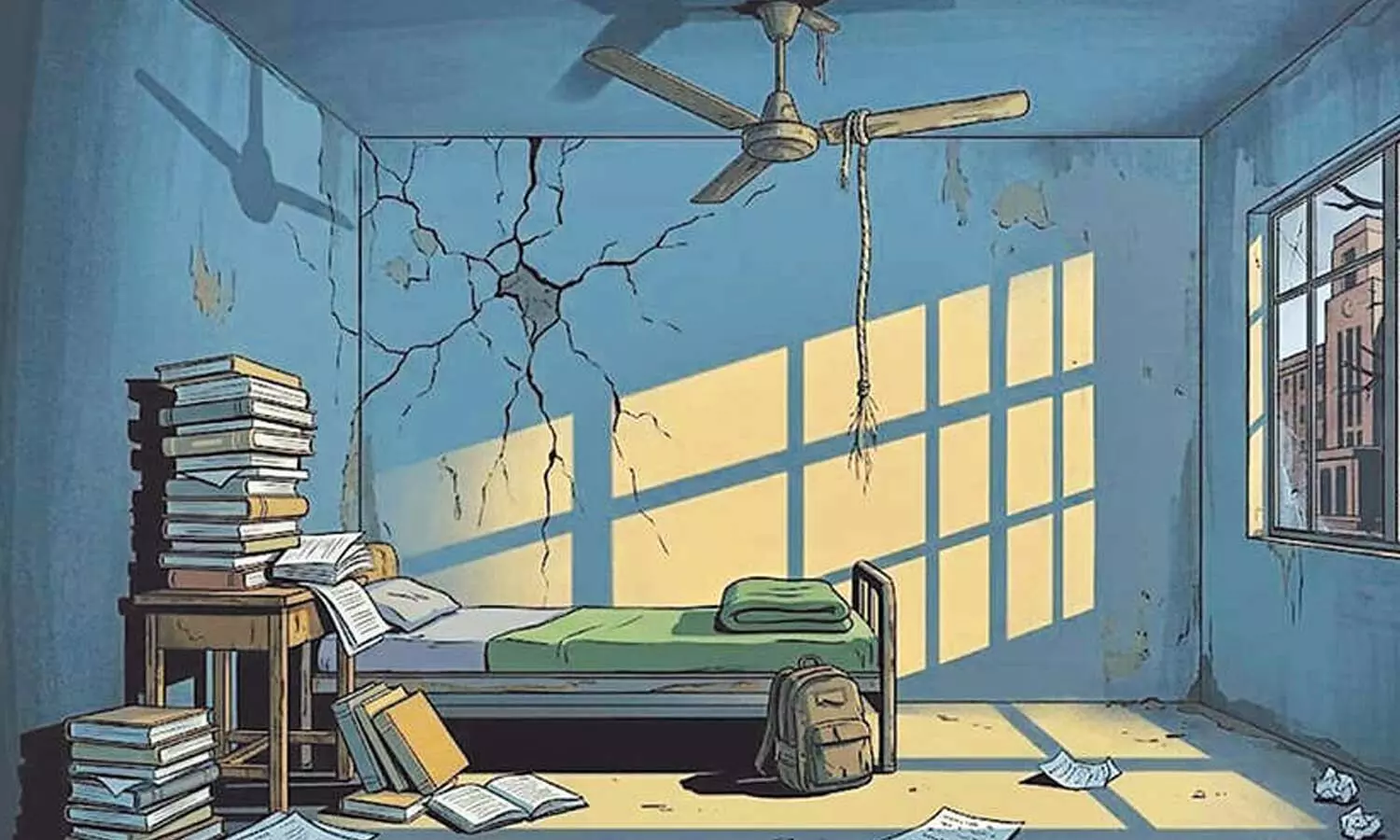
Beyond the ceiling fan: Why higher edn needs urgent reform
The recent response of replacing ceiling fans with wall-mounted fans in hostel rooms at IIT Bombay may look like a decisive safety measure. It is not. It is a symbolic reaction to a deep institutional crisis, and symbolism cannot substitute for reform. If India wants to prevent student suicides in higher education, it must stop treating the visible means of death as the cause of death.
The real causes lie much deeper: academic pressure, hyper-competition, caste-based discrimination, isolation, financial anxiety, and the near absence of serious mental-health support on many campuses.
The first truth is uncomfortable but unavoidable. Many universities have turned education into a relentless race. Students are pushed into a climate where marks, ranks, placements, and performance matter more than learning, curiosity, or wellbeing. This pressure is not confined to elite institutions. It spreads across the higher education system, where parents invest heavily, institutions promise success, and students are expected to excel without pause. For many young people, especially those far from home, failure begins to feel permanent public. In such an atmosphere, distress is often hidden until it becomes unbearable.
The second truth is that competition in India’s higher education system is not merely intense. It is often hyper-competitive and deeply unequal. Students do not begin from the same social or economic position. Some arrive with coaching, language advantage, social capital, and family support. Others come in with debt, first-generation anxieties, weak schooling, and the burden of proving they belong. When institutions ignore these differences and insist on a one-size-fits-all model of merit, they intensify despair. A system that rewards only the already advantaged cannot call itself healthy.
Then there is caste. Any honest conversation on student suicides in India must confront caste-based discrimination, whether open or subtle, as a serious structural cause of distress. Exclusion does not always arrive as a public insult. It can come through silence, isolation, ridicule, bias in classroom interactions, humiliation in evaluation, and the feeling of being permanently watched or judged. For many Dalit, Adivasi, and other marginalized students, the campus can become a place of quiet hostility rather than belonging. When a student feels socially and institutionally unwanted, academic pressure becomes much heavier.
This is why technical fixes alone are so inadequate. A wall-mounted fan may reduce one potential risk in one room, but it cannot remove the conditions that produce despair. A student in crisis does not need a redesigned ceiling. They need timely help, empathetic listening, confidential counselling, academic flexibility, and a campus that does not punish vulnerability. If institutions believe that changing hostel fixtures amounts to prevention, they are mistaking optics for action.
Mental health support on campuses remains far too weak. In many institutions, counselling exists only on paper or is treated as a peripheral service rather than essential infrastructure. Students may not know where to go, may fear stigma, or may worry that seeking help will affect their academic future.
Some campuses have counselling services, but they are under-staffed, under-trained, and overburdened. Others depend on faculty or wardens who are not equipped to respond to suicidal distress. That is not support. It is abandonment by bureaucracy.
What India needs is a complete rethink of higher education as a public good. Universities must be judged not only by placements and rankings, but by whether they are safe, inclusive, and humane places to study. That means stronger anti-discrimination mechanisms, better grievance redress, trained counsellors, transparent reporting of student distress, regular mental-health audits, and clear accountability for administrators. It also means academic reform. Less rigid obsession with a single exam or semester outcome, more flexibility for students in crisis, and more respect for diverse learning paths.
The state also has a larger responsibility. Public universities must be strengthened rather than left to decay. If public higher education is underfunded, overburdened, and poorly staffed, private institutions will fill the space, sometimes with high fees, weak accountability, and little real regulation. India does not need an expansion of education that is available only to those who can pay. It needs a system where quality, access, and accountability go together. The health of future generations cannot depend on a market logic that treats education as a product and students as consumers.
There is another danger in quick technical responses. They allow institutions to appear concerned without accepting responsibility. After every tragedy, administrations often announce committees, restrictions, inspections, and surface-level changes. But a campus cannot be made compassionate by circulars alone. Safety must be built into the daily culture of the institution. Students should feel that teachers notice them, administrators listen to them, and peers are encouraged to support one another without fear or shame.
The broader lesson from global best practice is clear. Suicide prevention works best when it is comprehensive. It requires early identification of distress, accessible counselling, crisis intervention, social inclusion, financial support, and institutional accountability. It also requires reducing the shame around mental illness and making help easy to access. No single intervention can solve the problem. And certainly, no single change in hostel hardware can do so.
The UGC’s mental-health guidance already points in the right direction. Confidential counselling spaces, trained peers and staff, early identification of distress, emergency referral systems, follow-up counselling and publicly displayed helpline information. But a circular is not a counsellor, and a policy document is not a relationship of trust.
India must therefore move from panic to policy. It must stop reacting to student suicides with cosmetic safety measures and start asking why young people feel trapped, invisible, and disposable inside institutions meant to educate them. The answer lies in reforming the culture of higher education itself. We need campuses that reduce pressure, not magnify it. That welcome difference, not police it. And that supports students before a crisis becomes a tragedy.
Removing ceiling fans may reassure administrators. It will not reassure students. A serious higher education reform agenda must go much further. Less cruelty, less exclusion, less performance hysteria, and much more care.
(The writer is with the Cholleti BlackRobe Chambers, Hyderabad, and writes on economy, politics and law)
Children from Four Devipatan Districts Send Gratitude Letters to CM Yogi Adityanath
Drugs worth Rs 10.17 lakh seized in Ahmedabad; one held
Pakistan’s information environment defined by steady accretion of internet shutdowns, covert surveillance: Report
Clash erupts at SRFTI campus in Kolkata, many students injured
Noise, Questions and the Missing Answers
Govt is taking steps to address land issues: Minister Ponguleti Srinivasa Reddy
Rains subside in Chinturu Agency, flood relief underway
Karur Stampede Anniversary: CM Vijay Remembers 41 Victims, Says Pain Has Not Faded
Godavari breaches 40-feet mark at Bhadrachalam
Students From LPU Vandalise Campus After Unverified Gang-Rape, Suicide Rumours; Police Deny Claims


