






- 2027 UP polls: SP to release manifesto today; PDA to remain focus
- US clears SpaceX plan for 1 million AI satellites
- ECI releases draft graduate voter rolls
- Wow! India’s AI-powered police stn to make debut at Panjagutta
- TGiCCC organises cancer screening camp for police personnel
- Hyd police take pledge to protect women’s rights
- HERIF launched to boost funding for Telangana universities
- TVK govt defied SC order on Deepam, alleges Tamilisai
SP's Big-Brother Attitude Creates Roadblock in Alliance Talks: Tussle Costs Opposition Time
In Short
Congress-SP seat-sharing tensions deepen ahead of the 2027 Uttar Pradesh Assembly elections, with Imran Masood criticising SP’s approach as uncertainty over alliance talks delays Congress’s election preparations.

Share :
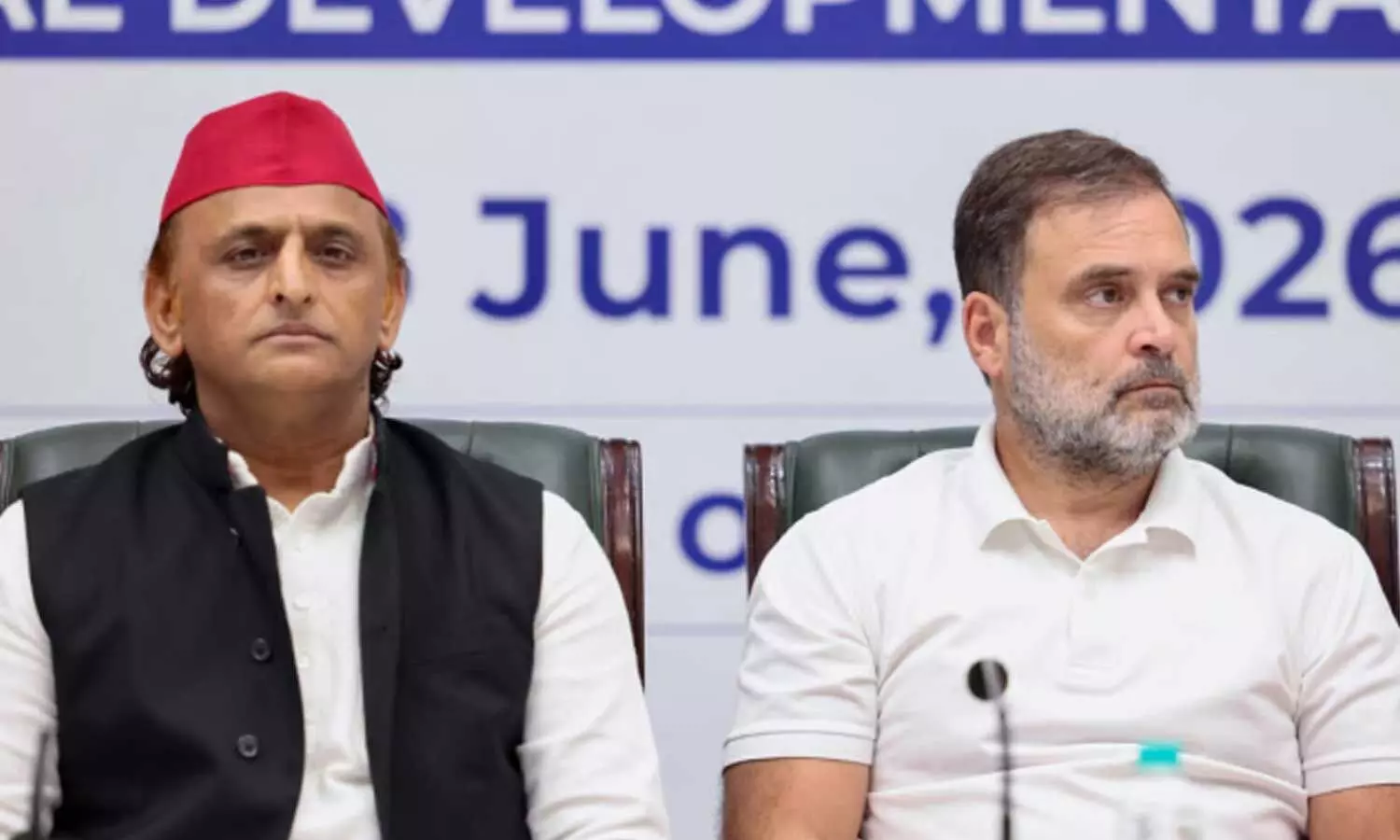
SP chief Akhilesh Yadav and Congress leader Rahul Gandhi
Congress appears to have turned into a ‘Naraz Fufa’ (disgruntled uncle), upset over what it describes as the “autocratic and illogical” attitude of the Samajwadi Party (SP) towards seat-sharing for the upcoming Uttar Pradesh Assembly elections.
Uttar Pradesh Congress Committee working president Imran Masood said his party was opposed to the SP playing the role of the big brother, apparently believing that its allies had no option but to accept its terms or walk away.
Masood argued that if the SP was serious about defeating the Yogi Adityanath-led BJP government and returning to power in Uttar Pradesh, it should adopt a more magnanimous approach and offer a significant number of seats to the Congress. He said the Congress had shown a large heart by allowing the SP to contest more seats in the state and expected the latter to reciprocate by conceding the constituencies sought by the Congress.
The SP's attitude, he said, was not only illogical but also suggested that it was not genuinely interested in an alliance. Masood said the two parties had held discussions on seat-sharing on Wednesday, but the SP had not informed the Congress that it was planning to announce the names of five candidates. He pointed out that the Assembly constituencies for which the SP had announced candidates fell within his Lok Sabha constituency. This, he said, was unacceptable to the Congress and amounted to a violation of alliance dharma.
The Congress, Masood asserted, was not begging for seats and could not be treated with such contempt. Asked when the next round of talks would take place, he said he saw little point in resuming discussions when the SP's position was effectively 'take it or leave it'. The Congress had already submitted its list of preferred constituencies, he said, and the SP could not dictate who the Congress should field as its candidates.
Masood also claimed that Pratapgarh had traditionally been a Congress seat, but the party had left it for the SP in the 2024 Lok Sabha elections. However, the electoral history does not entirely support this argument. Congress won the seat in 2009, but the BJP captured it in 2019, while Apna Dal won it in 2014. The SP emerged victorious in 2024. In other words, the Congress cannot claim a recent winning record in the constituency.
Masood sounded terribly disappointed when he said What's the point of having negotiations. SP can tell us keep out of contest and we will win on our own and defeat the Yogi government. They also know that they cannot win on their own but are not willing to be flexible. He said he was not sure if there would be any possibility of continuing with negotiations or not.’
This remark of Masood gains importance because he is the main negotiator so far in UP.
The SP, meanwhile, maintains that winnability will be the primary consideration in seat allocation. That, however, can be assessed only after both parties put forward their proposed candidates and the relative strengths of the contenders are examined. The Congress, on the other hand, appears to be relying considerably on its electoral performance in 2009 and earlier elections to stake its claim to constituencies.
Amid the growing friction, all eyes are now on a possible meeting between the two 'UP Ke Ladke' — SP chief Akhilesh Yadav and Congress leader Rahul Gandhi. However, there is no indication yet of when the two leaders will meet or whether their intervention can break the deadlock.
The Congress cadre is increasingly concerned that the party is losing valuable time because of the lack of clarity over the number of seats it will contest and the constituencies it will get. The SP, they point out, has already moved ahead with its preparations and appears to be much further along in its campaign planning.
The Congress, by contrast, seems to remain caught up in the 'Vote Chori' narrative, even as its principal ally is getting down to the business of election preparation.
Meanwhile, the SP is preparing to unveil its first manifesto for the 2027 Assembly elections. It is expected to focus on filling government vacancies, social justice, Dalit concerns, law and order, agriculture and farmers' welfare, as well as industry and the micro, small and medium enterprises (MSME) sector.
Ireland announce historic six-match Pakistan tour to prepare for World Cup qualifiers
Punjab reports 7,159 stubble burning cases: Patiala records 445 incidents, FIRs filed in 265 cases
18 Years After 26/11 Verdict, Ajmal Kasab's Lawyers Still Await Payment For Defending Terrorist
Look Out Circular Issued Against CJP's Saurav Das, Centre Tells Delhi High Court; Passport Discrepancies Cited
AP Panchayat and ULBs elections live updates: Polling begins for first phase
18 Years After 26/11 Verdict, Ajmal Kasab's Lawyers Still Await Payment For Defending Terrorist
Look Out Circular Issued Against CJP's Saurav Das, Centre Tells Delhi High Court; Passport Discrepancies Cited
SP's Big-Brother Attitude Creates Roadblock in Alliance Talks: Tussle Costs Opposition Time
AP police uses technology to track election security in Konaseema
Years after Mumbai 26/11, India evolves from dossier-led response to proactive counterterrorism


