




- Python used for dance during Ganesh immersion in Hyderabad rescued
- Rani Mukerji's mother Krishna Mukerji passes away at 75, family requests privacy
- 177 taluks now: BJP mocks Karnataka govt as Gadag added to expanded drought list
- World Rose Day 2026: History, Significance And Importance
- Mahabubabad Police Recover 2,027 Mobile Phones Using CEIR
- Amit Shah Inaugurates 3rd Anti-Narcotics Task Force Conference, Focus On 2026-29 Targets
- WhatsApp Brings Full Emoji Support to Apple Watch for Faster Replies
- Uttar Pradesh Tightens Food Labelling Rules, Packing Date Cannot Be Shown As Manufacturing Date
Asian Games: Cricket gets a crash course for Japanese fans as organisers roll out easy-to-follow guide
In Short
The two-page guide, distributed among Japanese fans, explains everything from the number of players and the format of a T20 match to scoring, dismissals, umpiring signals and how to read the scoreboard.

Share :
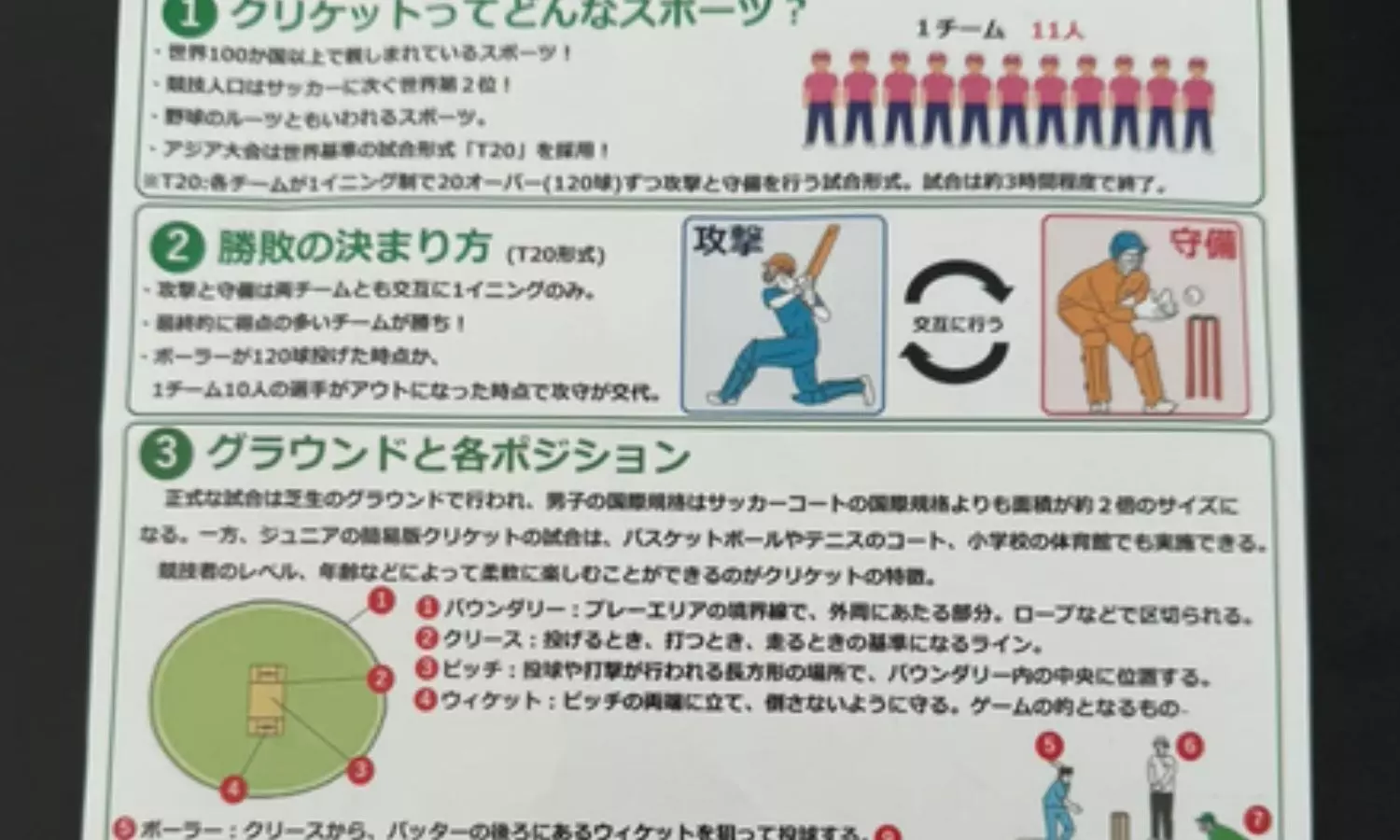
With cricket still a relatively unfamiliar sport for many Japanese fans
Nagoya: With cricket still a relatively unfamiliar sport for many Japanese fans, the Asian Games organising committee has come up with a simple and illustrated guide to help spectators understand the basics of the game and enjoy the action at the venue.
The two-page guide, distributed among Japanese fans, explains everything from the number of players and the format of a T20 match to scoring, dismissals, umpiring signals and how to read the scoreboard.
The guide begins with a basic introduction to cricket, explaining that it is played between two teams of 11 players and that the T20 format adopted at the Asian Games consists of 20 overs per innings, with each match lasting around three hours.
For spectators new to the sport, the guide explains how batting and bowling teams alternate innings, with the team scoring the most runs declared the winner. It also explains that an innings can end earlier if 10 wickets fall.
A large illustrated section introduces the cricket ground and different positions, including the bowler, batter, wicketkeeper, umpire, fielders and wicketkeeper standing behind the stumps.
The organisers have also explained the three basic ways of scoring runs — running between the wickets, four runs when the ball reaches the boundary after bouncing, and six runs when the batter clears the boundary without the ball bouncing.
One of the most useful sections for first-time spectators covers the different ways a batter can be dismissed. The guide illustrates run out, bowled, stumped, hit wicket, caught and leg before wicket (LBW), using simple graphics and brief explanations
Umpiring signals have also been included, explaining calls such as four, six, no-ball, bye, out and wide. The guide aims to make it easier for spectators to follow the officials’ decisions during the match.
There is also a section explaining how to read a cricket scoreboard, including the number of runs scored, overs bowled and wickets lost.
The initiative comes as cricket makes its presence felt at the Asian Games in Japan, where many local spectators are getting their first opportunity to watch the sport live.
Rather than assuming prior knowledge, the organisers have attempted to bridge the gap with a visual guide that allows Japanese fans to follow the game from the first ball to the final over.
Ashok Selvan turns emotional at 'Anbil Avan' event; discloses he pledged his parents' home to meet financial needs of film
Asian Games: Cricket gets a crash course for Japanese fans as organisers roll out easy-to-follow guide
India-US trade talks moving fast and in right direction: Piyush Goyal
Python used for dance during Ganesh immersion in Hyderabad rescued
Big schemes pointless if women's safety can't be ensured, says Priyanka Gandhi on Jamui case
India-US trade talks moving fast and in right direction: Piyush Goyal
EC announces Bihar MLC election schedule, polling on October 23
India tops in GDP growth outlook for FY27 at 6.7 per cent
BKI’s new Punjab strategy: Frequent strikes, police killings, drone smuggling
Vande Mataram row: Karnataka High Court hears PIL challenging State government’s decision


