US Designates Baloch Rebel Group As Terrorist Organization During Pakistani Army Chief's Visit

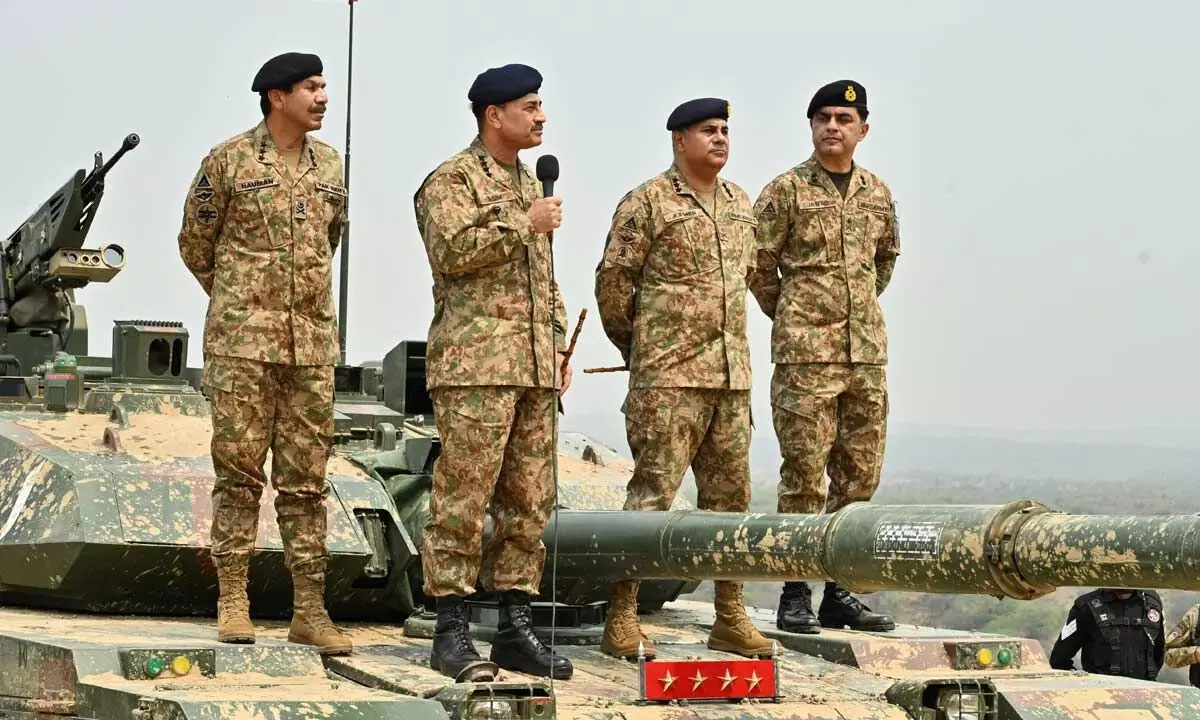
The United States labels the Balochistan Liberation Army as a terrorist organization during Pakistani Army Chief Asim Munir's second visit to America in two months, marking a significant diplomatic victory amid strengthening US-Pakistan relations under Trump's presidency.
The United States has officially designated the Balochistan Liberation Army as a foreign terrorist organization, delivering a major diplomatic victory to Pakistani Army Chief Field Marshal Asim Munir during his recent visit to America. This marks his second trip to the US in less than two months, highlighting the warming relationship between Washington and Islamabad under Donald Trump's administration.
The timing of this announcement carries particular significance, occurring precisely during Munir's diplomatic mission to the United States. The BLA, along with its operational wing known as The Majeed Brigade, has orchestrated numerous attacks against Pakistani military targets and infrastructure. By securing this terrorist designation, Pakistan has successfully portrayed itself as a victim of terrorism rather than a sponsor of it.
This development represents a stark contrast to recent US actions against Pakistan-linked groups. Just weeks earlier, America had designated The Resistance Front as a terrorist organization following the Pahalgam attack, explicitly naming it as a proxy for Lashkar-e-Taiba. That designation had embarrassed Pakistan, particularly since Islamabad had previously claimed the group was merely a local forum and had worked to remove references to it from UN Security Council statements.
The new BLA designation transforms the narrative in Pakistan's favor. The organization has been responsible for significant attacks, including the recent hijacking of the Jaffar Express train from Quetta to Peshawar, which resulted in numerous civilian and military casualties. Pakistan has long accused India of supporting BLA activities, though without providing concrete evidence.
Munir's visit to America was prompted by an invitation to attend the farewell ceremony for US Central Command General Michael Kurilla, who has previously praised Pakistan as a valuable counter-terrorism partner. However, the trip became controversial when Munir made inflammatory nuclear threats against India while speaking to the Pakistani diaspora in Tampa, Florida.
The army chief's remarks about Pakistan being willing to "take half the world down" if threatened drew sharp criticism from India but notably received no condemnation from the United States. This silence appears to reflect the broader reset in US-Pakistan relations under Trump's leadership, a dramatic shift from the previous administration's approach.
The relationship between Trump and Munir began strengthening after the Pakistani leader publicly endorsed Trump for the Nobel Peace Prize, crediting him with preventing war between India and Pakistan. This led to an unprecedented private luncheon meeting in June, marking the first time a US president had met with a Pakistani military leader without civilian officials present.
Since establishing this personal connection, Pakistan has secured several economic benefits from the United States. These include a development agreement for Pakistan's oil reserves and a significant reduction in tariffs from 29 percent to 19 percent. These concessions demonstrate the tangible results of Munir's diplomatic strategy.
The strengthening US-Pakistan ties come at a time when American relations with India have faced challenges over trade disputes. Pakistan appears to be capitalizing on this situation, with Munir skillfully managing Trump's preferences while advancing his country's interests.
However, not all American officials view this relationship positively. Former Pentagon official Michael Rubin has issued stark warnings about Munir, comparing him unfavorably and suggesting that no amount of concessions will change Pakistan's fundamental approach to regional security issues.
The BLA designation under US law makes it illegal for anyone to provide material support to the organization, effectively criminalizing assistance to the group's independence movement in Balochistan. This legal framework strengthens Pakistan's position in combating the separatist organization while potentially limiting international support for Baloch independence aspirations.
India has expressed displeasure with both the nuclear threats made on American soil and the broader US approach to Pakistan relations. The External Affairs Ministry specifically criticized Munir's inflammatory remarks, stating it was regrettable that such comments were made from the territory of a friendly nation.
The evolving US-Pakistan relationship under Trump represents a significant geopolitical shift in South Asian dynamics, with implications extending beyond bilateral ties to affect regional stability and counter-terrorism cooperation throughout the region.