






- Navigate the path of rational choices before giving wings to dollar dreams!
- Bullet train project hits electrification milestone
- Congress’s spin doctor perks up party cadre to aim for bigger mandate in TG
- Congress will win 90 Assembly seats: Revanth
- BRS braces for mega Deeksha Diwas meet in Karimnagar on November 29
- Pulse polio drive covers 95.6% of target kids on Day One
- 19-year-old held for woman’s murder within 24 hours
- Deputy CM Bhatti invites Schneider Electric to expand in Telangana
US senator-elect El-Sayed opposes funding Pakistan’s military
In Short
US Senator-elect Abdul El-Sayed opposes funding Pakistan's military, saying American support should prioritise democracy, equal rights and justice for all.

Share :
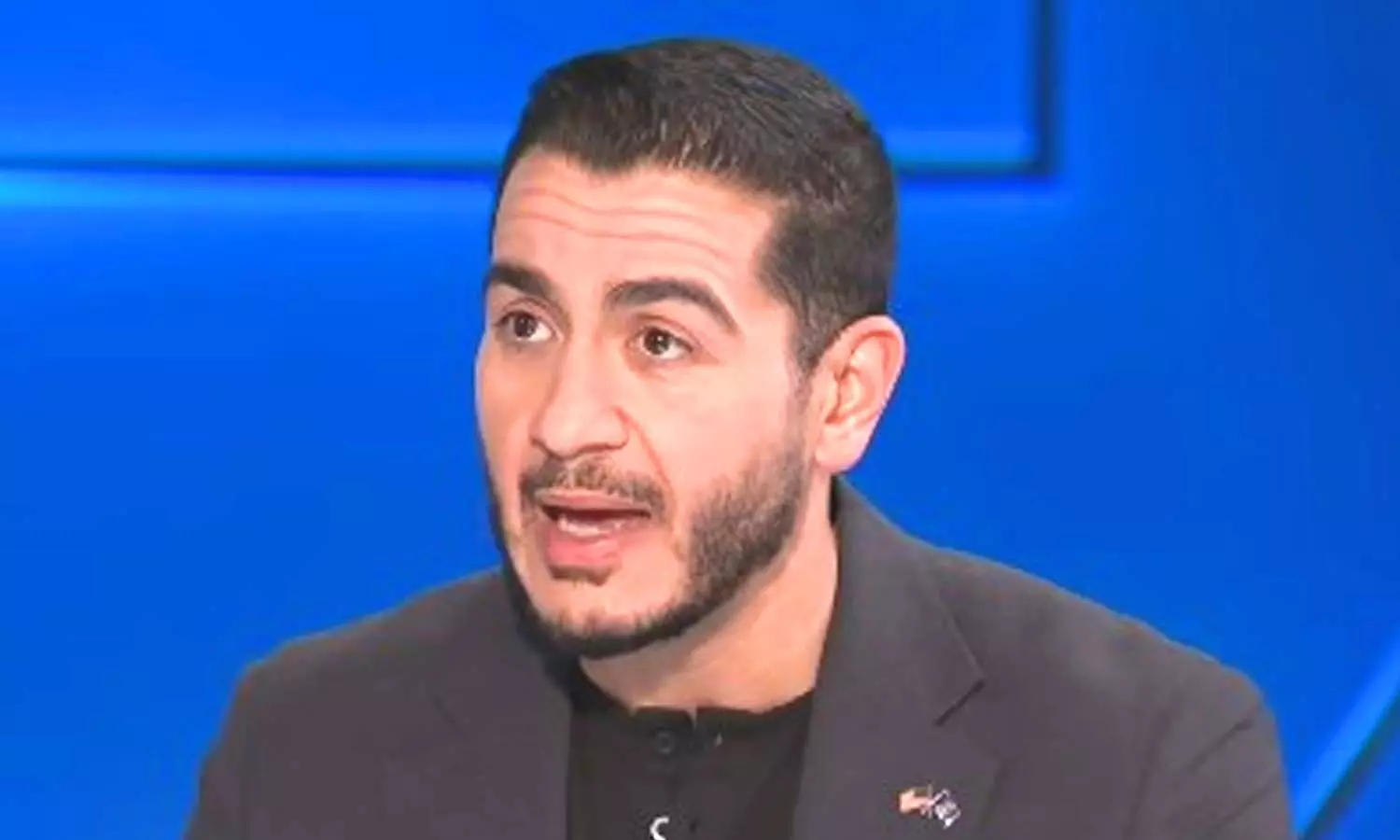
US senator-elect El-Sayed opposes funding Pakistan’s military
Washington: US Senator-elect Abdul El-Sayed said that Washington should not fund Pakistan’s military, invoking the country during a debate over Israel’s identity and arguing that governments receiving American support should uphold equal rights.
“I don't think we should be in the business of funding the military of Pakistan either,” the Michigan Democrat said on NBC’s “Meet the Press.”
His remarks came after host Kristen Welker challenged his criticism of states organised around a religious or ethnic identity. She cited Pakistan and Denmark while asking why Israel should abandon its identity as a Jewish state.
“Well, I don't believe in ethnostates generally,” El-Sayed replied, before making the Pakistan comment. “I'm just trying to apply my ideals evenly.”
El-Sayed, who has been elected to the Senate but has not yet taken office, did not identify a particular US assistance programme, specify an amount or outline legislation concerning Pakistan. His comments expressed his position rather than a change in American policy.
The exchange began when Welker played an earlier recording in which El-Sayed said Israel should uphold equal rights for all its citizens and should not identify itself with a particular culture or faith.
Asked whether he meant Israel should no longer exist as a Jewish state, he said his position rested on equality before the law.
“I'm saying that I don't believe in ethnostates. I'm saying I believe in equal rights to peace, dignity, and self-determination,” he said.
Drawing a comparison with the United States, El-Sayed said Americans should receive equal treatment under the law regardless of their skin colour or how they pray. Governments supported by Washington should meet the same basic standard, he argued.
“And I would argue based on our principles that we should always be putting democracy over everything else,” he said.
After Welker raised Pakistan and Denmark, El-Sayed returned to the rights of Palestinians and Jewish Israelis. He said Palestinian families had lived in the region for generations and had been promised a state of their own.
He argued that American policy should uphold democracy, justice and equal rights to peace, dignity and self-determination for both peoples.
“This is not opposing any one group of people. This is about upholding a set of principles under which all people can have equal rights to their peace, dignity, and self-determination,” he said.
In a separate exchange during the interview, El-Sayed also argued that Congress should exercise its authority over funding the war with Iran, which he described as illegal and unjustified.
Asked whether he would support a government shutdown to defund the conflict, he said he did not want the government to close, while insisting that lawmakers should assert their role in decisions about war and spending.
PM Modi, Nepal Prime Minister to jointly inaugurate Ayodhya-Janakpur train service today
Ambedkar open varsity resumes academic activities in Andhra Pradesh
Chandrababu Naidu calls for unanimous polls to engender village development
Bandi Sanjay on Maha Padayatra: Will deliver a strong message on protecting democracy
Don’t hurt Congress image: Revanth cautions party leaders at PAC meeting
Raj Gopal Reddy, Anirudh Reddy crossed ‘Lakshman rekha’: Mallu Ravi


