




- Will work with CM Vijay: PM Modi assures full support for TN development
- This is your time, Modi tells youth
- CJP vows to intensify stir
- No illegal detentions: Supreme Court
- Andhra Pradesh Government sanctions Rs 59.73 cr for Pushkar arrangements
- Make Indrakeeladri Dasara festivities a grand success: CM Chandrababu Naidu
- Dasara festivities begin at Kanaka Durga temple in Vijayawada
- Guntur Municipal Corporation to conduct PGRS today
Sanna biyyam, doddu dara! Rice prices skyrocketing in TG amid export push
In Short
Rising open-market rice prices in Telangana spark consumer distress. Experts urge price stabilization and subsidized retail sales as export ambitions grow.

Share :
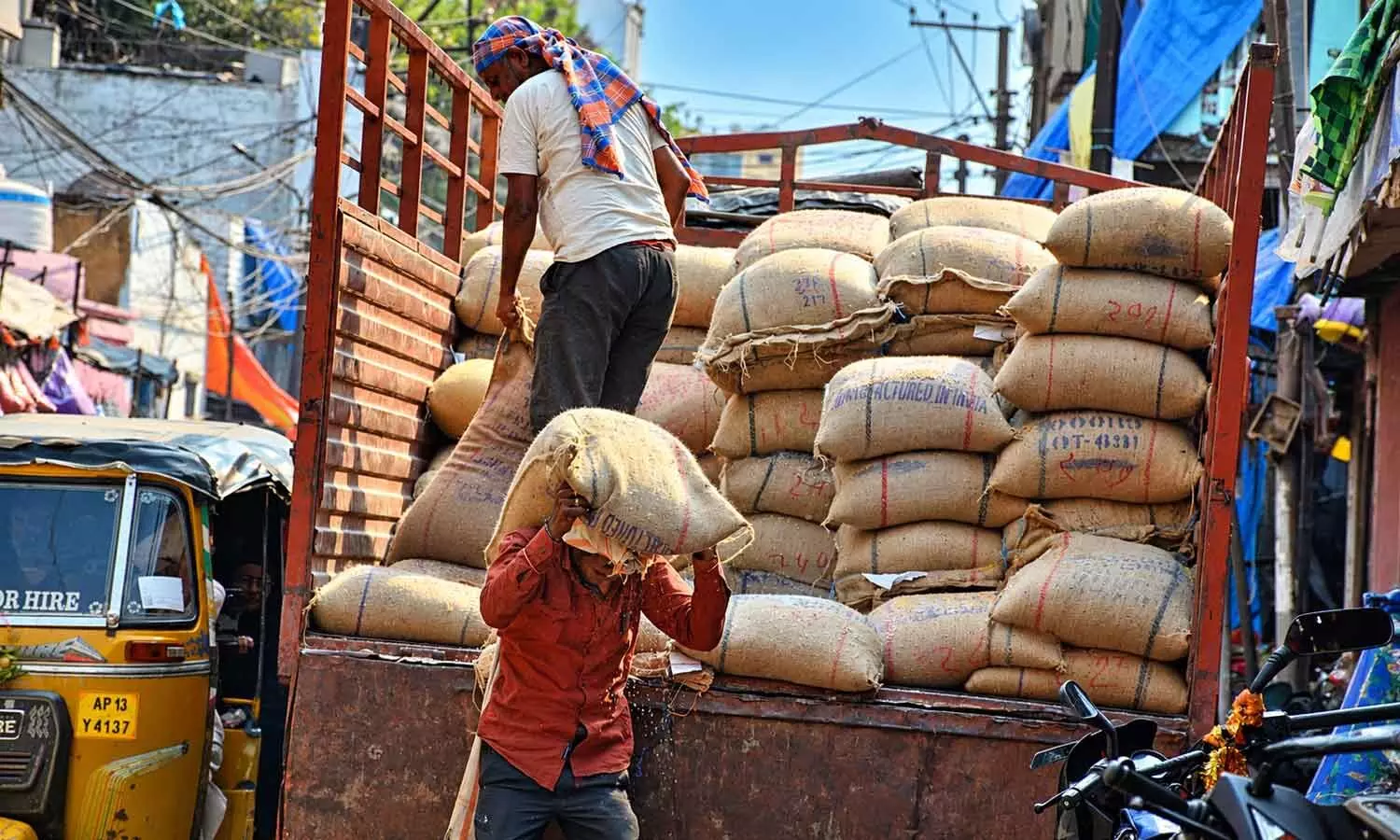
Rice prices skyrocketing in TG amid export push
Hyderabad: Prices of various varieties of rice are soaring across Telangana, raising concerns among consumers and questions over the roles of the state government, rice millers and private traders. With no specific mechanism in place to stabilise or otherwise directly regulate open-market rice prices, consumers are struggling to cope with the rising cost of the staple.
Open-market prices range from Rs 6,000 to Rs 10,000 per quintal. The prices of various varieties of rice have risen even as the Telangana government has stepped up efforts to export premium rice to international markets. The state is promoting its agricultural strength and seeking long-term partnerships with nations across Asia, Africa, and the Middle East. R. Srinivas, a retail trader from Dammaiguda, told ‘The Hans India’ that consumers were preferring rice priced below Rs 8,000 per quintal.
He said HMT (a popular, medium- to long-grain rice variety known for its light texture, separate grain structure after cooking) rice prices had increased from Rs 6,800 to Rs 7,600 per quintal within a week and warned that prices could rise further during the Dasara and Diwali festivals. Nagaraju, a software engineer, said he preferred eating out rather than buying rice at such high prices and expressed his concern over the possibility of further increases.
However, a wholesale rice trader in Kushaiguda, Prasad, attributed the rise in prices to inadequate availability in the market. Telangana has around 1.06 crore ration cards covering 3.43 crore beneficiaries, with each eligible beneficiary receiving six kg of fine rice free every month through the Public Distribution System (PDS). This translates to a monthly requirement of approximately 20.58 crore kg, or 2.058 lakh metric tonnes. The state has also been distributing smart ration cards.
According to a Technical Group report of the National Commission, Telangana's population is projected to reach 3.87 crore by July 1, 2026. Civil Supplies Minister N Uttam Kumar Reddy recently said the government spends around Rs 14,000 crore annually on ration rice, apart from nearly Rs 20,000 crore on paddy procurement.
At the International World Rice Conference (IWRC) 2026 in Manila, Civil Supplies Commissioner M Stephen Raveendra highlighted Telangana's export ambitions. The state reportedly produced 18.5 million tonnes of rice in the previous season, accounting for nearly 12 per cent of India's production from 10 per cent of its rice-growing area.
Following a shipment of 30,000 tonnes to the Philippines in 2025, Telangana is targeting premium markets with fine and superfine varieties. However, one Venkat Reddy said the state government should first take effective measures to control the skyrocketing rice prices in the open market and provide relief to consumers before focusing on rice exports to international markets.
It appears that traders too are making hay while the sun shines. An expert alleged that some traders visit paddy fields and purchase fine-variety paddy directly from farmers by offering the Minimum Support Price (MSP) along with the state government’s bonus. They then mill the paddy and sell the rice at far higher prices, taking prevailing market trends into account, the expert said.
Another expert pointed out that the six kg of rice distributed free of cost per beneficiary every month under the PDS is insufficient to meet a household’s monthly requirements. Consequently, even families receiving ration rice are compelled to purchase additional quantities from the open market, making them vulnerable to rising prices.
The expert urged the state government to take this factor into account while addressing the escalating prices of rice and introduce measures to ensure that all consumers, particularly low-income families, can afford their monthly food requirements.
Another expert urged the state to open outlets that sell rice at subsidised rates similar to Bharat Rice centres operated through NAFED, where rice could be sold at Rs 35 per kg to provide relief to consumers. The expert argued that while exports could generate economic benefits, ordinary consumers cannot benefit unless domestic affordability is addressed.
Sanna biyyam, doddu dara! Rice prices skyrocketing in TG amid export push
Man from Hyderabad killed in attack on Riyadh Airport
Power bank triggers fire on Delhi-Chennai flight
Modi, Shah turning Goa into a ‘drug hub’, alleges Revanth
What three incidents say about Indian aviation safety
21 years of right to information law – Achievements and bottlenecks


