




- LoP Jai Ram Thakur slams Himachal govt for embarrassment in court cases
- Jal Shakti Minister calls for making cleanliness a part of collective responsibility
- Bihar CM sets March 2027 deadline for Chakai ethanol plant
- Seamless Travel with Common Pass in Matro Rail and RTC bus
- Mamata Banerjee had no fracture in leg during 2021 Bengal poll campaign in Nandigram: Suvendu Adhikari
- 'Joyous occasion for the nation': PM Modi praises Men's cricket team for gold medal
- Delhi CM Rekha Gupta inspects Okhla landfill, says 'garbage mountain is going'
- 'Have roadmap in place to deal with drugs issue': New Punjab Cong chief Pargat Singh
Will turn Amaravati into global deep tech hub: CM Naidu
In Short
Naidu unveils Rs 500-crore Pan-IIT venture fund

Share :
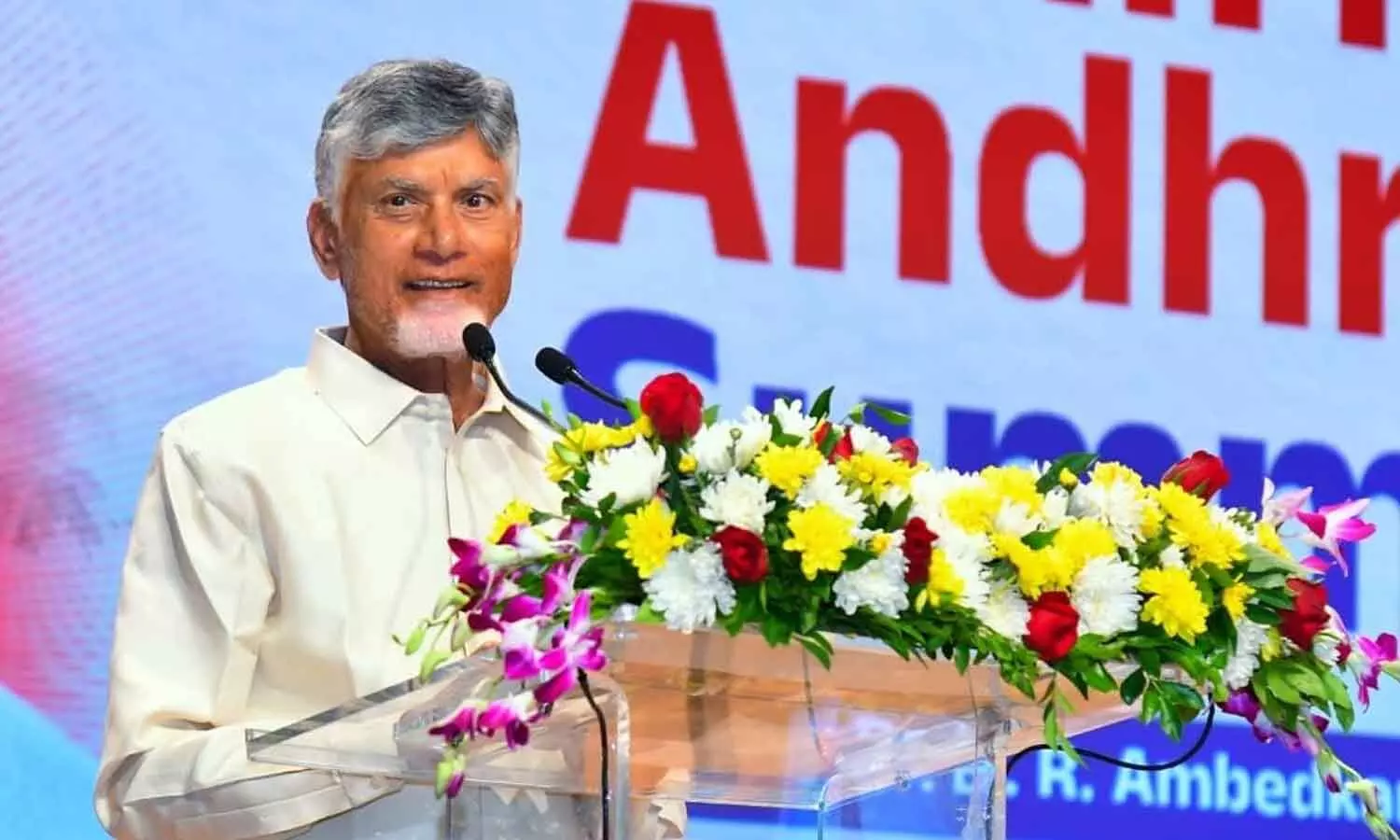
Chief Minister N Chandrababu Naidu
♦ Five ‘Q-Shiva’ quantum computers ready
♦ Quantum operations to begin in February
♦ Pan-IIT Amaravati Council to connect 23 IITs, 25 innovation hubs, universities, industry, and start-ups
Amaravati: Andhra Pradesh is seeking to build Amaravati into a global deep-tech and knowledge hub, with the government unveiling a Rs 500-crore venture fund, a permanent Pan-IIT Amaravati Council, and a roadmap centred on quantum computing, AI, semiconductors, space, and defence.
At the Pan-IIT AP 2026 Summit in Vijayawada on Saturday, Chief Minister N Chandrababu Naidu unveiled five ‘Q-Shiva’ quantum computers developed under the “Make in Amaravati” concept, along with a 4 Kelvin Processor. The systems will serve as mini quantum-testing laboratories. Qubit CEO Venkatasubramanyam said some specialised components were being sourced from Machilipatnam, including components available at only two or three locations globally.
Naidu said quantum computing operations in Amaravati would begin in February next year, with a 156-qubit system being jointly established by IBM, TCS, and L&T. Quantum testbeds are already operational, he said, adding that the state ultimately aimed to manufacture and export quantum-computing equipment.
A declaration signed by the AP government and Pan-IIT Alumni India announced the establishment of the Pan-IIT Amaravati Council as a permanent body and nodal agency for deep-tech development. It will coordinate with universities, industry and start-ups and facilitate technology transfer from IITs.
The Rs 500-crore Pan-IIT Amaravati Venture Fund will finance deep-tech start-ups, innovation, and investments. The state plans to identify technologies from 23 IITs and 25 innovation hubs, incubate at least 50 start-ups by 2030, establish 10 industry chairs in universities and connect 10 AP universities with the Pan-IIT ecosystem.
A network of 100 global IIT mentors will advise start-ups and entrepreneurs.
The deep-tech policy package will target quantum-AI, semiconductors, space, and defence, health, agritech and the blue economy.
Naidu said the state would also promote entrepreneurship from 6th class and develop IIT style laboratories in educational institutions, with the government willing to bear 50 per cent of the cost where necessary.
The initiative draws on the estimated 500,000 IIT alumni from 23 IITs. Naidu said their expertise could transform Amaravati into “Quantum Valley” and help build what he called “Cyberabad Plus”, with green energy, net-zero development, and deep-tech integration.
AP has set a target of producing 50 lakh AI experts, in line with the Prime Minister's national target of one crore. Naidu said AI had already helped increase the state's GST revenue by 18 per cent.
The strategy extends beyond Amaravati. Electronics, aerospace, and defence clusters are being developed around Anantapur, Kopparthi, and Tirupati, while private participation in space is being encouraged.
Naidu also linked the technology push to the Global Horticulture Hub in Rayalaseema, saying technology and efficient water management would transform the region into a major horticulture centre.
An Indian School of Agriculture, modelled on the Indian School of Business, is also planned, with Reliance offering support.
Naidu said industry, academia and government must work together to convert the Pan-IIT network into a long-term engine for technology, entrepreneurship, and high-value manufacturing in Andhra Pradesh.
Will turn Amaravati into global deep tech hub: CM Naidu
Regulatory frameworks need to evolve with rapidly changing environment: NITI Aayog’s Rajiv Gauba
'Gaurav Gogoi, Rahul Gandhi talk about sending me to jail whenever elections come': Himanta Biswa Sarma
Bhupender Yadav hails PM Modi’s vision for Great Indian Bustard conservation programme
Telangana CM Revanth Reddy calls for regular reviews on education and health depts
26 lakh women trained, 20 lakh become Lakhpati Didis: Rajasthan CM


