




- Damage to Krishna idol sparks concern at Tirumala; TTD responds
- Mega Job Mela: Over 1,120 youth placed in 135 top MNCs
- Bharath holds strategic development meet
- Switch to eco-friendly clay Ganesha idols this year: Collector
- Fire safety norms tightened for schools, junior colleges
- Resolve tribal land & water issues: AP ST Commission
- 27 KVR women’s college students selected during Qspiders job drive
- No eligible person should be denied pension: Collector
Dream. Start. Rise: How rural students in Telangana are learning to build and innovate
In Short
The T Works Foundation's 'Dream. Start. Rise.' initiative in Manthani empowers rural Telangana students with hands-on maker spaces, turning local problem-solving into working prototypes.

Share :
Dream. Start. Rise: How rural students in Telangana are learning to build and innovate
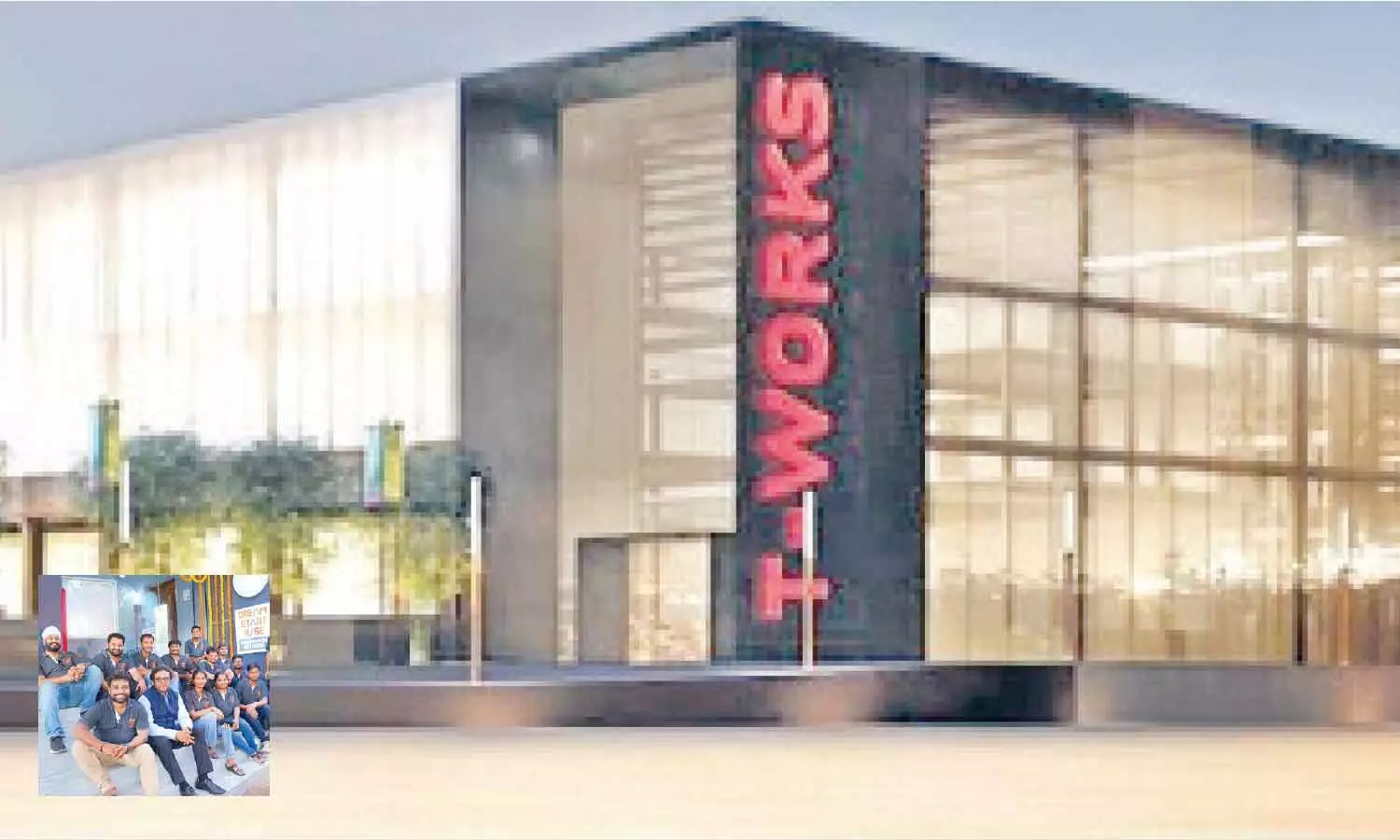
Karimnagar: A hands-on learning initiative in Manthani, Telangana, is giving school students an opportunity to explore technology, design and problem-solving beyond the traditional classroom. Through the Dream. Start. Rise. initiative, T Works Foundation is extending its maker ecosystem to rural students and teachers, encouraging them to identify local problems, develop ideas and build working prototypes.
The first Dream. Start. Rise. Centre was launched in Manthani on May 26, 2025, with the support of the Telangana Government. The centre has been designed as a practical learning space where students can work with tools and technologies such as 3D printers, laser cutters and electronics equipment.
Learning by identifying problems
At the centre, students follow a curriculum called “Mindset of a Maker”. The approach takes them through a process of understanding a problem, exploring possible solutions, building a prototype, testing it and making improvements.
During its first nine months, the initiative involved more than 1,800 students from over 20 schools and around 200 teachers. More than 300 sessions were conducted, accounting for over 650 hours of training. According to figures shared by the organisation, students developed more than 90 innovations and participated in over 130 opportunities and 10 industry studies.
The numbers are organisation-reported and are not independently audited, but they indicate the scale of the programme’s early reach.
The focus is not only on teaching students how to use equipment. It is also on helping them observe challenges in their surroundings and think about how technology and design could be used to address them.
From local concerns to prototypes
Several student projects have emerged from this approach. Aqua Field Bottle explores portable water filtration for field workers, while Navi Sense focuses on obstacle detection for people with visual impairments. GauTrack combines GPS technology with cattle health monitoring.
Other projects address issues closer to the students’ everyday environment. Pure Flow RO Reuse looks at ways of reusing wastewater generated by school reverse-osmosis systems. Waste Wise School focuses on waste segregation, while Straw2Sustain explores the use of paddy straw. Vedic Clay Back examines the reuse of clay from immersed Vinayaka idols.
Students have also experimented with discarded materials, including eggshells, waste paper and old flex banners. Projects such as Ghat Drape and Pad Shakti address public bathing spaces and access to affordable sanitary pads, respectively. Holycoco explores the conversion of temple coconut waste into cleaning products.
These projects are at different stages of development and should not necessarily be viewed as market-ready products. Their immediate educational value lies in helping students identify problems, test ideas and learn from the process of developing solutions.
Connecting classroom learning with industry
The initiative also gives students exposure to entrepreneurs, professionals and working technologies. At an Innovation Expo held in February 2026, more than 20 student innovations were showcased alongside startups and other organisations. The event brought together around 100 young innovators and 10 startups working across areas including water technology, sustainability, sanitation, agriculture, deep technology and the circular economy.
Students were able to see how ideas developed in a learning environment connect with real-world applications. Startups participating in the expo included organisations working on water purification and monitoring, wastewater treatment, robotic waste collection, precision agriculture, agricultural-waste products, public sanitation and extended-reality technologies.
This interaction can help students understand that innovation involves more than producing an idea. It requires testing, iteration, collaboration and an understanding of the needs of the people who may eventually use a solution.
Exposure beyond the classroom
The Manthani centre has also attracted visitors from the development and education sectors. During a visit to the centre, JICA India Chief Representative Takuro Takeuchi interacted with government school students and teachers and viewed student prototypes related to sanitation, waste management and agriculture.
For teachers, the programme provides exposure to activity-based approaches that can complement conventional classroom instruction. For students, it creates an opportunity to work with tools, collaborate with peers and apply concepts through practical projects. The broader aim of Dream. Start. Rise. is to make hands-on innovation opportunities accessible beyond major urban centres.
By placing a maker space within reach of government school students in a rural constituency, the initiative is attempting to connect classroom education with practical problem-solving.
As the programme develops, its long-term impact will depend not only on the number of students trained or prototypes created, but also on whether students continue to apply these skills in their education and future careers.
For now, the Manthani experience offers an example of how experiential learning can encourage students to look at familiar problems differently and begin building solutions of their own.


