After The Gates Close: The Lives Left Behind By Industrial Shutdowns

Discover how Thoothukudi's Sterlite closure erased 30K jobs, shattered supply chains, and made India copper-import dependent—exposing the human cost of industrial shutdowns without transition plans.
At 6 am every morning, Ravi still rides past the harbour road in Thoothukudi, though he no longer has a shift to report for. Until a few years ago, he supervised crane operations at the Sterlite Copper facility nearby. The job paid well, demanded technical skill and offered something increasingly rare in small-town India: stability. Today, Ravi spends his mornings scanning notice boards and calling old contacts. By afternoon, he helps a relative run a small tea stall. The income is irregular, the work informal, and the future uncertain. “I didn’t lose just a job,” he says. “I lost a profession.”
Ravi’s story is not an exception, nor is it confined to one factory, one industry or one state. It reflects a wider pattern that emerges whenever large industrial ecosystems are dismantled without a transition plan—quietly, unevenly and largely out of public view.
In India’s debates around development, industrialisation is often discussed in abstractions: investment figures, GDP ratios, emissions benchmarks and court rulings. But the true impact of an industrial decision is felt far more intimately. It accumulates through skilled workers slipping into informal labour, supply chains breaking apart and towns struggling to replace economic anchors that took decades to build. Administrative orders may close gates overnight, but their consequences ripple outward for years—into homes, farms and local economies.
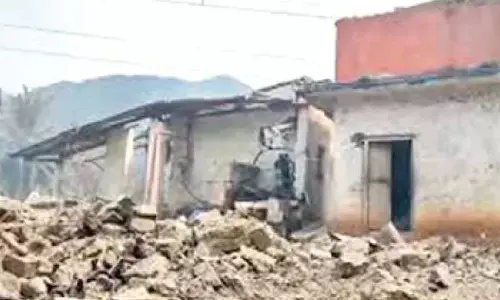
Few places illustrate this disconnect between decision and consequence more starkly than Thoothukudi.After the copper smelting facility shut down in 2018, what followed received far less attention. The closure triggered the slow unravelling of an entire economic ecosystem. Contractors lost long-term work. Transporters sold their vehicles. Vendors shut shop. Skilled workers, trained over years, found themselves competing for daily-wage jobs.
“I earned ₹45,000–₹50,000 a month earlier. Now I barely make ₹500–₹700 a day. Life has moved on. Nobody waits this many years hoping for reopening.”
That single sentence captures the cost of industrial absence better than any macroeconomic chart.
What often goes missing in debates about industrial closures is the scale of indirect dependence. Large plants do not exist in isolation. They anchor transport networks, maintenance services, chemical suppliers, small eateries, fertiliser units and port-linked logistics. Estimates suggest that close to 30,000 direct and indirect jobs vanished. Around 400 downstream businesses were affected, touching nearly a lakh livelihoods.
“Supervisors who once earned ₹30,000–₹40,000 were offered ₹8,000 outside,” says G. Mahendran, who managed logistics operations earlier. “At that income, you cannot run a family. People pledged jewellery, sold land, pulled children out of private schools.”
These are not collateral effects. The circular local economy was broken, replaced by longer supply chains, higher costs and economic fragility. But the impact of the shutdown did not remain local. It reshaped national supply chains as well. Before its closure, the plant produced over a third of India’s refined copper and helped make the country a net exporter. Its shutdown pushed India into import dependence almost overnight.
Today, India imports more than 40% of its copper requirements even as demand surges. Copper is no longer just an industrial metal; it is the backbone of the energy transition. Electric vehicles, renewable energy grids, data centres, charging infrastructure and defence electronics all rely on it. China controls nearly 70% of global copper refining capacity. In an era of geopolitical uncertainty, this dependence is not merely economic—it is strategic.
Elsewhere, the global copper industry has not stood still. Refineries in Europe, Japan and Canada now operate with near-total sulphur capture, zero liquid discharge, real-time emissions disclosure and circular waste systems. Technology has advanced. Regulation has matured. India’s conversation, however, remains frozen at the moment of shutdown.
Opposing an industrial facility is easy. Replacing what it sustains is not. The closure of an industrial facility creates a vacuum—one that, in places like Thoothukudi, has been filled by underemployment, migration and insecurity.
Across the world, industrial economies facing similar tensions have responded not by dismantling capacity, but by reinventing it. Copper producers in Europe, East Asia and the Americas have adopted closed-loop water systems, near-total sulphurcapture, real-time emissions disclosure and circular waste management. Community oversight mechanisms and third-party audits are increasingly standard practice.
As India charts its path toward a manufacturing- and energy-transition-led future, these experiences merit careful reflection. Sustainable industrialisation is not merely possible; it is necessary. The challenge lies in designing frameworks where economic growth, environmental responsibility and community trust reinforce one another—rather than being forced into opposition.
This article is authored by Dr. Suvrokamal Dutta, an acclaimed International Conservative Political Economic and Foreign Policy Expert.