Firecracker units across AP flout rules brazenly

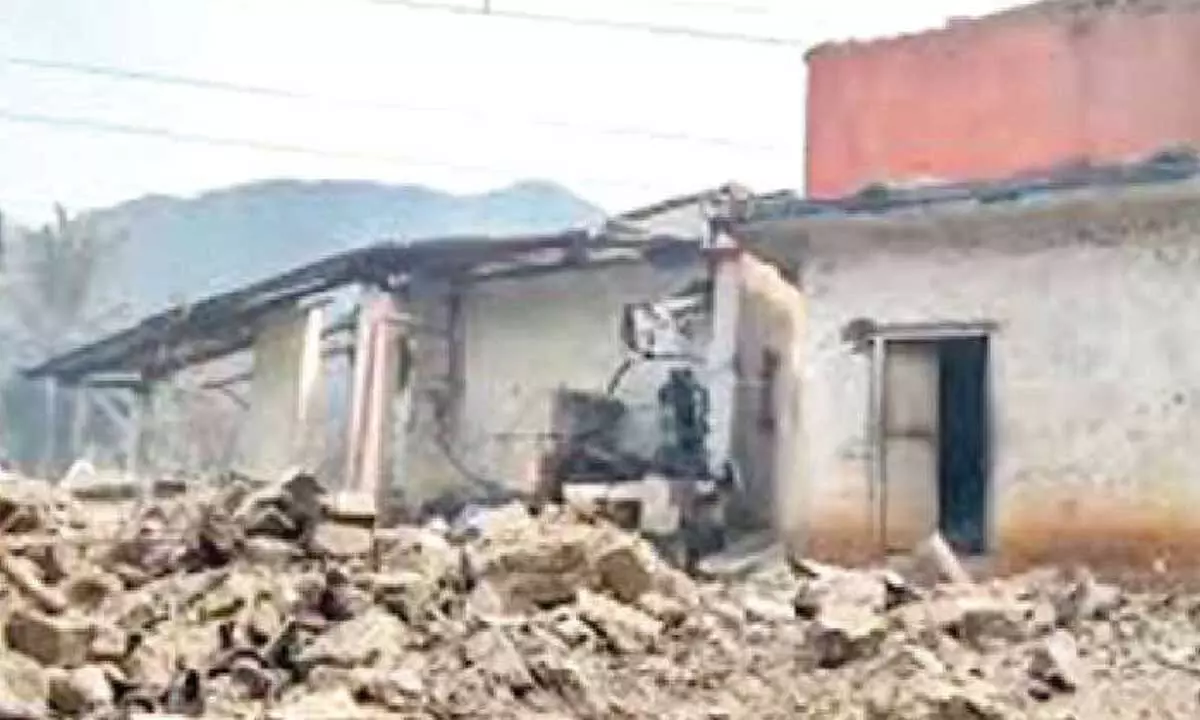
RAJAMAHENDRAVARAM: The silence in the agricultural fields of Vetlapalem is sombre, no longer serene; the air is heavy and redolent of chemicals, having borne the weight of a tragedy that has shaken the conscience of Andhra Pradesh. The death toll in the recent explosion at Surya Sri Fire Works in Vetlapalem village has gone up to 26 lives, rising steadily as workers succumb to severe burns in hospitals. What was meant to be their workplace turned into a death trap, casting a macabre shadow over many of the state’s firecracker manufacturing hubs.
In the aftermath of the blast, shocking details of negligence have begun to emerge. Survivors undergoing treatment revealed that the unit was not just using traditional materials but was handling high-intensity chemicals to manufacture loud, explosive bombs. On the day of the disaster, nearly 150 kilograms of explosive material was reportedly stocked on the premises, far exceeding safe limits. Furthermore, while the unit had permission to engage only eight workers at a time, more than 40 were present at the unit when the fire broke out.
The human element in the cause of this disaster is perhaps the most painful. Among the victims was 39-year-old Lovaraju, a father of three who had been working in the unit for three years. His wife, Bujji, shared a heart-breaking account of their struggle. "He went to work there because there was no agricultural work or other livelihood to support our family. Our daughter is pregnant and we had just brought her home for the delivery, and now this tragedy has happened," she said, while mourning her husband.
This incident is not an isolated one. Data suggests that close to 100 people have died in firecracker-related explosions across state in the past decade, averaging 10 deaths annually. Major blasts in areas like Tadepalligudem, Amalapuram, Anakapalli, and Rayavaram highlight a pattern of blatant violations. Although provisions in the Explosives Act of 1908 mandate approvals from the Revenue, Fire, and Police departments, many of the units continue to operate in unauthorised sheds pitched in interior fields with limited road access, making it nearly impossible for ambulances to reach them in time.
Industrial safety experts and legal advocates point to a systemic failure in worker protection. Rajamahendravaram-based advocate G. Srinivas observed that insurance implementation remains weak, while personality trainer Darapu Nagireddy commented: "Workers handling volatile chemicals must be trained in fire control and provided with accessible firefighting equipment. Currently, about 90 per cent of these workers are registered as agricultural labourers, leaving them without any formal occupational safeguards or protective gear”.
Safety norms under the Explosives Act 1908 require the units to obtain approvals from various departments, including Revenue, Fire Services, Police, and the Pollution Control Board, before commencing operations. Explosive materials are classified from Hazard Type 1 to Hazard Type 4, with HT1 being the most powerful. Firecrackers are generally categorised under HT4, yet reports suggest that higher intensity materials are sometimes handled within these units, escalating the risk.
Labour Minister Vasanamsetty Subhash recently stated that 488 firecracker manufacturing units are officially operating across the State. However, unofficial estimates suggest that the number of unauthorised units could be significantly higher. In the erstwhile East Godavari region alone, over 200 units are believed to be functioning, employing nearly 10,000 workers. Around 90 per cent of them are reportedly registered as agricultural or daily wage labourers, leaving them without adequate occupational safeguards.
Manufacturers, however, argue that the seasonal nature of the industry makes it difficult for them to comply with year-round industrial norms. Subba Rao, a manufacturer from Peddapuram, expressed his concerns regarding the government's stance. "Firecracker manufacturing and sales happens seasonally. It is not right to apply the same rules as other products. While we intend to follow safety measures, it is painful that the attitude remains as if only owners are at fault when an accident occurs," he remarked.
The state government has taken a serious view of the Vetlapalem disaster, which Collector Shan Mohan described as “a blow to the district's prestige”. In a swift move, the government suspended four key officials, including a DSP and a Fire officer, for enforcement lapses.
Chief Minister N. Chandrababu Naidu has issued a stern warning that properties of erring traders could be attached to compensate victims.
While enforcement agencies have intensified surprise checks and seized illegal crackers worth lakhs in districts like Eluru and Konaseema, public sentiment remains skeptical. The consensus among citizens is that post-accident crackdowns are a temporary fix. Unless the scrutiny at the licensing stage becomes uncompromising and periodic inspections are conducted with integrity, the glow occasioned by the firecracker industry during festivities will continue to be overshadowed by the smoke of funeral pyres.