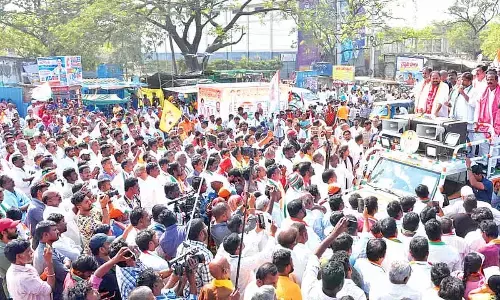
Reaching out to women pays at the hustings

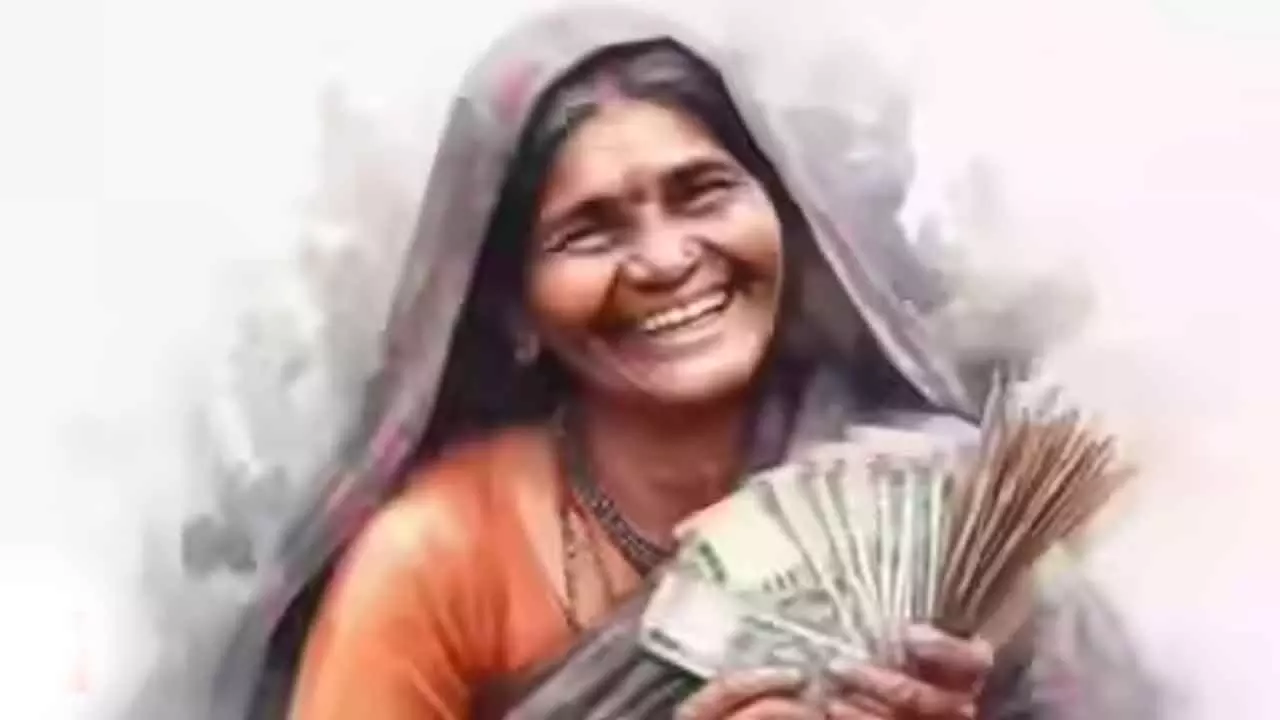
It is a trend that is catching up thick and fast as it comes as a blessing in disguise for women across segments, especially the economically marginalised sections. This transformative measure has propelled India’s status as one of the world’s largest and least-studied social-policy experiments.
The cash transfers scheme was set rolling in Goa, when it launched an unconditional cash transfer scheme to women in 2013. Seeing the positives that could be gained by political parties, other state governments followed suit. Ironically, there was no uniformity in earmarking of funds. The importance of this scheme came to the fore during the Covid-hit crisis. Assam launched its own version for the benefit of vulnerable women in 2020. Interestingly, this has been classified as ‘cash transfers to women for unpaid household work’.
The monthly transfer amount could be between Rs 1,000 and Rs 2,500. The intention of the government is to ensure that families can purchase nutritious food, and their children can be enrolled in schools, apart from managing other essential requirements. This will translate into improved health and education for children from the lower strata or so goes the argument. A bigger relief is that the beneficiaries need not run from pillar to post to get the money as the amount is transferred directly to women who have bank accounts. As per statistics, over 300 million Indian women from the vulnerable category have bank accounts and they are eligible to benefit from cash transfers.
However, the ground-level implementation shows that across India, around 118 million adult women drawn from 12 states are currently receiving unconditional cash transfers from their respective governments, which has made it one of the world’s largest and least-studied social-policy experiments. In an interesting survey finding, globally women were found to perform three-quarters of unpaid care work. On average, the annual figure shows that women slog for 201 working days and the men a modest 63 working days.
Another facet to the women eligibility and their availing the benefits is that while almost 90 per cent of women in West Bengal handled their accounts on their own, nearly 30 per cent women in Maharashtra failed to register their candidatures due to documentation or because some of them did not need the support as they were ‘self-sufficient’. These facts were substantiated by an extensive survey taken up this year.
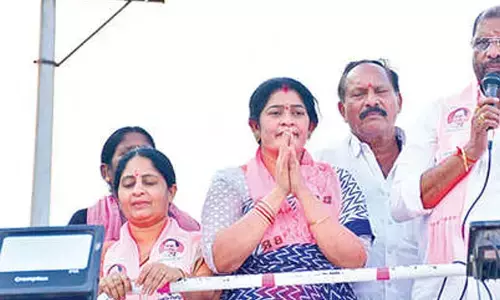
Amid all these developments, one must not forget that Indians are, by and large, accustomed to reaping the benefits of various welfare schemes and subsidies, which explains the unwillingness of many people to take up jobs despite ample availability. Realising that the cash transfer scheme will hit the right chord vis-à-vis the electorate and significantly swell their voter base, almost every political leader, particularly from the ruling party, dangles it before the gullible women voters.
To cite an example, just ahead of the Bihar Assembly elections, the government transferred Rs 10,000 to an overwhelming 7.5 million women’s bank accounts. Not surprisingly, women voters outnumbered men by a distance. A similar appeasement can be seen across states, with the respective dominant parties doing it with an eye on winning elections. Call it by any name, the plain truth is that the cash transfer scheme is an electoral ploy that brings in dividends because there is a sizable turnout of female voters in any election. And that is the clincher.