Op Sindoor debate: More heat and dust than light

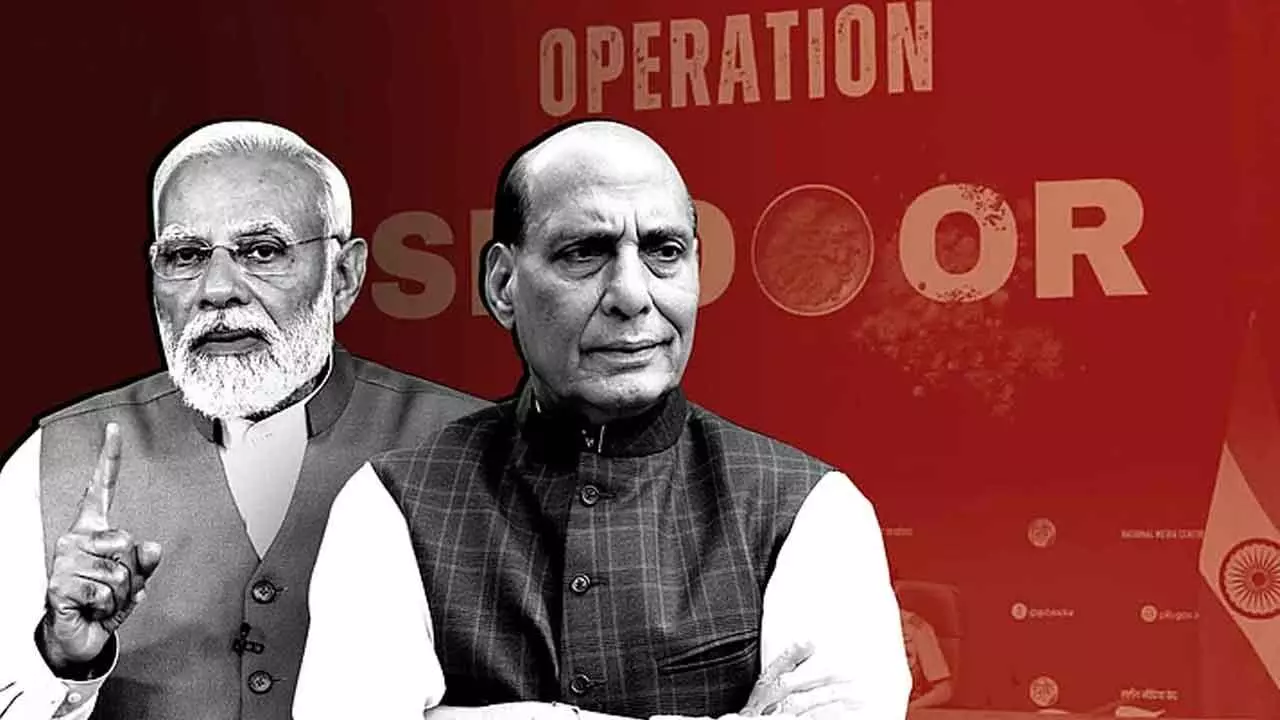
The parliamentary debate over Operation Sindoor, launched in response to the Pahalgam terror attack, was marked less by genuine deliberation and more by a disheartening display of petty politicking. Both the treasury benches and the Opposition were more interested in promoting political narratives that aligned with their interests than in confronting the complex realities surrounding the operation, its military dimensions, and its broader national implications.
The attack in Pahalgam was a grim reminder of the persistent threat India faces from cross-border terrorism. It demanded a thoughtful and unified political response. Instead, what unfolded in Parliament was a spectacle in which politicians from all sides sought to score points.
The ruling party, led by Prime Minister Narendra Modi, appeared more focused on defending its decisions than on explaining them. When questioned about the sudden cessation of military action, government representatives offered ambiguous and unconvincing replies.
A significant point of contention was whether the ceasefire—announced shortly after Indian forces appeared to have gained the upper hand—was influenced by external pressure, particularly from then-US President Donald Trump. The government categorically denied this, yet failed to provide a clear and credible rationale for the abrupt halt in operations.
This lack of transparency has left a lingering sense of confusion and mistrust. Why stop military action when momentum was on our side? If the ceasefire was a strategic choice, what were the broader diplomatic or security calculations behind it? These are valid questions that need to be answered, especially by the Prime Minister, who has consistently positioned himself as a strong leader in matters of national security. Yet, the response from the ruling party was defensive and evasive—an opportunity for meaningful engagement was lost.
On the other side of the aisle, Congress leader Rahul Gandhi offered a scathing critique of the Modi government’s handling of the situation, focusing on lapses in intelligence, decision-making, and communication. While some of these criticisms were substantive, his refusal to acknowledge the commendable military response mounted during the later stages of the 88-hour conflict was deeply disappointing.
By refusing to accept the Modi government’s role in ensuring military preparedness, Gandhi missed a crucial opportunity to rise above partisan politics and demonstrate statesmanship.
In moments of national crisis, political unity—at least on matters of defence and security—is not only desirable but a sine qua non. The inability of key Opposition figures to offer even measured praise to military preparedness reflects a troubling trend in Indian politics, where partisanship routinely trumps patriotism.
What the debate over Operation Sindoor ultimately reveals is that India’s political leadership is still struggling to strike a balance between partisan gains and the national interest. Criticism of the government is entirely valid—indeed, necessary in a vibrant democracy.
But such criticism must be grounded in facts, aimed at improvement, and free from the corrosive influence of electoral compulsions. Similarly, those in power must learn to engage with uncomfortable questions, not deflect them through rhetorical flourishes or indulge in whataboutery.
India deserves better from its elected representatives—leaders who are not only politically astute but also morally courageous, willing to put the national interest above party lines, especially during times of crisis. If Operation Sindoor taught us anything, it is that unity and clarity in purpose must accompany strength in action.