




- Andhra Pradesh Government sanctions Rs 59.73 cr for Pushkar arrangements
- Make Indrakeeladri Dasara festivities a grand success: CM Chandrababu Naidu
- Dasara festivities begin at Kanaka Durga temple in Vijayawada
- Guntur Municipal Corporation to conduct PGRS today
- AP Special TET begins
- Chiranjeevi lauds AP’s development
- Police gear up with advanced protective equipment for peaceful polls
- Anantapur: MP lays foundation for CC road under ‘Palle Panduga’ programme
Govt must engage with protesters, not suppress them
In Short
Massive crackdowns on CJP protests over alleged electoral irregularities erode India's democratic image. Dissent must be met with transparency, not repression.

Share :
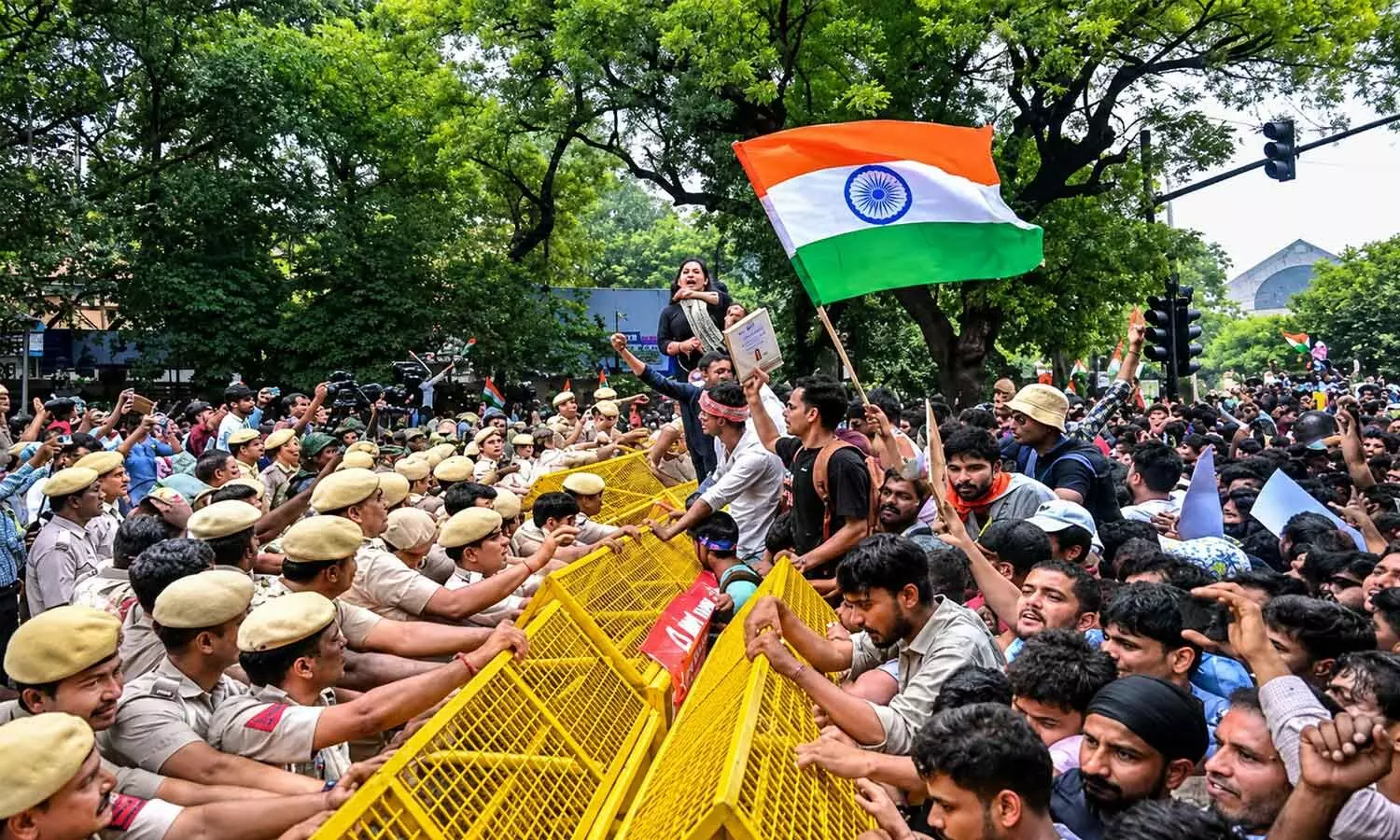
Govt must engage with protesters, not suppress them
The government may have succeeded in checking the Cockroach Janta Party’s (CJP’s) protests of alleged electoral roll irregularities until Chief Election Commissioner Gyanesh Kumar goes, but it has lost moral authority. The massive police deployment, shutting down of dozens of Delhi Metro stations, cancellation of hundreds of trains, shutting down of the internet, detention of thousands of protesters, including CJP top leadership, four former chief ministers - the Aam Aadmi Party’s Arvind Kejriwal, Trinamool Congress founder Mamata Banerjee, and the Left’s Pinarayi Vijayan and Manik Sarkar - all these repressive measures further darken the already dismal record of the Narendra Modi regime on civil liberties and human rights.
Nothing on the record shows that anything in the CJP’s earlier protest was illegal. When it led a similar struggle against the then education minister Dharmendra Pradhan a few months ago, its leaders and activists were not involved in any violence. The government has dragged itself into a quagmire, drawing flak from various quarters, including global attention. UN Human Rights spokesperson Thameen Al-Kheetan urged New Delhi to respect the right to peaceful assembly, exercise restraint in handling protesters, and ensure that restrictions on demonstrations met strict tests of necessity and proportionality.
A student organisation at the Harvard Kennedy School expressed solidarity with Gen Z against Gyanesh Kumar. The remarks from the UN, which is frequently accused of anti-Semitism, are gratuitous. Our foreign office has slammed these remarks, saying, “India is the world’s largest democracy, where the right to peaceful assembly is guaranteed by our Constitution and safeguarded by robust institutions, an independent judiciary, and a free media.” That’s right, but the government must ensure that the world’s largest democracy also looks like one.
Its ham-handed and unseemly measures have raised genuine concerns about the functionality of democracy, for elections occasionally cannot be the sole marker of functionality—especially when even the fairness of polls is unprecedentedly under a cloud of suspicion. This was the reason that the Supreme Court decided to hear a plea on Sunday seeking contempt proceedings against Union Home Secretary Govind Mohan, Delhi Police Commissioner Anurag Kumar, and Delhi Metro Rail Corporation Chairperson D Thara for allegedly violating its October 9 direction on keeping Metro and train services running during protests in the capital.
In a setback to the government’s stand, the apex court ordered normal Metro services, internet restoration, and free public movement amid CJP protests. Further, a Delhi executive magistrate court released CJP leaders. With condemnation mounting over the government’s disproportionate response to the protest, it is better advised to scale down repressive measures and allow the agitators to exercise their democratic right to protest. Dissent is not a threat to democracy; suppressing it is.
If allegations of electoral irregularities are unfounded, the authorities should address them through transparent explanations and credible evidence rather than coercive action. Indeed, the more forcefully the government seeks to silence its critics, the greater the suspicion it generates about the issues they have raised. The government should engage with the protesters, ensure the restoration of normal public life, and investigate allegations of excessive police action. Democratic legitimacy is earned through restraint, not intimidation.
Govt must engage with protesters, not suppress them
FM Sitharaman holds talks with top bankers on cross-border financial flows
PM Modi urges students to dream big, help build a developed India by 2047
JP Nadda targets Sukhu govt over governance, healthcare projects
‘India is moving forward with the dream of hosting 2036 Olympics’: PM Modi
Bihar CM inspects construction work of Patna Metro at Nehru Path; two foot-overbridges to be built


