Jassper Shipping’s Roadmap to Rs.1,800 Crore: Driving Growth Through EV-Enabled Logistics by FY30


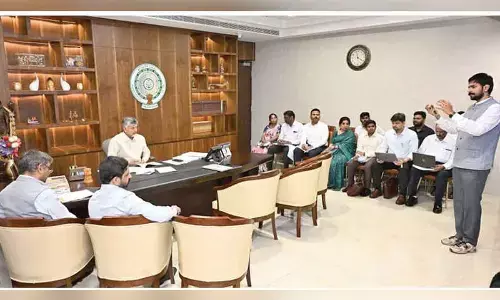
EV Fleet Logistics with Pushpank Kaushik, CEO &Head of Business Development, Jassper Shipping and his team
With the rise of EV logistics, digital technologies, and sustainability options, India’s logistics industry is undergoing a major transformation.
Hyderabad (Telangana) [India]: With the rise of EV logistics, digital technologies, and sustainability options, India’s logistics industry is undergoing a major transformation. India’s logistics industry was valued at USD 228.4 billion in 2024 and is expected to reach USD 357.3 billion by 2030. The sector is constantly growing at a rapid pace, and now it is facing the challenge of reducing carbon emissions. EV fleets are standing out in this challenge; they operate at 15-20% lower cost per kilometre compared to diesel vehicles. With the shift in industry, businesses are looking for more efficient and sustainable transportation options.
Industry landscape
The financial aspect of the industry is one of the leading drivers in the shift towards EVs. In urban areas, the demand for two-and three-wheeled vehicles is already rising. They are becoming more popular with the change in the industry, which shows the industry trend. Amid this industry transformation, Jassper Shipping has created a bold roadmap to reach ₹1,800 crore in revenue by FY30, based on a three-part strategy.
The three pillars of the three-part strategy are:
• Integrating Electric Vehicle (EV) logistics across its operations.
• Adaptation of digital technology to enhance operational efficiency,
• Building strong partnerships in various sectors, energy, finance, and charging infrastructure, strengthen ecosystem synergy and accelerate sustainable growth.
As EV logistics becomes an advantage in the competitive industry, Jassper Shipping is focused on evolving more into a sustainable, tech-driven supply chain player. As the industry pivots towards green and sustainable operations, government initiatives like PM E-Drive are promoting companies like Jassper towards sustainable practices.
The PM E-Drive initiative launched with a total budget of around ₹10,900 crore in September 2024. It was focused on promoting EV adoption in the commercial sector and building charging stations. The initiative focused on public charging infrastructure and stricter production conformity (COP) compliance. The government also coordinated various programs like PLI, state EV policies, and manufacturing incentives aimed at boosting domestic production in the EV sector.
Strategic Pillars - Jassper’s Roadmap to ₹1,800 crore
Jassper Shipping is focused on introducing electrification, starting with e-2W and e-3W vehicles for urban cities, and last-mile operation. To make it effective and affordable, the company will look at battery swapping, leasing, or subscription methods. Jassper Shipping plans to work with charging point operators (CPOs) and renewable energy firms to ensure a steady supply. They are utilising their electrified fleet to implement AI and machine learning-based route optimisation systems that adjust to traffic, load, and battery status. A real-time dashboard will help track the vehicle usage, battery condition, and energy consumption. The company will integrate sustainability into its core operations. By FY30, Jasper Shipping is focused on drastically reducing its carbon footprint.
“At Jassper Shipping, we believe the future of the logistics industry lies in sustainable energy and advanced technology.” Pushpank Kaushik, CEO & Head of Business Development at Jassper Shipping, said, “Our focus is not only to shift and transport goods but to take the industry forward efficiently and responsibly. The shift to EV logistics is not based on growth; it is based on the foundation to build sustainable next-generation supply chains and efficient advanced operations.”
Key Challenges and Risk Mitigation
• Battery supply & cost: The price of the raw materials required for batteries, such as nickel, cobalt, and lithium, fluctuates based on the global supply chain. Jasper plans to diversify its source by collaborating with multiple suppliers and manufacturers.
• Driver Readiness and Maintenance Skills: Operating EVs requires a skillset from driver to technician. To make this transition, Jassper Shipping will conduct training programs, hands-on training and telematics-based dashboards to support driver performance.
• Capital Intensity & Funding: EV Fleets require a higher cost in building and operations. Jasper will seek a variety of funding sources, like green or ESG-linked loans, grants, or public-private partnerships.
Jassper Shipping’s goal of reaching ₹1,800 crore by FY30 is based on a data-driven, realistic approach with an ambitious vision. With the rise of EV adoption, leveraging favourable policies, building strategic partnerships, Jassper Shipping is ready to evolve the traditional maritime operation into a modern tech-forward green logistics leader. For more information, please visit: https://www.jasspershipping.com/