






‘UP Ke Ladke’ at War: SP-Congress Rift Deepens
In Short
The SP initially maintained that it would not concede more than 23 seats to the Congress.

Share :
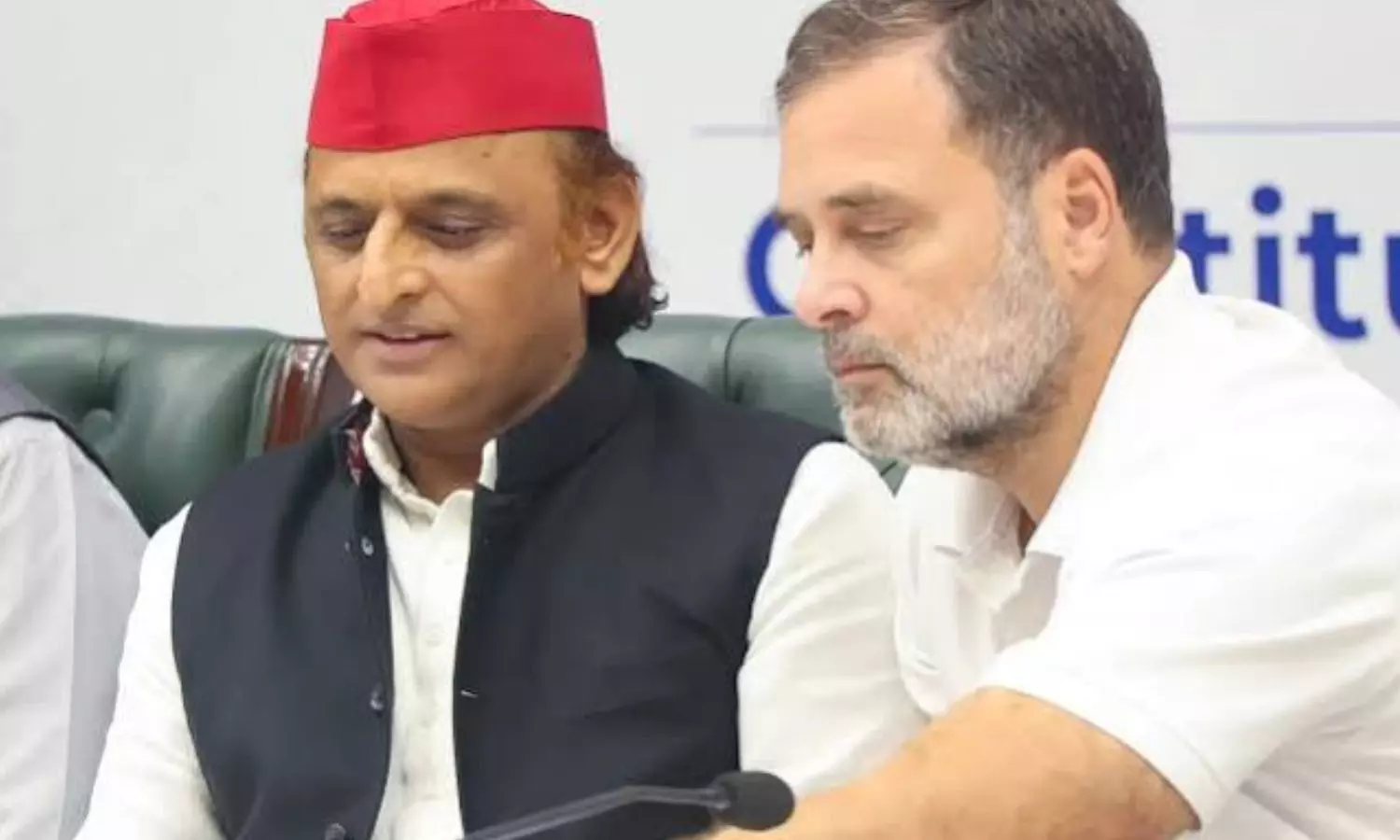
SP initially maintained that it would not concede more than 23 seats to the Congress.
All is not well between the Samajwadi Party (SP) and the Congress. Seat-sharing talks between the two parties, led by the two ‘UP Ke Ladke’ (Men of UP), appear to be getting increasingly tangled, with the negotiations turning into a clash between electoral pragmatism and bruised egos. The SP, led by Akhilesh Yadav, announced a list of five candidates even before the talks could be finalised.
The SP initially maintained that it would not concede more than 23 seats to the Congress. However, it is now learnt to be willing to offer a maximum of 52 seats. Of these, only one Assembly seat under the Amethi Lok Sabha constituency could reportedly be given to the Congress, while no seat under the Rae Bareli Lok Sabha constituency would be left for the party.
Of the five seats for which the SP announced candidates in a surprise move, four are currently held by its sitting MLAs — Ashu Malik from Saharanpur, Nahid Hasan from Kairana, Umar Ali Khan from Behat and Mehboob Ali from Amroha. All four constituencies are in western Uttar Pradesh, where the SP expects a challenge not only from the BJP and its ally, the RLD, but also from the recently floated Samajik Parivartan Morcha, associated with AIMIM leader Asaduddin Owaisi and Aazad Samaj Party (Kanshi Ram) chief Chandrashekhar Azad.
The fifth candidate is Jyoti Lodhi, who will contest from Lalitpur in Bundelkhand.
By announcing candidates for five seats, including four represented by its sitting MLAs, the SP has made it clear that it may not be willing to part with constituencies it already holds. The move has evidently upset the Congress, which has termed the announcement contrary to the principles of an alliance.
Hurt by what it described as a unilateral decision, Working President of the Uttar Pradesh Congress Committee (UPCC) Imran Masood said the party was not a beggar and would not accept the SP treating it as a subordinate partner or positioning itself as the big brother. The Congress is an ally, not a party that can be dictated to, he asserted.
Masood also pointed out that the SP had announced on its own that it would offer just 26 seats to the Congress. “We never asked you for 26 seats,” he said, warning that such unilateral announcements would adversely affect the ongoing negotiations.
The SP, however, believes that the Congress is seeking around 131 seats, apparently basing its claim on its electoral strength in 1989. The party argues that the Congress has been out of power in Uttar Pradesh for nearly 37 years and that its performance in the last two or three elections has hardly justified such a demand.
The SP has also cited the Bihar experience, arguing that it cannot afford to repeat what it considers a mistake there, where 45 seats were allotted to the Congress, which subsequently lost most of them, contributing to the alliance's poor performance.
The SP maintains that ego should not come in the way of negotiations and that winnability must be the sole criterion for deciding seat-sharing arrangements.
But Masood was quick to hit back, questioning the seriousness of the alliance and asserting that it must first be made clear whether the political battle is against the BJP or the Congress. Announcing candidates while seat-sharing discussions are still underway, he said, raises serious doubts about the SP's commitment to the alliance.
Taking another swipe at the SP, Masood said the Congress would not stand in the way of the regional party pursuing its own political course.
Questioning the intentions of its ally, Masood said: “I do not understand whether you want to fight me, the Congress or the BJP. It needs to be decided whether we want to fight the BJP or fight among ourselves.”
“Where is the alliance? If you are behaving like this, then where is the alliance? I simply do not understand this approach. You say one thing here, while something entirely different happens elsewhere,” he added.
Masood said the issue would be discussed within the party and a decision taken on the future course of action.
“Rahul Gandhi will come, Priyanka Gandhi will come, and whatever instructions our leadership gives us, we have to follow them. The SP's announcement makes no difference to us. However, it must definitely be decided whether the fight is against the BJP or against the Congress,” he said.
SP chief Akhilesh Yadav, in a post on X, said the best approach, one that could yield the most positive results, would be to field candidates as “PDA candidates”.
SP veteran Shivpal Yadav sought to play down the controversy, saying, “The alliance will remain; everything will be sorted out.” Another SP leader, Udai Veer Singh, too dismissed the controversy, pointing out that the party had announced candidates only in constituencies held by the SP in the 2022 Uttar Pradesh Assembly elections.
He said the arrangement was similar to the one followed during the 2024 Lok Sabha elections, when the SP gradually announced candidates even as seat-sharing talks were underway. That arrangement had worked successfully, he maintained.
Meanwhile, the Congress has decided to organise a rally in Lucknow on Constitution Day, which will be addressed by AICC president Mallikarjun Kharge.
In a poetic retort apparently aimed at those questioning his political standing, Masood added: “Unko acchi nahi lagti bulandi meri, unko shayad meri parwaaz bahut khalti hai.” (They cannot stand my rise; perhaps my flight troubles them.)


