






- Sikh BJP leaders 'proud' of PM Modi's visit to Gurdwara in Manila
- India's horticulture output estimated to rise 4.36 pc to record 3,869 lakh tonnes in 2025-26
- Suriya’s Scene Crosses ₹260 Crores Worldwide In Just 10 Days
- INS Sahyadri and Japan's JS Ise participate in maritime exercise
- OpenAI Rolls Out New AI Tools to Detect CSAM on ChatGPT
- Chennai corporation plans upgrade of 753 roads, seeks consultants for quality checks
- 184 women incorrectly declared dead in govt records denied Gruha Lakshmi benefits, claims Karnataka BJP
- JPMorgan Chase Software Bug Disrupts Banking Services Across US
Tough Bargaining Over UP Assembly Seats Between SP-Congress and BJP Allies
In Short
The two leaders Rahul Gandhi and SP chief Akhilesh Yadav were supposed to meet today and discuss the issue.

Share :
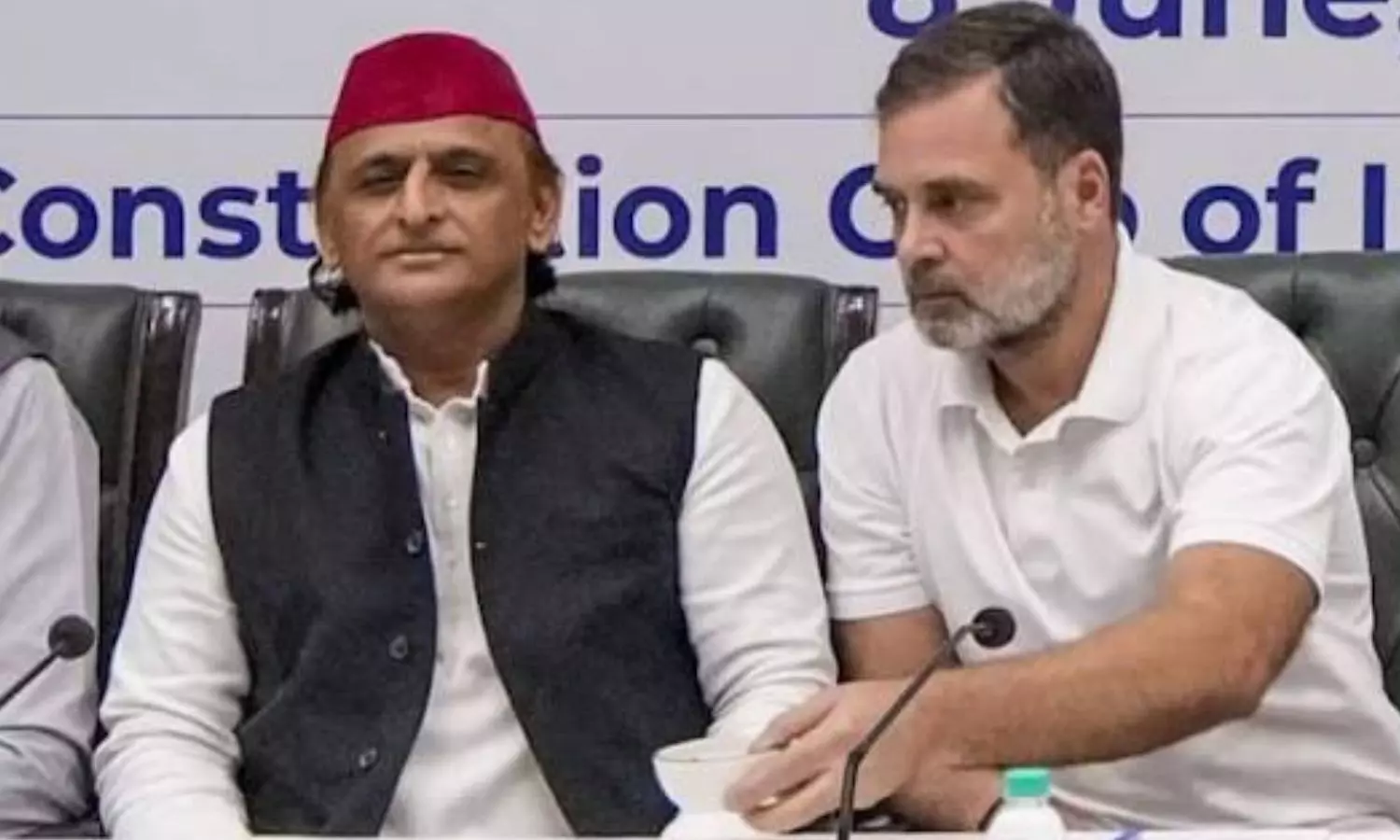
Will the seat-sharing process in Uttar Pradesh be smooth
Will the seat-sharing process in Uttar Pradesh be smooth? According to the Samajwadi Party, there are several issues that need to be finalised.
The two leaders Rahul Gandhi and SP chief Akhilesh Yadav were supposed to meet today and discuss the issue. In fact a draft list was also submitted to Akhilesh during the meeting between the two at a function that was held on Monday to launch the memoirs of Sonia Gandhi. But Akhilesh reportedly suggested that they meet next week.
These two leaders are expected to have a two- or three-day meeting from November 23 to give shape to the issue of seat sharing. The Congress it is said, wants around 180 seats, but the SP chief feels that the main criteria should be winnability.
The draft list of the Congress Party, according to sources had wants all Assembly seats in the six Lok Sabha constituencies. Amethi, Rae Bareli, Allahabad, Barabanki, Sitapur and Saharanpur.
The Samajwadi Party, on the other hand, is of the view that it should give tickets to most of the sitting MLAs.
On the other hand, the BJP team led by Union Home Minister Amit Shah is holding parleys with four of its main allies on the seat-sharing issue. The Lok Jan Shakti Party headed by another Union Minister Chirag Paswan is seeking a larger share, and in the recent past he had even said if no understanding is arrived at, he would contest all the 400 seats.
The BJP, it is said, is of the view that it should leave about 70 to 100 seats to its allies. The Rashtriya Lok Dal, headed by Jayant Chaudhary, who leads the Jat community in western UP, is seeking around 35 seats; the Nishad Party, which represents the fishermen community, is hoping to get around 36 seats, and Apna Dal is also seeking a larger share.
Amid this scenario, the campaign in UP is turning more and more into personal allegations.
Samajwadi Party Chief Akhilesh Yadav on Tuesday criticised Uttar Pradesh Deputy Chief Minister Keshav Prasad Maurya for demanding a Shri Krishna Janmabhoomi temple in Mathura, framing the issue as a key plank for the 2027 assembly elections.
Reacting to Maurya's slogan, "Ayodhya hui hamari hai, ab Mathura ki baari hai (Ayodhya has become ours; now it's Mathura's turn)", Yadav termed him "farzi admi" (fake person), alleging he lacked knowledge of religious rituals and devotional songs.
"He (Maurya) doesn't know any hymns and does not perform any rituals and is a fake person," Yadav said.
Yadav also referred to an alleged case of Maurya involving forged receipts and collection of donations for a 'Devi Jagran', claiming that the matter had reached the High Court, he added.
Cyclone Akvan poses fresh threat to Andhra Pradesh
CM Naidu puts admin on high alert
Meet the man who turned down Rs 72L job to set up startup in Tirupati
Piyush Goyal on two-day visit to Italy to boost economic ties
Crucial Union Cabinet Meeting on Wednesday: PM to Review Performance of Ministers on Different Issues.
Telangana’s 4,000 MW Yadadri plant to achieve full capacity soon


