




- Resolve to fight darkness
- 'Best wishes': PM Modi greets CM Revanth Reddy on his birthday
- Diwali 2026: CMs extend greetings; pray for harmony, growth
- Three killed in ORR crash in Hyderabad
- Factional feud escalates in Manthani Congress
- KU Inter-Collegiate Powerlifting and Best Physique competitions held successfully
- NRI University celebrates Freshers’ Day
- CM Revanth Reddy greets people on Diwali
Ram Nagari Set for Political Showdown. BJP Seeks Akhilesh’s Apology Over Kar Sevak Firing
In Short
Ayodhya witnesses a political face-off as BJP demands Akhilesh Yadav apologise for the 1990 Kar Sevak firing, while the Samajwadi Party announces his proposed Ram Temple visit on December 12.

Share :
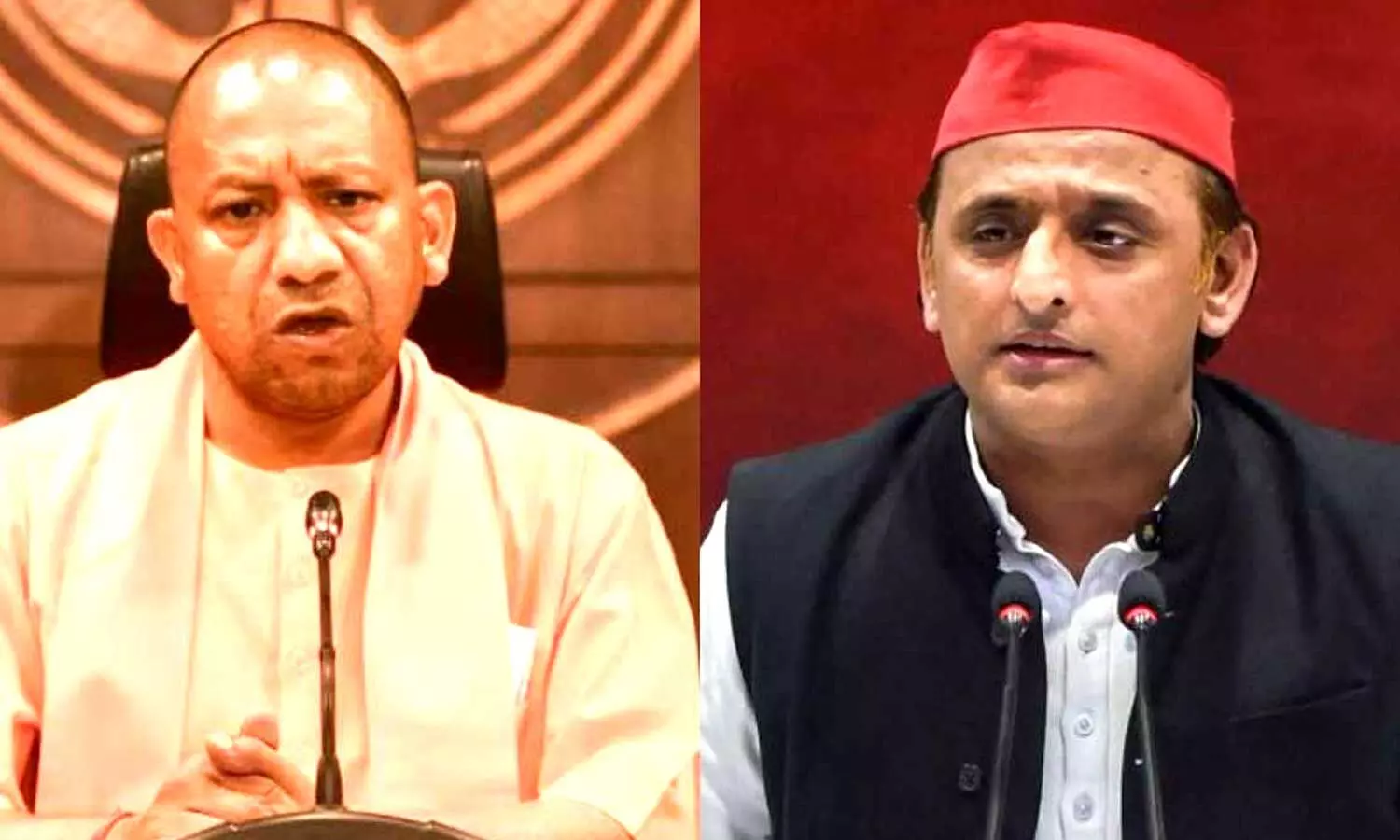
Ram Nagari Set for Political Showdown. BJP Seeks Akhilesh’s Apology Over Kar Sevak Firing
Ram Nagari, the city of Ayodhya, saw a grand display of faith and tradition as the banks of the Saryu were lit up with over 30 lakh earthen lamps on Saturday at 56 ghats, along with a spectacular display of laser and drone show depicting the life journey of Lord Ram. But in less than 12 hours, Ayodhya has bounced back on the political stage with challenges, counter challenges and sharp criticism of Chief Minister of UP Yogi Adityanath.
In his address in Ayodhya minutes before the lamps were lit, the chief minister criticised the former chief minister and Samajwadi Party chief, Akhilesh Yadav, for not visiting the Ram Temple. He also demanded an apology from him for firing on the Karsevaks during the regime of the Samajwadi Party.
Reacting to this, SP leader Pawan Pandey said on Saturday that Akhilesh does not need anyone’s permission to go to Ayodhya. He said the SP chief would be visiting the Ram temple on December 12. If this happens, it would be the first visit of the former chief minister to the Ram Temple since its inauguration in January 2024.
The BJP, while welcoming the decision, said that the announcement has come from a party leader, not from Akhilesh. However, if good sense has prevailed upon him, and if he would really visit the Ram Temple, it would be a welcome move. The party spokesperson and MP Sudanshu Trivedi said that he should apologise to Lord Ram and the people for showering bullets on the Karsevaks during the rule of the Samajwadi Party in UP and keeping Lord Ram under lock and key.
Other BJP leaders felt that this was perhaps an afterthought of Akhilesh, as he must have felt that all their narratives were not working in winning the Hindu votes and, as such, he was now contemplating visiting the temple. Whatever it may be, if he visits it would be a welcome move.
On the other hand, the Chief Minister Yogi Adityanath in a TV interview, said that it is a fact that Akhilesh Yadav was working hard in view of the upcoming Assembly elections, but the result would be 80-20. That is, 80% of people will stand by the BJP and 20% with the combined opposition led by SP. He said that from a backwards state, UP had now become a performing state. It had witnessed tremendous growth in terms of industrial growth. Over the last nine years, the state has attracted investment commitments of over Rs 50 lakh crore, and most of them have been grounded. More are in the advanced stage of finalisation. This has helped in the growth of employment opportunities for the youth, and a few more lakhs of jobs will soon be added, he said.
He said in terms of law and order, the state had become role model for other states.
In the meantime, Yogi on Sunday extended Diwali greetings to people in Ayodhya, distributed fruits and sweets among sanitation workers, boatmen and underprivileged families, and called for a clean, beautiful, and well-organised city while invoking the ideals of Lord Shri Ram.
Addressing people during the celebrations, CM Yogi urged them to take a collective resolution to protect Ayodhya’s religious identity, dignity and cultural heritage.
“We have to take only one resolution. That resolution has to be that in the coming times; there should be no evil eye on our Ayodhya. Our resolution should be against the loot of Ayodhya's wealth, defame Ayodhya again; there should not be any evil eye on our Ayodhya,” he said.
The Chief Minister also referred to the city’s past, asserting that restrictions and violence against devotees would no longer be tolerated.
“Now, in Ayodhya, bullets will not be fired on Ram devotees. Now, in Ayodhya, no one can use a stick to say 'Jai Shri Ram'. Now, in Ayodhya, no one will be able to put a ban on 5-kosi, 14-kosi and 84-kosi circumambulations,” CM Yogi said.
Emphasising the need to maintain Ayodhya’s religious and cultural significance, he said the city should reflect cleanliness, beauty, proper organisation and dignity.
“This should be the symbol of our resolution. Ayodhya should be clean, beautiful, well-organised and dignified. Ayodhya is Lord Ram’s Ayodhya. We have to organise Ayodhya in the same way and move forward,” he added.


