Students used their pocket money for drugs

Hyderabad: As Mahindra University authorities continue to reel from the shock of a recent drug bust involving some of its students, fresh revelations from the Telangana Anti-Narcotics Bureau (TANB) point to a larger, more complex network operating across several premier institutions in the city. Senior officials involved in the probe told ‘The Hans India’ that the case had “only scratched the surface of a city-wide racket”.
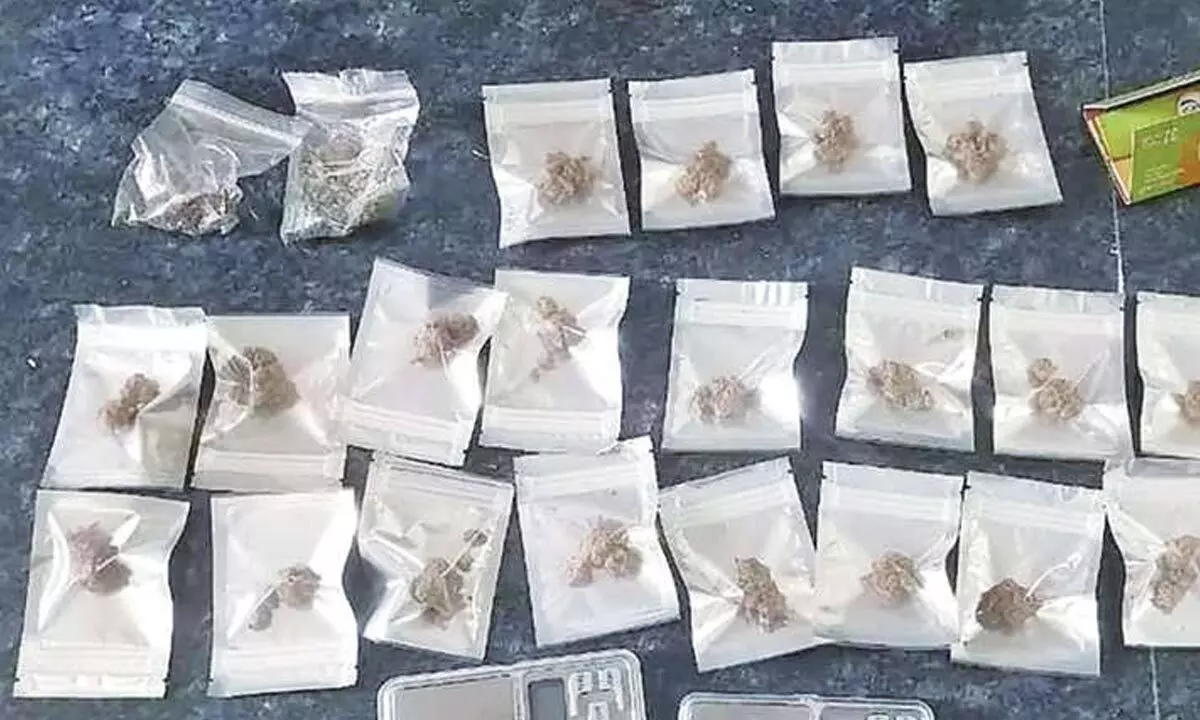
It may be recalled that on August 27, four persons, including two students, were arrested for operating a drug racket inside the Mahindra University here. During a prior raid at Shivalayam Colony in Suraram, police officials seized 1.15 kg of ganja, 47 grams of high-grade OG weed, packaging material, a digital weighing machine and multiple mobile phones used for trafficking.
Officials probing the ramifications of the case said the racket had established a supply chain reaching from inter-state suppliers to student peddlers on campus, with nearly 50 students now under investigation for consumption.
The officials revealed that the key accused, identified as a Nigerian national known as “Nick,” is still absconding. “If we can get him, there are many other major drug racket links we can uncover,” said one senior officer, pointing to an international chain of operations. According to the TANB, several individuals from Nigeria, Somalia, and Sudan enter India on tourist or education visas but never return, slipping into illegal activities for survival. Only 10 out of 100 go back, he added.
The investigators highlighted the vulnerability of courier and parcel services, calling them the “most exploited platform”, for narcotics trafficking. Unlike passenger screenings at airports, courier consignments often bypass verification processes.
“There are no OTP authentications, proper address details, or digital verification. We spend days tracking irregularly packed parcels that are divided into multiple compartments. “We have missed the right packages while scanning,” the official admitted.
The TANB confirmed that drug use is not restricted to the Mahindra University campus. “We have identified cases in several premier private institutions, including Symbiosis and CBIT, he said. Students tend to misuse their pocket money for drugs, leading to dependency and reckless behavior”.
Supporting this statement, Neha Agarwal, psychologist and co-founder of InnerHeal Therapy, said, “Many of these students are simply trying to fill an emotional void—whether it’s love, acceptance, or fear of abandonment. “The pain they want to escape can make drugs seem like an easy way out, offering a quick high and temporary thrill. Sadly, many do not realize that they are trapped until it is already too late to turn back.
Many students from well-off families use their pocket money in unhealthy ways, such as through substance abuse. Easy access to cash sometimes makes them feel independent, but without real responsibility. Often, just to feel included and part of a group, students get pulled into these habits, creating a dangerous cycle that harms their studies and personal growth,” she added.
Officials stressed that strict surveillance is being paired with the rehabilitation of students. One of the students recently caught is currently undergoing regular blood tests and counselling. “We are also conducting regular awareness campaigns, in collaboration with universities like ICFAI, to sensitize students to the dangers of substance abuse,” an anti-narcotics officer said.
Meanwhile, Mahindra University, in its official statement, maintained that “any act that violates the law or endangers the safety of the student community will be dealt with severely.” Vice-Chancellor Dr. Yajulu Meduri assured that the campus would ramp up preventive awareness, counselling, and partnerships with the law enforcement authorities.
Yet, as more institutions figure in the narcotics trail and as courier loopholes remain unaddressed, the case underscores a disturbing dual reality. While Hyderabad’s private universities project themselves as global education hubs, they are also becoming fertile grounds for organized rackets feeding on the youth’s vulnerabilities.