Muslim Women Break Barriers, Step into Local Politics with 42% BC Reservation

Mahabubnagar
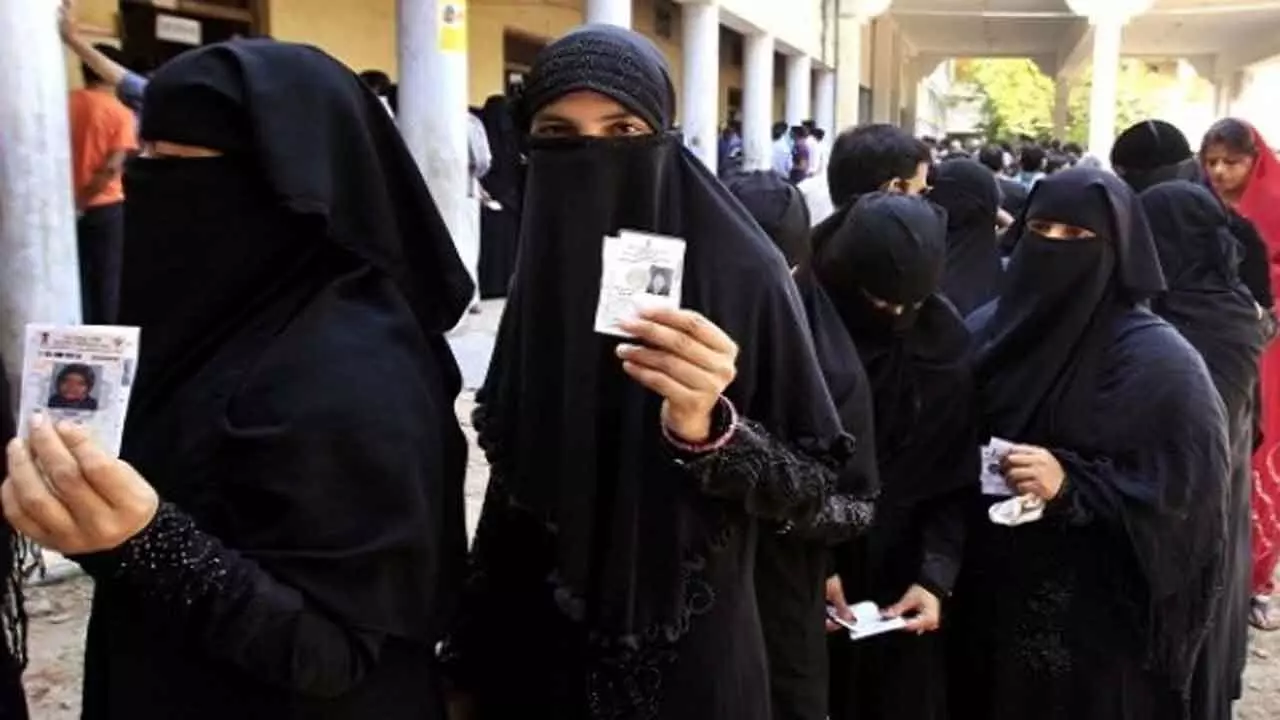
Grassroots democracy in Telangana is on the cusp of a historic change. Muslim women, long confined to the roles of homemakers and caregivers, are now preparing to step into the political arena with determination and purpose. Thanks to the Telangana government’s recent decision to implement 42 percent reservation for Backward Classes (BCs) in local body elections, many Muslim women—who fall under BC categories—are seeing a new path open before them.
The upcoming panchayat elections, scheduled for next month, are already generating excitement in Mahabubnagar and other districts. What was once unthinkable—Muslim women contesting in significant numbers—has now become a distinct possibility.
“Earlier, politics was seen as a men’s space. Women like me were expected to manage only the home and family. But with reservations, I finally feel my voice can matter in the community,” said Shabana Begum, a resident of Jadcherla mandal, who is planning to file her nomination.
Echoing her, Sameera Fatima, a first-time aspirant from Mahabubnagar town, remarked: “We take care of our children, their education, our homes, and even manage family finances. If we can handle all this, why not governance? I want to contest not just for myself, but to inspire more Muslim women to come forward.”
Local social activist Naveed Khalid, President of Youth Welfare Mahabubnagar, called this a “watershed moment in grassroots democracy.” He noted, “For decades, women were kept away from public decision-making. Today, with policy support and welfare schemes empowering them, Muslim women are not only entering politics but also aiming to reshape it. This is not token participation—it’s meaningful leadership.”
Naveed also highlighted that welfare schemes like Jan Dhan Yojana, Ujjwala Yojana, and Atal Pension Yojana have made women financially literate and more confident in public dealings. “When women get access to governance structures, priorities like health, sanitation, education, and welfare take center stage. That is the real strength of women’s leadership,” he added.
Across India, this trend is already visible. In Uttar Pradesh, 61 Muslim women won in the 2023 urban local polls. In Bihar and Assam, women leveraged self-help groups and community recognition to win seats, even without party support. Kerala’s Kudumbashree movement has shown how grassroots women leaders can transform governance.
As Telangana gears up for elections, Muslim women in Mahabubnagar are ready to carry this torch of change. “We have been silent for too long,” said Ayesha Parveen, a young postgraduate eager to contest. “Now, it’s time our ideas, our struggles, and our vision also reflect in the panchayat halls.”
With reservations acting as a catalyst, the journey of Muslim women from the kitchen to the council chamber is no longer just a dream. It is becoming a powerful reality—one that promises to change the face of local politics in Telangana.