Medigadda among nation’s ‘3 most vulnerable structures’

Rs 100 cr allocated by Centre for dam rehab remains unspent till date
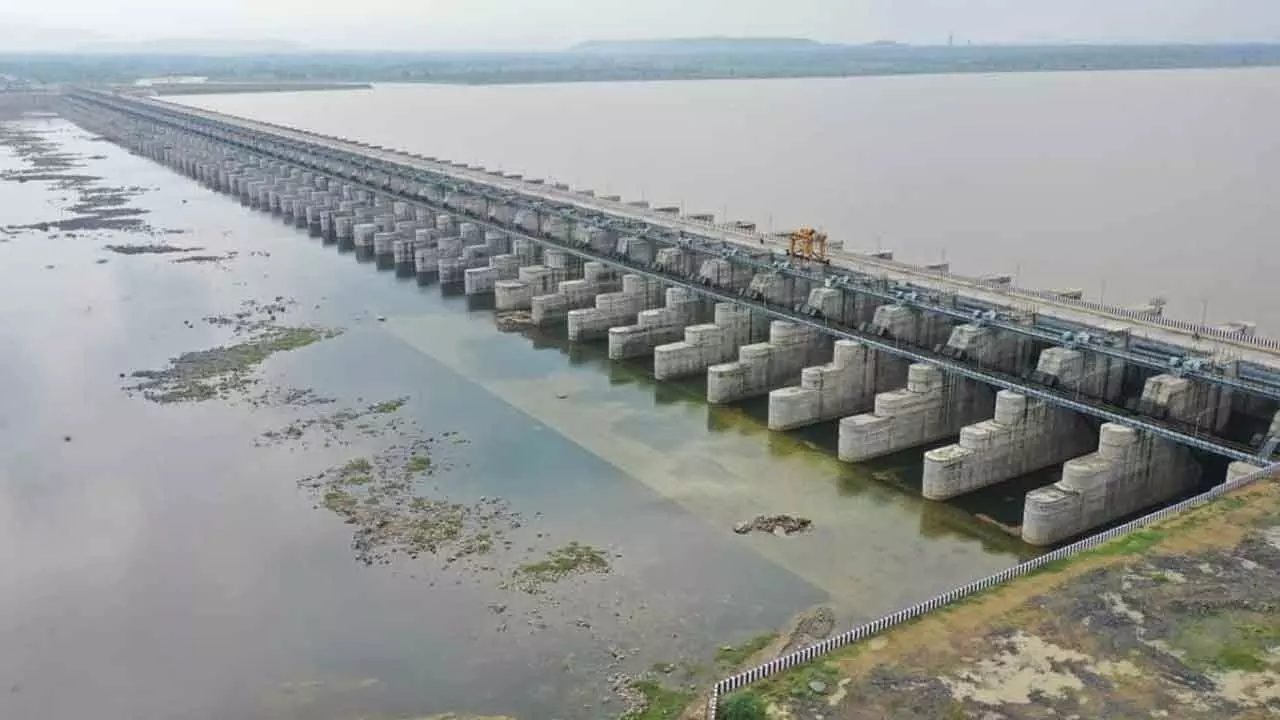
Hyderabad: In a dubious distinction, the damaged Medigadda barrage, a component of the Kaleshwaram Lift Irrigation Project, ranks among “the three most vulnerable and high-risk structures under category-1 in the country”.
According to the Union Ministry of Jal Shakti, the two other dams in category-I are the lower Khajuri Dam in Uttar Pradesh and the Bokaro Barrage of the Damodar Valley Corporation. These have been included under the Dam Rehabilitation and Improvement Project Phase-II (DRIP-II) Scheme for rehabilitation and safety enhancement.
Since the Lakshmi (Medigadda) Barrage is a category-I dam, Telangana State has been requested to implement the various preventive and mitigating measures recommended by the National Dam Safety Authority (NDSA) to safeguard the structure’s integrity and resilience.
It may be mentioned here that the state government recently invited proposals from private agencies for the rehabilitation of the damaged Medigadda as well as Annaram and Sundilla barrages sister barrages based on the NDSA recommendations. However, the government has not yet finalised the tenders in view of a search for a reputed agency to execute the works.
Responding to a question in the Lok Sabha, Minister of State for Jal Shakti Raj Bhushan Choudary said that in accordance with the provisions of the Dam Safety Act, 2021, every owner of a specified dam is mandated to conduct every year a pre-monsoon inspection and a post-monsoon inspection of each specified dam under their jurisdiction.
As an outcome of pre-monsoon and post-monsoon inspections, dams are being placed in one of three categories on the basis of urgency of repairs/maintenance. “Category-I indicates the most serious deficiencies, which if left unattended, may lead to their failure”, the Minister said, adding that 216 dams have been placed under Category-II. Of these, 69 specified dams are more than fifty years old.
“Rehabilitation and improvement works will enhance dam safety and flood-handling capacity through structural and non-structural measures.
These include raising parapet walls, improving spillways, preparing O&M Manuals and Emergency Action Plans, repairing or replacing gates and hydro-mechanical components, strengthening dam structures with grouting and seepage control, and upgrading safety facilities such as access roads, lighting, catwalks etc.
The Minister also mentioned that the Union government had allocated Rs 100 crore to Telangana under the Dam Rehabilitation and Improvement Project (DRIP – 2). However, “the government has not spent any funds till date”.