Funding $3-trn economy dream: TG to rely mainly on municipal bonds, FDIs & sovereign funds

Constraints on taxation, borrowing under FRBM main hurdles
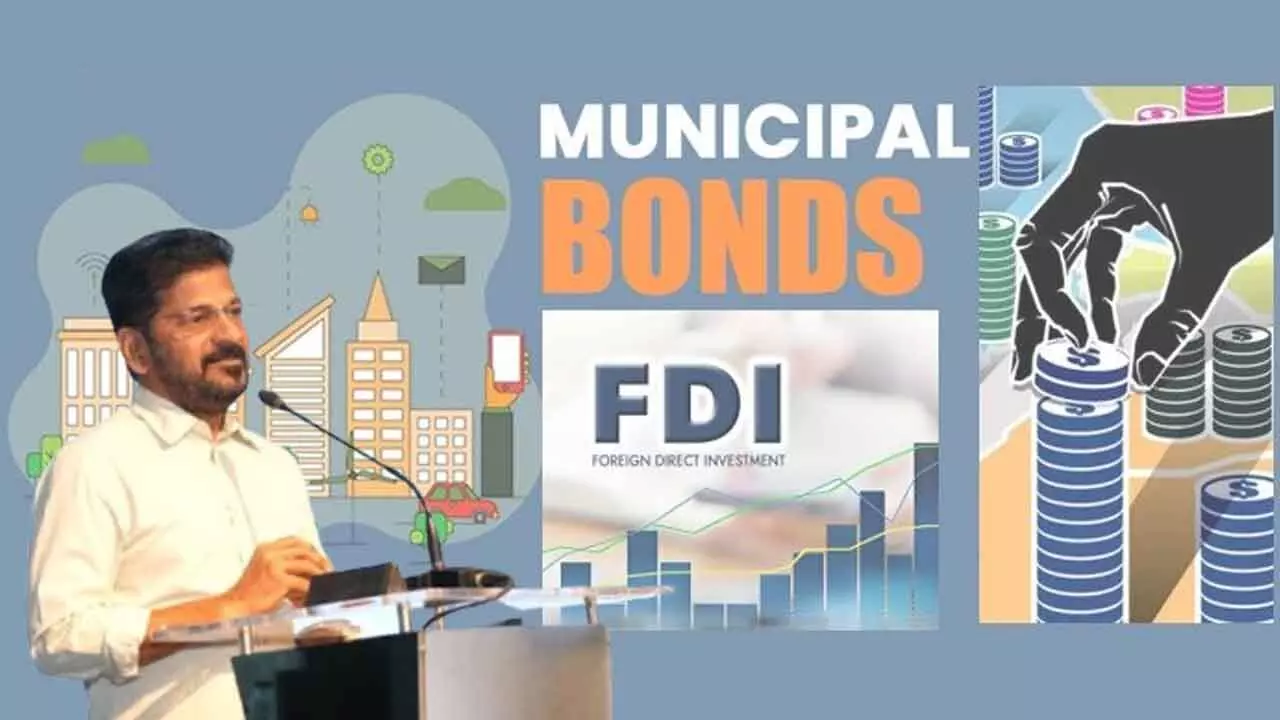
Hyderabad: Given the constraints on taxation and borrowing within FRBM limits, the Telangana government, which has come out with the Telangana Rising 2047 Vision Document, with the overarching goal of becoming a $3-trillion economy in little over two decades, proposes to rely mainly on municipal bonds, foreign direct investments (FDIs) as well as sovereign wealth funds (SWF) from Saudi Arabia and Japan to fund its upcoming projects.
The state government is of the considered view that limited options for taxation and constraints on borrowing within Fiscal Responsibility and Budget Management (FRBM) limits would be the main hurdles in mobilising finances for the works to be taken up over the next 22 years.
According to the Vision Document: “Telangana’s tax to GSDP ratio cannot increase substantially under the current GST regime and federal fiscal framework leaving limited fiscal space to fund large capital expansion through taxes alone. Also, the FRBM Act-mandated borrowing caps restrict the state’s ability to raise significant additional debt without risking fiscal stress or crowding out private investments.
“The first big option was mobilisation of the global capital mainly Foreign Direct Investment (FDI) and long-term sovereign wealth fund investments which will drive capital expansion scaling annual inflows by prioritising deep-tech and securing strategic sovereign wealth funds partnerships with Japan, Saudi public investment fund, and in Europe to bridge the investment gap and sustain high productivity growth.
“Another option of municipal bonds will significantly scale municipal bond financing. While municipal bonds form a major share of sub– sovereign financing globally (7-8 per cent in USA, 30 per cent in China) , India market remains nascent with only Rs 2,600 crore raised since 2018, including about Rs 495 crore in Telangana.”
The state government has therefore projected that 40 per cent of the funds required would be mobilised through FDIs and SWFs, 30 per cent through domestic financial institutions and 10 per cent by way of equity and innovation finance in private investments. In the government investments, 15 per cent funds will be mobilised from municipal bonds and 5 per cent through innovation finance.
The document explains the capital mobilisation mix required to achieve the targeted 52 per cent investment rate, with private capital contributing 80 per cent and the government enabling the remaining 20 per cent through public investment tools. “It reflects the state’s commitment to fiscal discipline while strategically leveraging global and domestic private financing to power the state transformation,” the document said.