BRS, Cong govts presented unrealistic budgets: CAG

- Shortfall of revenue expenditure against budget estimates largely due to poor financial management
- Public debt between 2020 & 2024 increased due to surge in borrowings every year
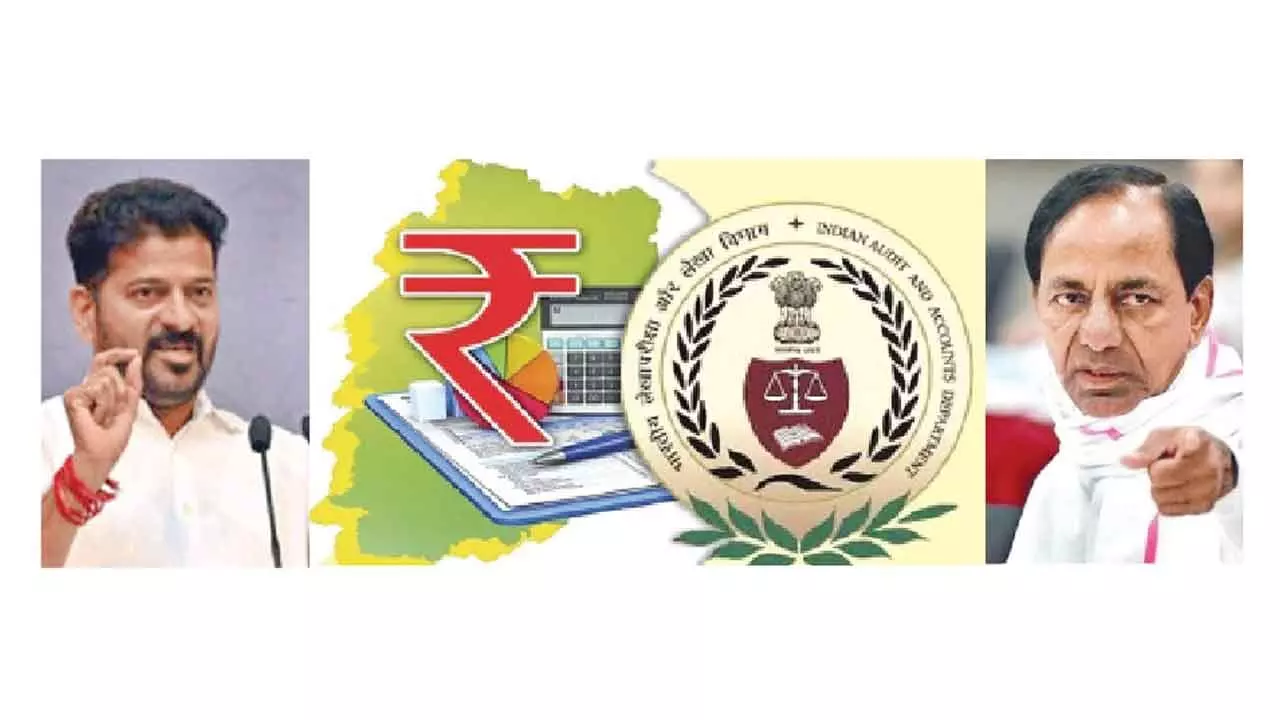
Hyderabad: The previous Bharat Rashtra Samithi (BRS) and the present Congress-led state governments have presented ‘unrealistic’ budgets for five years between 2020-2021 and 2024-2025 financial years.
This has been categorically affirmed in the Comptroller and Auditor General of India (CAG) report, “Accounts at a glance-2024-2025’. It points out that the gap between the budget estimates and actuals increased in the five years under review. The highest gap of 29 per cent was found in the 2024-2025 outlay, the report mentions.
The BRS ruled the state till 2023, while the Congress party assumed power in December 2023.
The analytical report, which was tabled in the Assembly, on the last day of the budget session on Tuesday, states that realisation of the budget in the 2020 financial year was 89 per cent, which left an 11 per cent gap in the expenditure.
Ironically, the gap was increased to 24 per cent in 2021-2022 and brought down to 19 per cent in 2022-2023. The difference between the estimates and actuals touched an alarming level of 28 per cent in 2023-2024, while it was 29 per cent in the next year.
The CAG report observed that the shortfall of revenue expenditure against the budget estimates in the last five years was largely due to poor financial management.
The official statistics said that: 2020-2021-budget estimates: Rs 1. 38 lakh crore-actuals: Rs 1.22 lakh crore-Gap Rs 15,400 crore; 2021-2022–Rs 1.80 lakh crore - Rs 1.36 lakh crore; Gap-43,447 crore:
2022-2023-Rs 1.89 lakh crore - Rs 1.53 lakh crore; Gap Rs 35,868 crore: 2023-2024 - Rs 2.34 lakh crore - Rs 1.68 lakh crore; Gap-Rs 66,000 crore; and 2024-2025 - Rs 2.48 lakh crore - Rs 1.77 lakh crore; Gap – Rs 71,000 crore.
The report further stated that public debt between 2020 and 2024 had increased because of a surge in borrowings every year. Most of the borrowings were spent only on capital expenditure and debt serving.
The expenditure incurred on social services remained stagnant during the five years, while there was also a significant increase in spending on economic services.