Assembly adopts resolution against changes in MNREGA

Key points of the resolutions
- The new law undermines the rights of the rural poor and weakens the demand-based employment system.
- The reduced allocation model will limit workdays for women, affecting poor households.
- Altering the funding ratio to 60:40 violates federal principles and imposes additional financial burden on states.
- Removal of Mahatma Gandhi’s name dilutes the moral and ideological spirit of the scheme.
- The mandatory 60-day break during the agricultural season is unjust to landless labourers.
- Removing labour-intensive works will harm small farmers, Dalits, and tribals
The Assembly resolved that the MGNREGA Act must continue in its original form to fulfil the aspirations of wage-earning rural families and protect the livelihoods of the most vulnerable
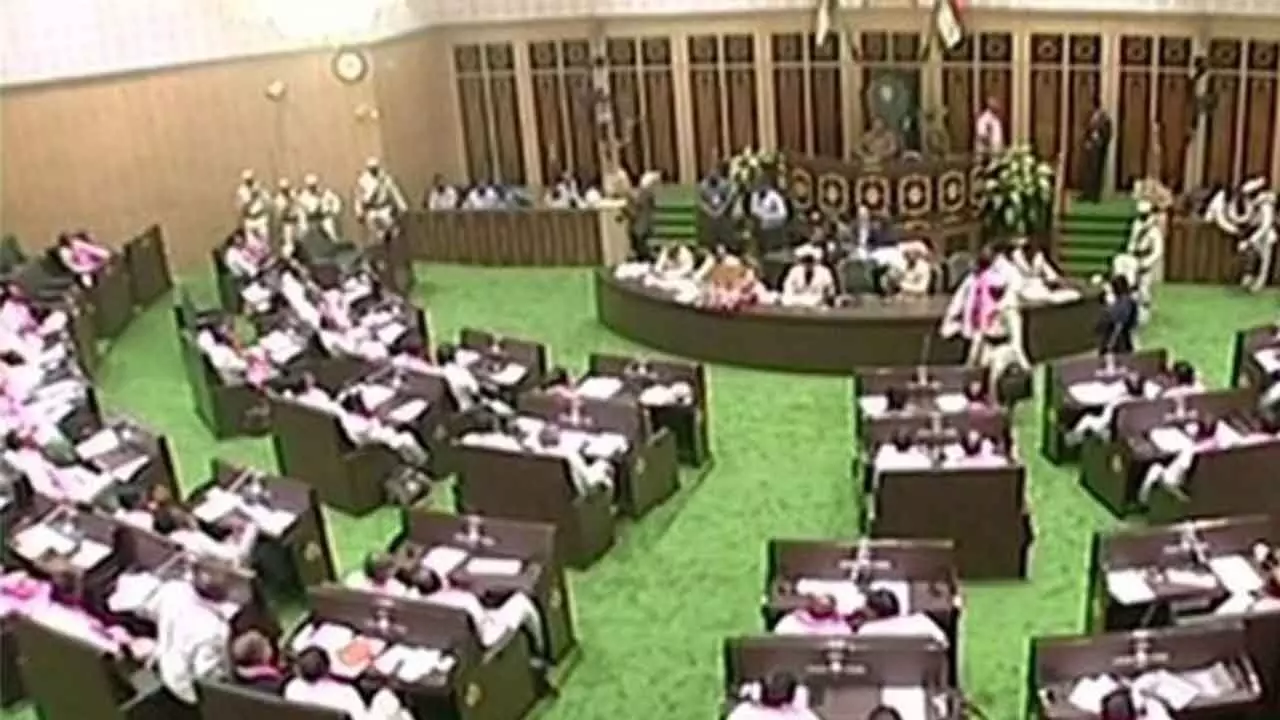
Hyderabad: The Telangana Legislative Assembly on Friday adopted a resolution opposing changes to the Mahatma Gandhi National Rural Employment Guarantee Scheme (MGNREGS), alleging that the Centre’s move to alter the funding ratio unfairly burdens states and violates the spirit of federalism.
Introducing the resolution, Chief Minister A Revanth Reddy objected to the Centre’s decision to change the fund-sharing pattern from 90:10 to 60:40 between the Centre and the states. He described the move as anti-federal and demanded that the Centre withdraw the changes and restore the original MNREGA framework. The Chief Minister said the scheme was introduced with the objective of women empowerment and livelihood security for the rural poor, and alleged that the Centre had weakened its core intent, even by changing the name of the programme. He informed the House that the resolution would be forwarded to the Union government.
Explaining the background of the scheme, the resolution noted that MGNREGS was introduced in 2005 by the UPA government led by Dr Manmohan Singh and came into force on February 2, 2006. It guarantees 100 days of employment per rural household, aiming to reduce poverty, unemployment, distress migration, and wage disparities, while promoting inclusive development.
Over the past two decades, nearly 90 per cent of beneficiaries in Telangana have been from Scheduled Castes, Scheduled Tribes, and Backward Classes, with women accounting for 62 per cent. The scheme has particularly benefitted Dalits, tribals, persons with disabilities, Adivasis, Chenchus, and other vulnerable groups. The House observed that the newly introduced Viksit Bharat Guarantee for Rozgar and Aajeevika Mission (Rural) Act, VBG RAMG–2025, threatens the employment security of rural women and marginalised communities and undermines the demand-driven nature of the original scheme.