Tirumala Introduces Rs 25 Crore High-Tech Lab to Safeguard Prasadam Quality

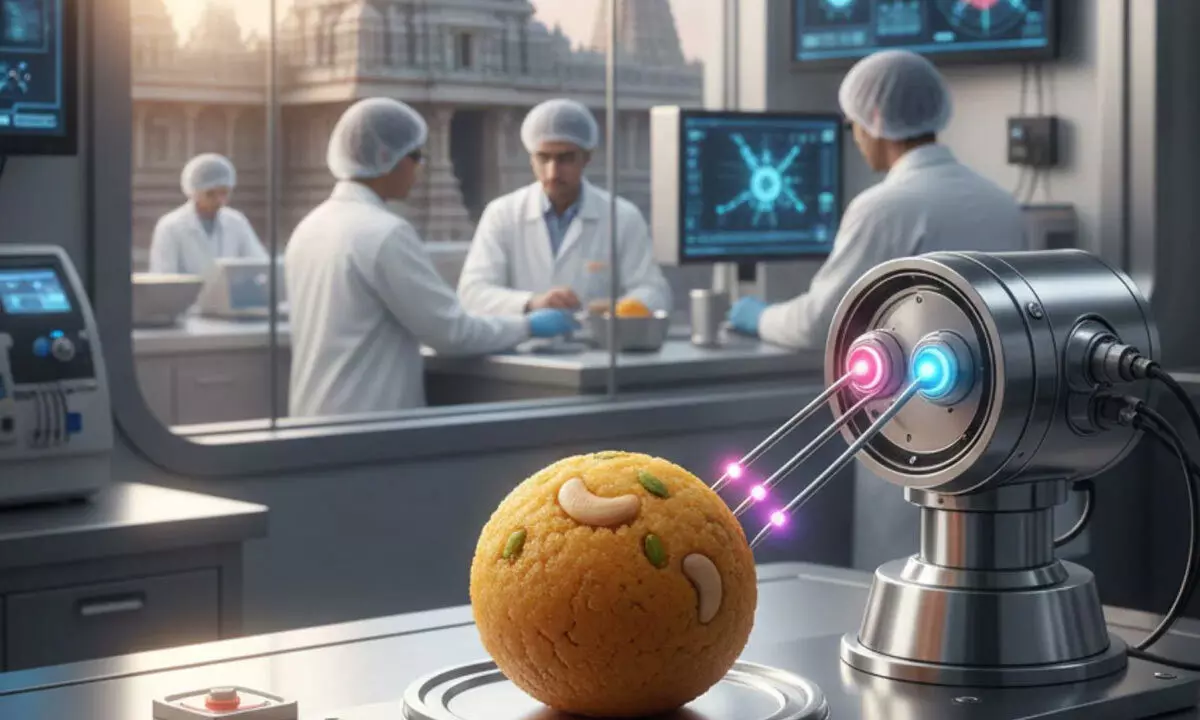
Tirumala’s new Rs 25 crore lab will deploy electronic nose and tongue technology to ensure prasadam purity and safety.
In a significant move aimed at strengthening food safety standards, the temple town of Tirumala is set to launch a state-of-the-art food testing laboratory worth Rs 25 crore. The initiative, backed by the Andhra Pradesh government, is designed to ensure that the prasadam served to millions of devotees meets the highest benchmarks of quality and purity.
The upcoming facility will focus particularly on monitoring the ingredients used in the iconic Tirumala laddu, along with other temple offerings. State Health Minister Y Satya Kumar Yadav confirmed that the lab is nearing completion and is likely to become operational next month.
“The testing at the lab will ensure that the laddu and the prasadams served to the devotees will be of the highest quality. About 90 per cent of the work is over, and operations may start next month," Yadav said as quoted by The Indian Express.
The laboratory is being established following an agreement signed in October 2024 between the Andhra Pradesh government and the Food Safety and Standards Authority of India (FSSAI). It is housed in the renovated old flour mill building in Tirumala, offering nearly 12,000 square feet of space. Around 40 personnel from the Tirumala Tirupati Devasthanams (TTD) health department and the state health department will manage the operations.
At the heart of the new lab are two advanced devices — the electronic nose and electronic tongue — being imported from France at a reported cost of Rs 3.5 crore. These sophisticated machines are capable of detecting subtle variations in smell, taste, and texture that might escape human senses.
The electronic nose identifies even minor changes in aroma, helping officials detect possible spoilage or adulteration. Meanwhile, the electronic tongue analyses flavour profiles and purity levels. Authorities believe these tools will play a crucial role in evaluating the quality of ghee, a vital ingredient in the preparation of Tirumala laddus.
Beyond these headline technologies, the laboratory will also be equipped with modern microbiology testing systems, freshness sensors, and instruments capable of identifying pesticide residues and metal contamination. More than 60 raw materials — including ghee, sugar, rice, cashews, cardamom, almonds, jeera, raisins, chickpeas, dry fruits, and water — will undergo regular screening.
Electronic nose and tongue systems are already widely used in global food industries for quality control. From dairy products and edible oils to spices, tea, and packaged goods, these technologies have proven effective in enhancing food safety. Similar systems are also used in pharmaceutical and environmental laboratories to detect contamination and chemical changes.
The decision to set up this high-tech facility follows allegations of adulterated ghee supplies to TTD. In November 2025, a Special Investigation Team reported that an Uttarakhand-based company had allegedly supplied nearly 60 lakh kilograms of adulterated ghee to TTD between 2019 and 2024, in deals estimated at Rs 240 crore. The SIT claimed the ghee was mixed with substances such as palm oil, palm kernel oil, beta-carotene, acetic acid ester, and artificial flavouring agents to manipulate test results and maintain aroma.
With the new laboratory, officials aim to prevent such controversies in the future by ensuring faster, more accurate testing before ingredients are used in preparing prasadam — reinforcing devotees’ trust in one of India’s most revered temples.