Tim Cook Hints at Major Apple Intelligence Upgrades as iPhone Sales Soar to Record Highs

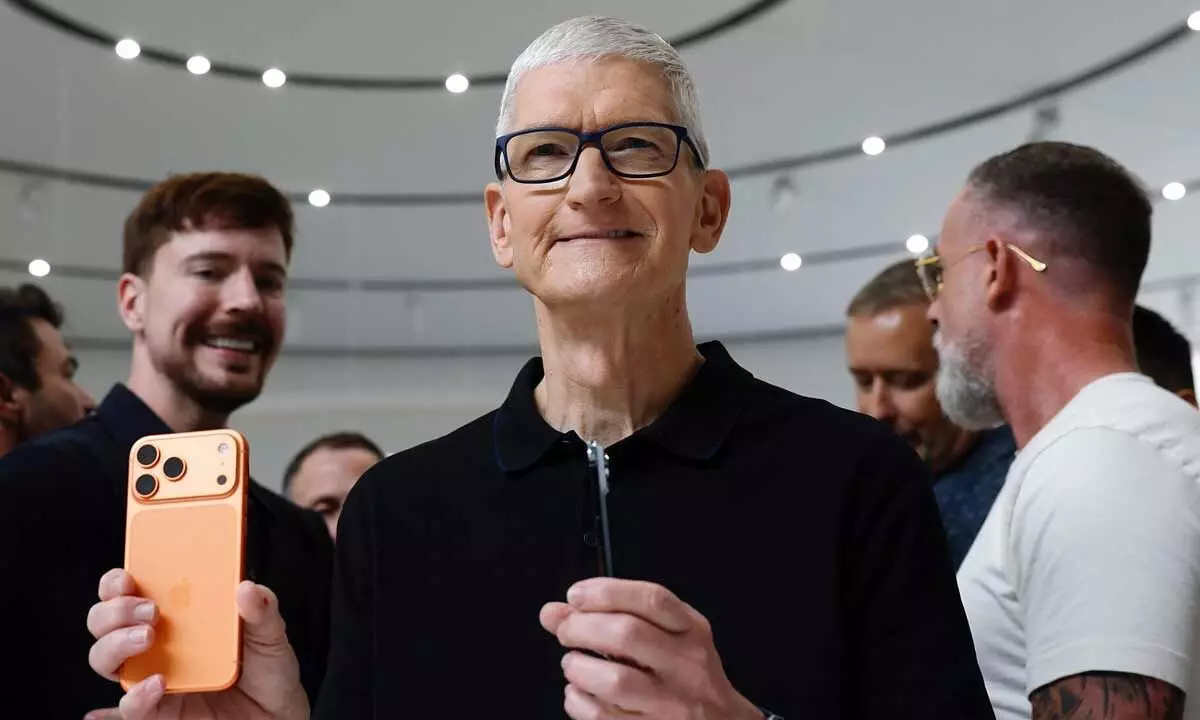
Apple CEO Tim Cook teases next-generation Siri and expanded AI partnerships as iPhone sales reach historic highs in 2025.
Apple is setting the stage for a transformative leap in artificial intelligence. Following a record-breaking iPhone sales quarter, CEO Tim Cook has hinted that Apple Intelligence—the company’s new suite of generative AI features—is about to get even smarter.
Speaking with CNBC after Apple’s Q4 2025 earnings call, Cook confirmed that Apple intends to broaden its AI collaborations beyond OpenAI, signaling a more open and integrated approach for the future. “Our goal is to expand integration with other AI players over time,” Cook said, without naming specific partners. His statement suggests that Apple plans to make its AI ecosystem more inclusive and flexible, bringing in multiple large language models for enhanced user experiences.
The strong performance of the iPhone 16 lineup has fueled this optimism. Apple’s fiscal year ended on a high note, with iPhone sales hitting record levels globally. Cook credited this success to the “early traction” of Apple Intelligence features, which have drawn customers back into the Apple ecosystem despite a challenging global market.
Currently, Apple Intelligence is powered by both Apple’s proprietary models and OpenAI’s ChatGPT, which together enhance Siri’s natural conversational abilities and fuel features like Visual Intelligence and Writing Tools across iPhone, iPad, and Mac. However, this collaboration is only the beginning. Earlier this year, Apple’s Senior Vice President Craig Federighi revealed that the company plans to integrate additional models such as Google’s Gemini “in the future.”
One of the most anticipated moves in Apple’s AI roadmap is the introduction of Model Context Protocol (MCP) support. Originally developed by Anthropic, MCP enables smooth interaction between AI models, applications, and tools. Apple is reportedly working to incorporate this framework into its platforms, paving the way for secure, cross-model communication. This integration could allow developers to build more intelligent and privacy-respecting apps that interact seamlessly with Apple’s AI ecosystem.
The spotlight, however, remains firmly on Siri’s upcoming transformation. Cook confirmed that the next-generation Siri, powered by Apple Intelligence, is slated for release in 2026. Initially expected to debut with iOS 18 in 2024, the upgrade was delayed as Apple fine-tuned its AI systems. The new Siri promises deeper contextual understanding, multi-step task execution, and tighter app integration—key areas where it aims to outpace rivals like Google Assistant and ChatGPT-based bots.
Reports indicate that while Apple continues to refine its in-house AI models, it may also leverage external AI engines from partners such as OpenAI and Anthropic for complex, multi-application tasks. This could enable Siri to handle advanced actions like scheduling, event planning, and drafting communications with greater natural fluency.
What sets Apple apart is its privacy-first design. Instead of relying solely on cloud computing, many Apple Intelligence functions are processed on-device, with only high-complexity tasks routed securely to external AI models. This hybrid architecture ensures that users benefit from cutting-edge AI capabilities while maintaining Apple’s hallmark focus on data security and privacy.
As 2026 approaches, Apple’s AI strategy appears to be evolving into a balanced blend of innovation, collaboration, and privacy, positioning it as one of the key players driving the next phase of intelligent technology.