Sam Altman’s Bold Move: OpenAI Set to Challenge Google and Microsoft in the AI Cloud Race

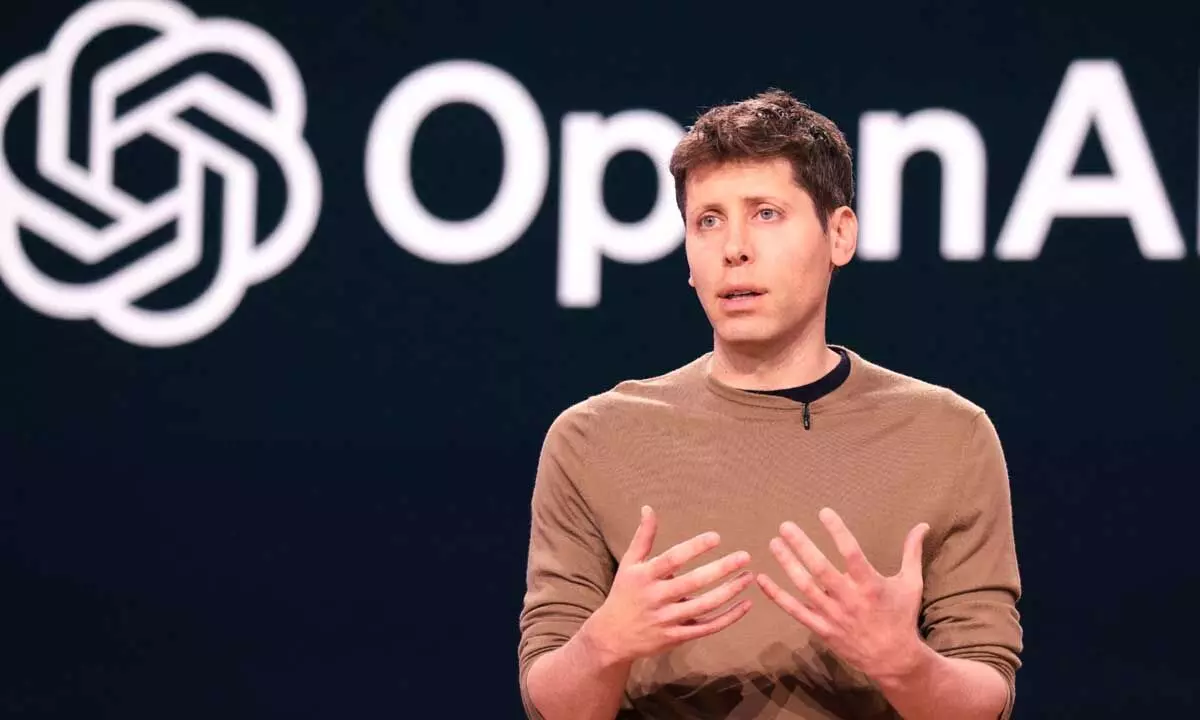
Sam Altman hints at OpenAI’s entry into cloud computing, signaling a major shift that could rival Microsoft and Google’s dominance.
OpenAI CEO Sam Altman may have just dropped his biggest hint yet about the company’s next transformative move — and it’s not another chatbot. In a subtle but significant post on X, Altman revealed that OpenAI is preparing to enter the cloud computing business, setting the stage for a potential showdown with tech giants Google and Microsoft.
Altman wrote, “We are also looking at ways to more directly sell compute capacity to other companies (and people); we are pretty sure the world is going to need a lot of ‘AI cloud’, and we are excited to offer this.”
The statement has sent ripples across the tech community. If OpenAI follows through, it would mark one of the company’s most ambitious strategic pivots since its founding—transforming from a massive consumer of cloud services into a cloud provider itself.
From AI Pioneer to Cloud Contender
Until now, OpenAI has relied heavily on Microsoft’s Azure infrastructure to power its products, including ChatGPT and its widely used APIs. Altman’s latest comments, however, suggest a future where OpenAI sells compute power rather than just consuming it. That would place it in direct competition with the so-called “Big Three” cloud players—Amazon Web Services (AWS), Microsoft Azure, and Google Cloud Platform (GCP).
Industry watchers see this as a pivotal moment. “I’ve never seen OpenAI talk so clearly about building a business like this,” said one observer, highlighting that this is the first real signal of OpenAI’s intention to enter the commercial cloud market.
The move also echoes remarks made earlier by OpenAI CFO Sarah Friar, who in September voiced concerns about the company’s dependence on big cloud providers. She noted that these partners were “learning on our dime,” implying that OpenAI’s collaborations were giving away too much of its data and infrastructure expertise. That frustration now seems to have evolved into a full-blown business opportunity.
The Trillion-Dollar Challenge
Altman’s comments also raise a critical question: how will OpenAI finance such a colossal infrastructure expansion? Reports suggest the company has already signed deals worth over $1 trillion for AI chips and data centers — a figure that rivals the total capital expenditure of its biggest backers.
Building a cloud platform could provide the financial engine to sustain those investments. At scale, the cloud business is immensely profitable, as proven by Amazon and Microsoft, who turned their infrastructure costs into recurring revenue streams by renting out compute power.
For OpenAI, offering its own “AI cloud” could help offset massive operational costs while deepening its ecosystem and customer reach.
A New Balance of Power
Breaking into the cloud market won’t be easy — AWS, Azure, and GCP currently command nearly 75% of global market share. Yet, with OpenAI’s brand strength, technological edge, and investor backing, it could become a serious disruptor.
Unlike Meta, which has invested billions in AI infrastructure without a monetizable cloud arm, OpenAI seems poised to turn infrastructure into profit. If successful, this strategy could not only reduce dependence on current partners but also turn them into competitors.
Should Altman’s vision succeed, OpenAI won’t just build smarter AI — it will also stake its claim in the cloud computing kingdom ruled by Pichai and Nadella. And if not, as Altman jokes, he could always turn to farming.