Oppo’s AI Vision: Smartphones as Empathetic Partners, Not Replacements
Share :
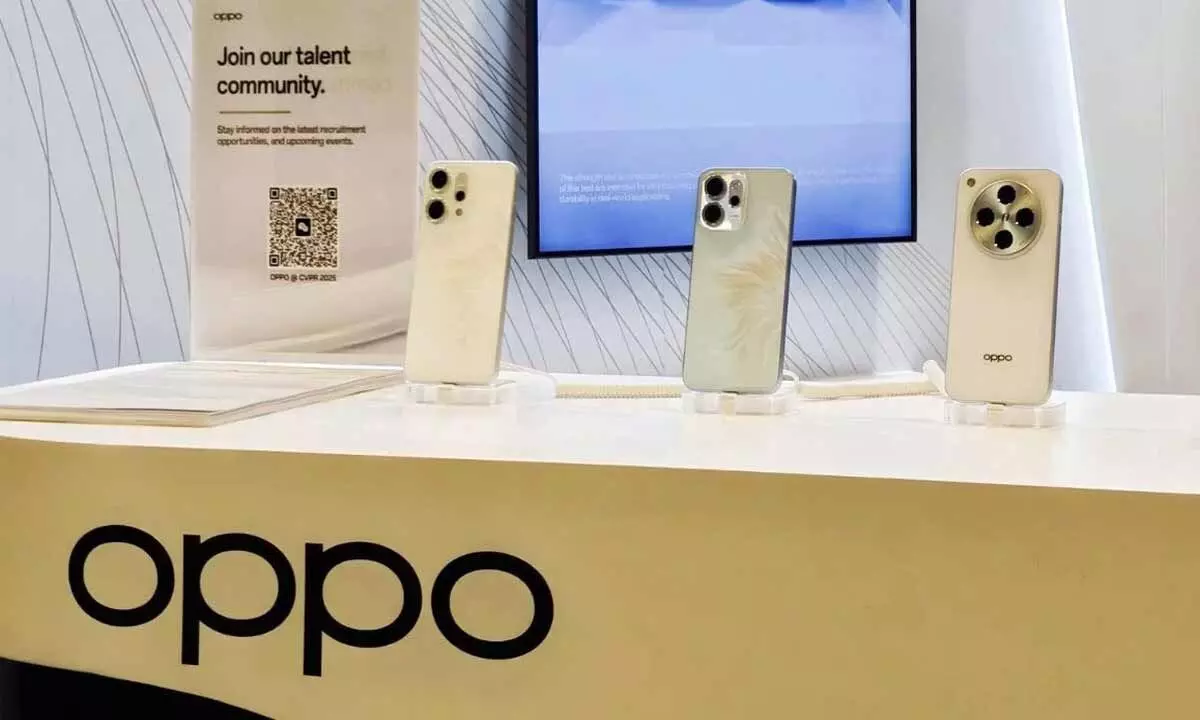
Oppo reimagines smartphones as intelligent collaborators, aiming to bring GenAI features to 100 million users globally by the end of 2025.
Oppo is redefining the future of smartphones by positioning artificial intelligence (AI) as a collaborative tool that amplifies human potential, not one that competes with it. The company is actively investing in AI to transform the smartphone into an intelligent, empathetic assistant that complements daily life through intuitive, useful features.
At the Mobile World Congress (MWC) 2025, Oppo introduced its enhanced AI strategy, with an ambitious goal to bring generative AI to 100 million users globally by the end of 2025. Peter Dohyung Lee, Head of Product Strategy at Oppo, emphasized India’s importance in this vision. “India is central to our goal of bringing GenAI to 100 million global users by 2025,” Lee told India Today Tech, highlighting the country’s rapid AI adoption and tech-savvy consumer base.
Since 2020, Oppo has been building its own large language models (LLMs), becoming the first smartphone brand to deploy a 7-billion-parameter LLM directly on a device. These efforts have led to the rollout of over 100 generative AI features across Oppo smartphones in 2024 alone.
AI is deeply woven into Oppo’s internal and product ecosystem. From features like HyperTone Image Engine for improved photography to intelligent battery optimization via SuperVOOC charging, AI enables a smarter, more personalized user experience. Internally, the company uses AI to enhance R&D, automate testing, and streamline development.
“Our goal is simple – AI for all,” said Lee. Oppo is democratizing AI by embedding it across all product tiers, not just premium devices. The recently launched Reno 14 series is a testament to this, integrating advanced tools such as AI Eraser 2.0, AI Best Face, and productivity boosters like AI Voice Scribe and AI Translate.
Strategic collaborations with global tech leaders such as Google, Microsoft, MediaTek, and Qualcomm are helping Oppo push the boundaries of mobile AI. For instance, Google's Gemini is now integrated into Oppo’s ecosystem, enabling users to perform complex tasks using natural language across apps. Microsoft’s Azure AI brings improved transcription services and will soon allow PC users to control connected Oppo smartphones using Copilot.
Oppo also stresses data privacy, investing heavily in encryption, firewalls, and on-device processing to ensure responsible AI implementation. “AI means more data, but it also means more responsibility,” Lee remarked, underlining the brand’s commitment to user trust.
The Indian market, with over 690 million users, plays a critical role in this expansion. Lee observed that Indian consumers expect flagship-grade features even in mid-tier phones, which aligns with Oppo’s mission to make GenAI features broadly accessible.
“The future is not about humans vs AI, but it’s about humans and AI,” Lee concluded. As smartphones evolve into context-aware, real-time collaborators, Oppo envisions a future where AI enriches creativity, communication, and everyday convenience—always with empathy and user control at the forefront.