OpenClaw Founder Peter Steinberger Joins OpenAI to Lead Personal AI Agents Push

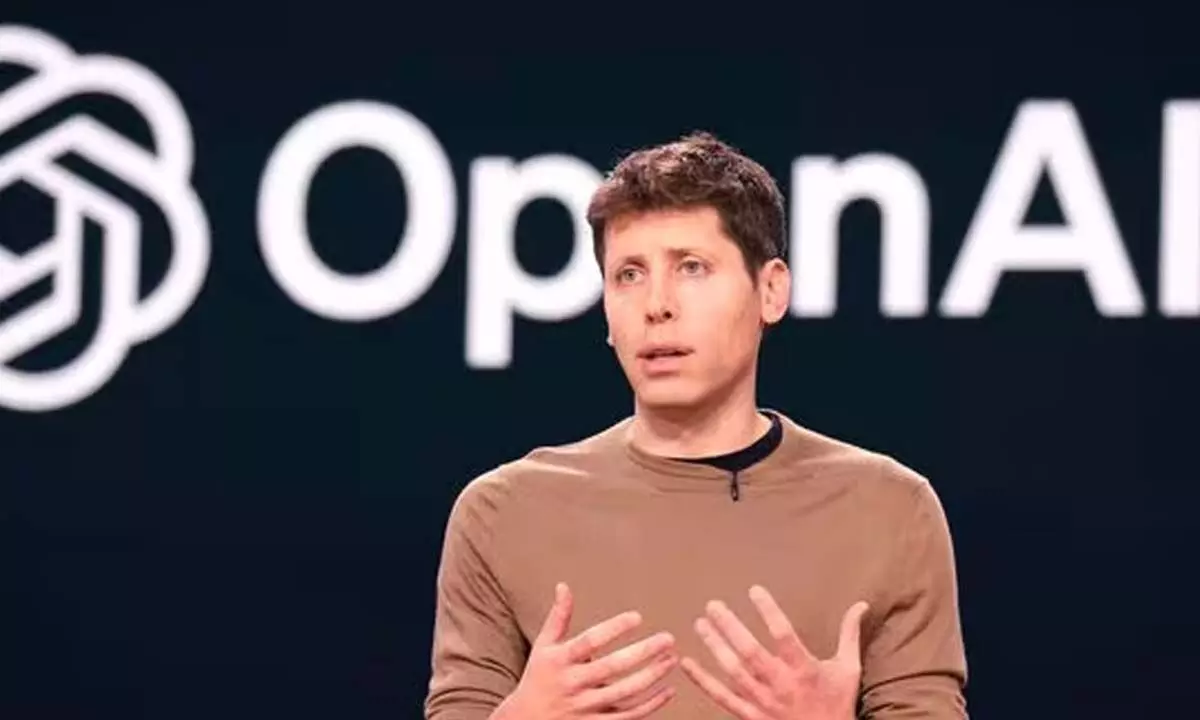
OpenClaw creator Peter Steinberger joins OpenAI to spearhead personal AI agents as the company shifts toward multi-agent systems.
In a significant move for the rapidly evolving artificial intelligence space, Peter Steinberger — the creator of OpenClaw — has officially joined OpenAI. The announcement was made by OpenAI CEO Sam Altman on X, confirming that Steinberger will lead the company’s efforts in building personal AI agents.
The development comes just days after AI agents powered by OpenClaw captured widespread attention on the AI-only platform Moltbook. The viral momentum around user-created personal agents has amplified discussions about the future of multi-agent systems and autonomous AI collaboration.
Altman praised Steinberger’s vision and technical depth, stating, “He is a genius with a lot of amazing ideas about the future of very smart agents interacting with each other to do very useful things for people.” The OpenAI chief also signaled a strategic shift within the company, adding, “We expect this will quickly become core to our product offerings.”
OpenAI is currently best known for ChatGPT and its advanced AI models, including GPT-5.2, as well as its newly introduced vibe-coding app, Codex. However, while OpenAI has dominated conversational AI, it had not yet fully embraced the kind of personal agent ecosystem that OpenClaw made accessible to everyday users. Steinberger’s arrival appears to fill that gap.
OpenClaw — previously known as Clawdbot and Moltbot — quickly gained popularity for enabling users to build customized AI agents capable of handling diverse tasks. Since its public debut in November, the project has experienced remarkable growth. According to Steinberger, OpenClaw has accumulated over 100,000 stars on GitHub and once recorded a peak of two million visitors in a single week.
Explaining his decision to join OpenAI, Steinberger wrote in a blog post that scaling a company was never his primary ambition. Instead, he emphasised impact. “What I want is to change the world, not build a large company and teaming up with OpenAI is the fastest way to bring this to everyone.” He further noted alignment in long-term vision, adding, “The more I talked with the people there, the clearer it became that we both share the same vision.”
For existing OpenClaw users concerned about the project’s future, both leaders offered reassurance. Altman confirmed that OpenClaw will continue to function as an open-source foundation, supported by OpenAI. “The future is going to be extremely multi-agent and it's important to us to support open source as part of that,” he wrote.
Steinberger echoed this commitment, assuring the community that OpenClaw will remain “open and independent.”
The move underscores a broader industry shift toward collaborative, multi-agent AI systems — tools designed not just to respond to users but to autonomously coordinate, interact, and solve complex problems together. With Steinberger now leading personal agent development at OpenAI, the company appears poised to expand beyond chat interfaces and into a more interconnected AI future.