NASA Unveils ‘Athena’ Supercomputer to Power Next-Generation Space Exploration

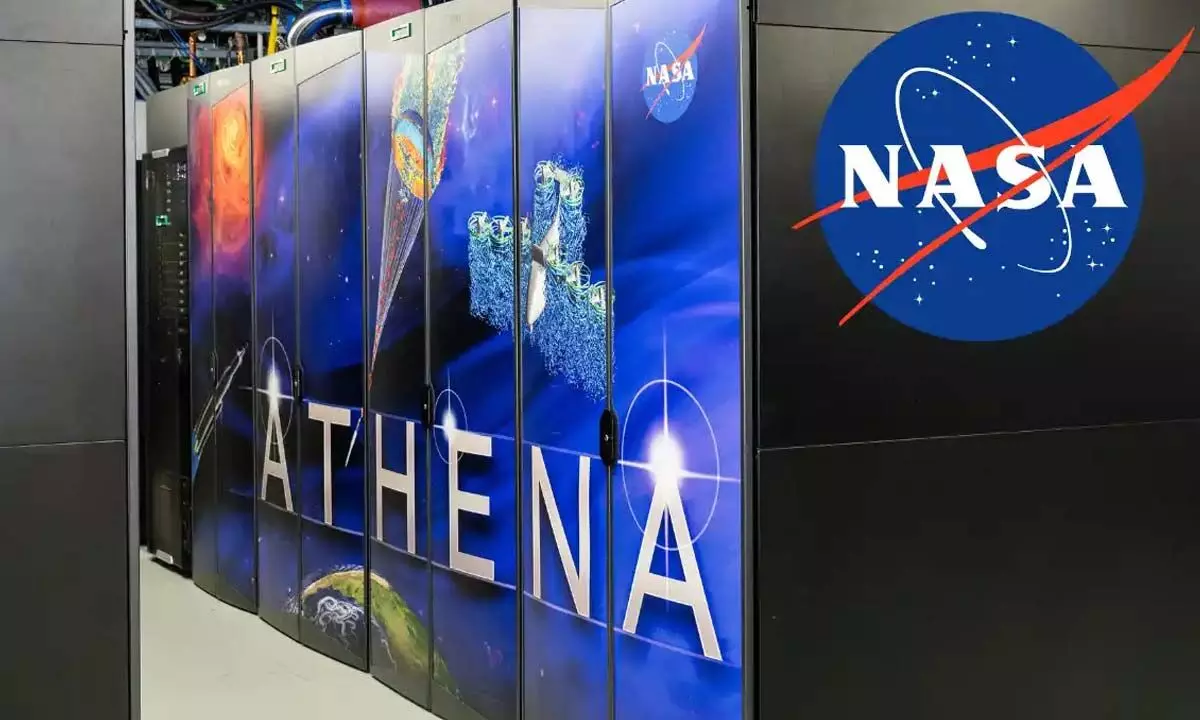
NASA’s Athena supercomputer delivers massive computing power to simulate missions, advance AI research, and transform the future of space exploration.
NASA has taken a significant leap forward in space research and mission planning with the launch of its newest high-performance supercomputer, Athena. Designed to handle some of the most complex scientific calculations ever attempted, the system promises to reshape how the agency prepares for future space missions and studies the universe.
Installed in California, Athena is built to process vast amounts of data at incredible speeds. The machine will support everything from spacecraft design and orbital simulations to studying distant celestial bodies and tracking unknown objects in deep space. By running millions of calculations in seconds, NASA hopes to reduce uncertainties and improve mission safety and efficiency.
According to the agency, Athena stands out for both its raw power and thoughtful engineering. NASA claims Athena can solve advanced mathematical problems in seconds thanks to its 20 petaflops of peak performance which makes it capable of solving 20 quadrillion calculations. This level of computing strength allows researchers to conduct simulations that once took days or even weeks in a fraction of the time.
Yet performance is only part of the story. Engineers have also focused on energy efficiency. Despite its enormous processing capability, Athena has been designed with smarter cooling systems and reduced operational costs. This efficient architecture could help NASA redirect savings toward developing new spacecraft and mission hardware instead of spending heavily on system maintenance.
Access to Athena will not be limited to internal teams. The supercomputer is available to NASA researchers and external scientists and researchers supporting NASA programs who can apply for time to use the system," NASA in its detailed post. This open-access approach is expected to encourage collaboration and accelerate discoveries across scientific communities.
Beyond crunching numbers, Athena will play a key role in advancing artificial intelligence. NASA plans to use the system to train AI models that can simulate mock missions with greater precision. These models could help astronauts better understand how to approach planetary orbits, navigate space hazards, and plan landings with fewer risks.
The new system will operate under the supervision of NASA’s Chief Science Data Officer, enabling a flexible hybrid computing setup that blends supercomputers with commercial cloud platforms. This integration gives scientists more tools to handle large-scale research projects efficiently.
By processing enormous datasets about planetary conditions, atmospheres, and terrain, Athena will also allow NASA teams to design spacecraft tailored specifically to each mission’s challenges. From mission planning to launch strategy, the system is expected to influence nearly every stage of exploration.
With Athena now online, NASA is positioning itself at the forefront of scientific computing. The supercomputer represents not just faster calculations, but a smarter, more connected future for space exploration — one where technology helps humanity reach farther and understand more than ever before.