India’s AI Summit Signals a Bold Global Shift

India’s AI Impact Summit 2026 positions the nation as a decisive global force shaping inclusive and sovereign artificial intelligence governance
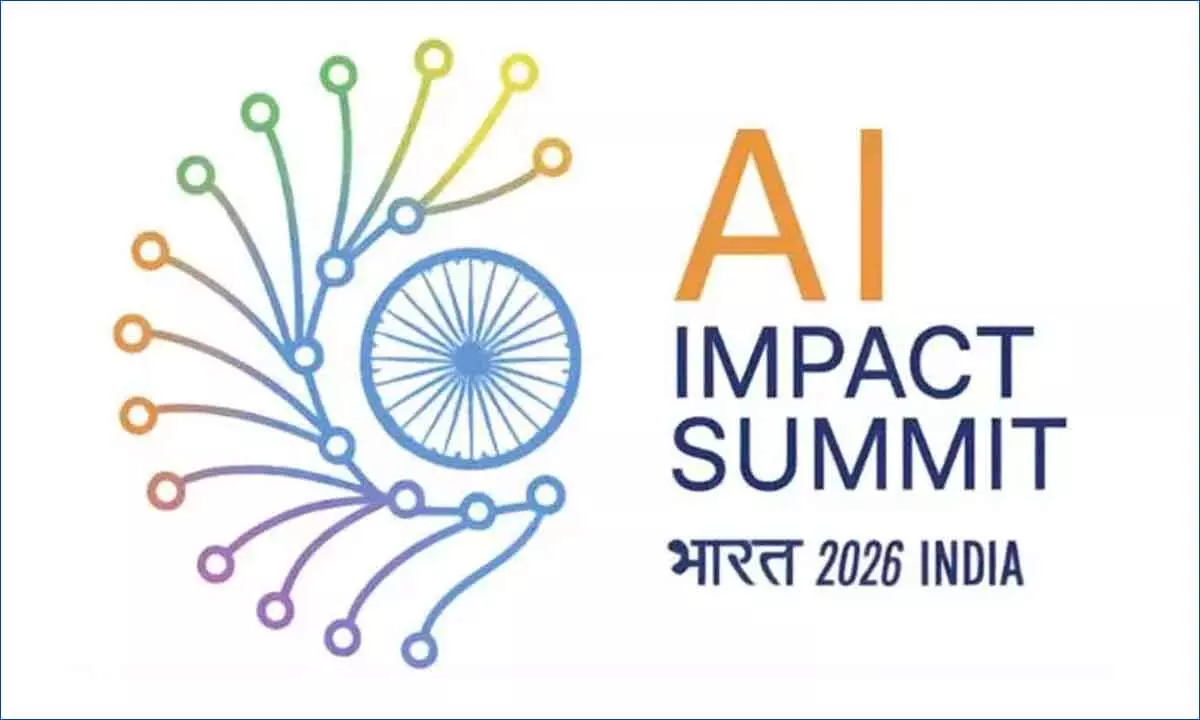
India has transformed a high-profile technology gathering into a defining geopolitical moment. The India AI Impact Summit 2026, held at Bharat Mandapam in New Delhi, has gone beyond innovation showcases to position the country as a key voice shaping the global artificial intelligence narrative. With more than 2.5 lakh attendees and participation from world leaders and technology giants, the event has underscored India’s growing influence in the AI ecosystem.
Among the distinguished attendees were French President Emmanuel Macron, OpenAI CEO Sam Altman, and Google CEO Sundar Pichai. Their presence highlighted the summit’s global relevance. But beyond the impressive guest list, the message from New Delhi was clear: the Global South intends to play a decisive role in shaping AI governance rather than merely adopting technologies developed elsewhere.
A New Economic Horizon
The economic optimism surrounding the summit has been striking. Veteran filmmaker Shekhar Kapur described AI as a transformative force that could add $1 trillion annually to India’s GDP. He emphasised that the “democratic nature" of AI enables young innovators—regardless of whether they studied at elite institutions like the IITs—to participate meaningfully in the tech revolution.
Echoing this forward-looking outlook, Union IT and Electronics Minister Ashwini Vaishnaw projected that India could draw over $200 billion in AI-driven investments within the next two years. These investments are expected to flow into infrastructure, semiconductor manufacturing, and energy systems, creating a robust foundation for sustained growth.
Investing in Talent and Innovation
The summit also spotlighted India’s ambition to expand its AI research talent pool. Rajan Anandan, Managing Director at Peak XV Partners, highlighted the concept of “talent density.” He pointed out that while countries like the United States and the United Kingdom boast thousands of top-tier AI researchers, India currently has roughly 200. The national aspiration, he suggested, is to grow that number to between 10,000 and 15,000 to remain globally competitive.
Backing this vision with financial commitment, Peak XV Partners announced an investment of ₹160 crore in five early-stage AI startups. These ventures are focused on building “population-scale" products designed to address the needs of India’s 900 million internet users, demonstrating how AI can directly impact everyday life.
Debate and Democratic Tensions
Despite the celebratory tone, the summit has not been without controversy. The government’s proposal to require social media platforms to remove “problematic" AI-generated content within three hours has triggered debate. Digital rights activist Nikhil Pahwa raised concerns over potential implications for free expression. Yet, he also described the summit as a “transformational moment,” expressing gratitude to Prime Minister Narendra Modi and his administration for hosting the landmark event.
A Civilisational Turning Point
Global economist Steve Hanke observed that India’s “Sovereign AI" framework represents a distinct alternative to the American market-driven approach and Europe’s regulation-heavy model. Rooted in the philosophy of “Sarvajan Hitay, Sarvajan Sukhaye,” India’s vision emphasises inclusive growth and shared technological progress.
As the summit draws to a close, the anticipated “Delhi Declaration” is expected to formalise India’s AI blueprint, offering a collaborative roadmap for the Global South. What began as a technology conference has evolved into a powerful statement of intent: India is not just participating in the AI era—it is shaping its direction.