India Unveils ‘VoicEra’ Open-Source AI Stack to Power Multilingual Voice Services

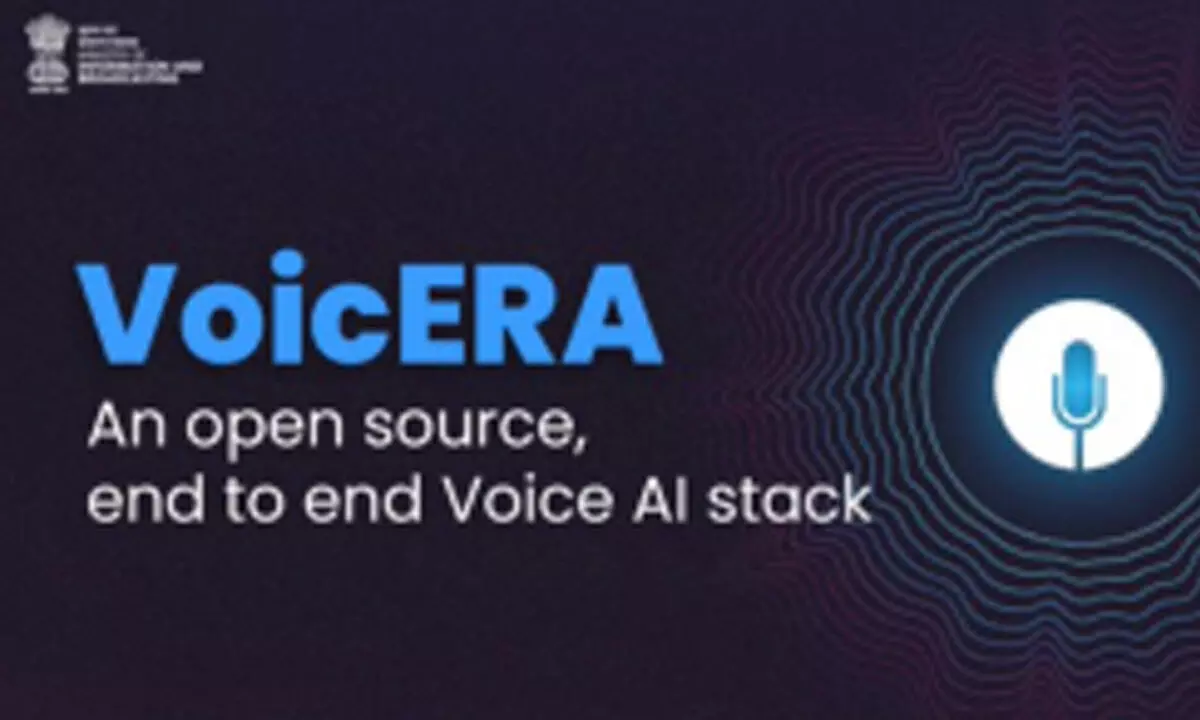
India launches VoicEra, an open-source AI voice stack to strengthen sovereign, multilingual digital services across government and platforms.
The Indian government has introduced VoicEra, a new open-source AI voice technology stack aimed at accelerating the development and deployment of voice-enabled services across the country. The announcement was made at the India AI Impact Summit 2026, underscoring India’s growing emphasis on sovereign AI infrastructure and local innovation.
VoicEra is designed as a comprehensive AI stack for voice capabilities, enabling developers, startups, and public institutions to build scalable and customizable voice-powered applications. As digital communication increasingly shifts toward voice interactions—particularly on platforms like WhatsApp—the government aims to leverage this behavioral change to modernize digital services nationwide.
Voice-based communication has emerged as a powerful alternative to text, offering accessibility and convenience. Global technology leaders such as Google and OpenAI have already demonstrated how voice assistants can simplify daily tasks, information access, and digital engagement. With VoicEra, India intends to build similar capabilities using locally developed AI models that are optimized for Indian languages and contexts.
According to the government, VoicEra functions as a full-stack solution that supports seamless cross-platform integration through voice APIs. This means developers can deploy voice-enabled services across devices and operating systems without being restricted to a single ecosystem. Importantly, the stack can be hosted on domestic servers, reducing dependence on foreign infrastructure and strengthening data sovereignty.
One of the key objectives behind VoicEra is to modernize existing government systems by integrating AI-driven voice services at scale. By doing so, authorities hope to enhance efficiency, accessibility, and security across public platforms. The open-source framework further allows developers to customize solutions according to regional needs, whether that involves creating voice assistants, translation tools, or citizen service interfaces.
The broader context of VoicEra’s launch ties into India’s push for sovereign AI. Discussions at the summit emphasized the importance of retaining data within national borders and building indigenous technological capabilities. As digital governance expands, secure and locally controlled AI systems are increasingly viewed as critical infrastructure.
Language diversity also plays a central role in the initiative. India’s vast multilingual population often faces barriers in accessing digital services designed primarily in English or limited regional languages. By enabling localized voice models, VoicEra aims to bridge this gap and extend AI-driven solutions to rural and underserved communities.
The government believes that what began as a convenience feature in messaging platforms could soon transform into a foundational layer of digital governance. Voice-enabled services, once limited to private apps, may eventually become embedded across public systems—from citizen support services to administrative processes.
With VoicEra, India signals its intention not just to adopt AI technologies, but to build and control the underlying frameworks powering them. If successfully implemented, the open-source stack could accelerate innovation, improve inclusivity, and position India as a leader in multilingual voice AI solutions tailored to its unique demographic landscape.