Artificial Intelligence in Cybersecurity: Practical Perspectives from Sudhir Kumar Rai

Artificial intelligence has become an integral part of modern cybersecurity operations. As digital threats grow in scale and complexity, organizations increasingly depend on data-driven systems to detect, prioritize, and respond to incidents in near real time. Machine learning and, more recently, generative AI are now embedded across security pipelines, supporting faster analysis of large, noisy datasets and assisting analysts in high-pressure operational environments.
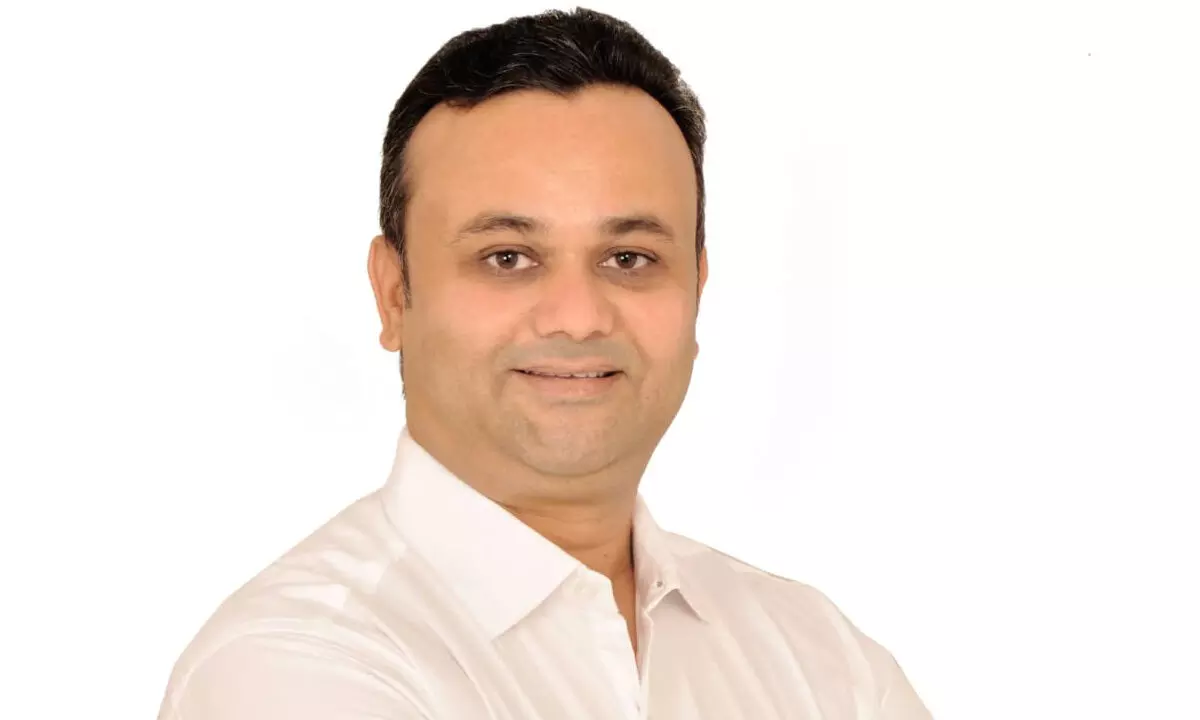
Sudhir Kumar Rai works at the intersection of artificial intelligence, large-scale data systems, and cybersecurity. With experience applying machine learning across domains such as financial fraud detection and enterprise security, he currently serves as Director of Data Science at Trellix, where his work focuses on building AI systems for threat detection, alert triage, and security intelligence.
In a conversation with The Hans India , Sudhir Kumar Rai , director of Data science reflects on his professional journey, the practical realities of applying AI in cybersecurity, and how emerging technologies and regulatory frameworks are shaping enterprise AI adoption.
How did you enter the field of data science and cybersecurity?
Rai: My early training was grounded in mathematics and analytical problem-solving, which naturally led me toward data science. As I gained experience with machine learning, I became increasingly interested in applying these techniques in environments where outcomes matter immediately. Cybersecurity stood out because of its urgency and constant evolution. It’s a domain where models must perform reliably under real-world constraints, not just in controlled settings.
You’ve worked with globally distributed teams. What helps maintain alignment across regions?
Rai: Clear goals and shared context are essential. Teams need to understand not only what they’re building, but why it matters within a broader system. Regular design reviews, strong documentation, and structured knowledge-sharing help maintain consistency. At the same time, distributed teams bring diverse perspectives that often improve system design, particularly in complex domains like security.
What role do you see generative AI playing in cybersecurity?
Rai: Generative AI has the potential to improve analyst efficiency, especially in areas like alert summarization and prioritization. It can help surface context and reduce cognitive load. At the same time, it introduces new risks, including more convincing phishing and automated attack techniques. Defensive systems need to evolve accordingly, combining traditional detection with methods that can identify AI-assisted threats.
How should organizations address concerns around explainability and ethics?
Rai: Governance needs to be embedded throughout the model lifecycle. In security and regulated environments, decisions must be interpretable and auditable. Techniques that improve transparency should be part of system design from the start. Privacy-preserving methods, such as federated learning, are also becoming more relevant as data sources grow increasingly distributed.
What are the main challenges of operating AI at cybersecurity scale?
Rai: Three challenges stand out: data volume, signal-to-noise ratio, and model drift. Security systems process extremely high-velocity data streams, often under strict latency requirements. Threat patterns change quickly, so models must adapt without sacrificing reliability. Continuous evaluation and human-in-the-loop feedback are critical to keeping systems effective over time.
How are regulations influencing enterprise AI development?
Rai: Frameworks such as the EU AI Act are pushing organizations toward more disciplined engineering practices. While compliance adds complexity, it also encourages better documentation, accountability, and risk management. Teams that factor regulatory considerations into system design early tend to scale more smoothly.
Upcoming Critical Pivot in GenAI Adoption
Looking ahead, artificial intelligence is expected to play an even greater role in cybersecurity operations. The focus is shifting toward systems that are not only scalable, but also interpretable and resilient to adversarial change. As AI becomes more deeply embedded in security infrastructure, practical, governance-aware approaches will be essential to ensuring these technologies deliver meaningful real-world impact.