AI Builds a Web Browser in a Week: Ambitious Experiment Sparks Online Debate

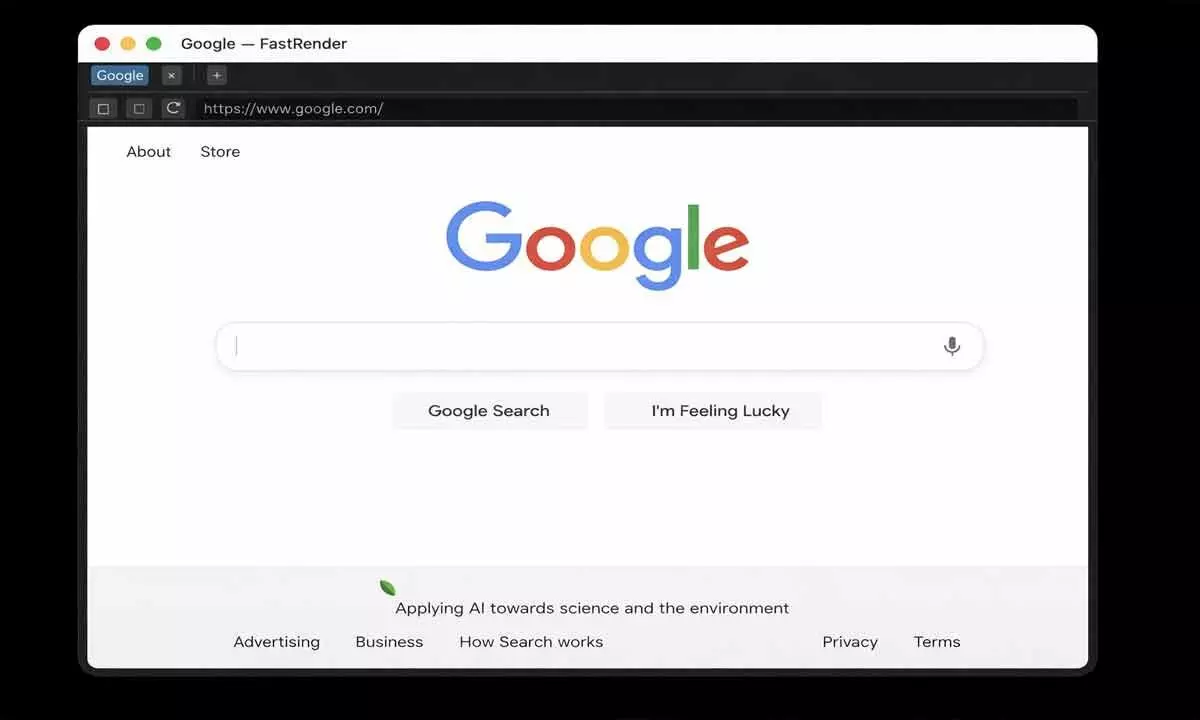
Cursor CEO says AI built a web browser in one week, but experts and users remain cautious about real-world usability.
Artificial intelligence is evolving at a breathtaking pace, and a recent experiment by Cursor has once again pushed the boundaries of what machines can achieve. Cursor CEO Michael Trulli revealed that his team used an AI system to build an entire web browser in just one week—an achievement that has both impressed and unsettled the tech community.
Cursor has rapidly gained attention in recent months as “vibe coding”—the practice of letting AI handle large portions of software development—has become increasingly practical. Trulli shared on X that his company tasked an AI coding agent with creating a full browser from scratch. According to him, the model completed the project in seven days without human intervention.
Describing the scale of the effort, Trulli wrote, “It's 3M+ lines of code across thousands of files. The rendering engine is from-scratch in Rust with HTML parsing, CSS cascade, layout, text shaping, paint, and a custom JS VM.” He also posted a screenshot showing the AI-built browser loading Google’s homepage—proof that the software at least runs.
However, Trulli was quick to manage expectations. “It kind of works! It still has issues and is of course very far from Webkit/Chromium parity,” he admitted. In a follow-up, he clarified that this was never meant to be a finished product. “There are definitely lots of issues! This was an experiment in pushing the frontier of what coding agents can do. The result is very very far from production software.”
The project relied on GPT 5.2 Codex, an OpenAI model designed for extended autonomous tasks. Trulli explained that the AI handled everything from parsing HTML and managing CSS layouts to building a custom JavaScript virtual machine—components that normally require years of coordinated engineering effort.
Despite the technical feat, online reactions have been mixed. While many praised the ambition behind the project, others questioned its real significance. Several users pointed out that Chromium—the open-source foundation behind Google Chrome and Microsoft Edge—contains more than 35 million lines of code. Compared to that, 3 million lines may seem modest, even if produced at remarkable speed.
Skeptics also asked practical questions: What prompt was used? How many tokens did it consume? Was Chromium used as inspiration? These doubts highlight a broader concern—whether AI-generated software can match the reliability, security, and performance of mature, human-built systems.
Still, the experiment underscores a growing trend. AI systems are increasingly capable of working autonomously for long stretches. Anthropic, for instance, claims its Claude Sonnet 4.5 model can code a full application in 30 hours. Together, these developments suggest that AI’s role in software engineering is expanding rapidly.
For now, Trulli’s browser remains a proof of concept rather than a competitor to Chrome or Safari. Yet it signals a future where AI may drastically shorten development cycles—raising both excitement and anxiety about what lies ahead for programmers and the tech industry alike.