Adobe Unveils AI Assistant in Photoshop: Edit Images Effortlessly with Simple Prompts

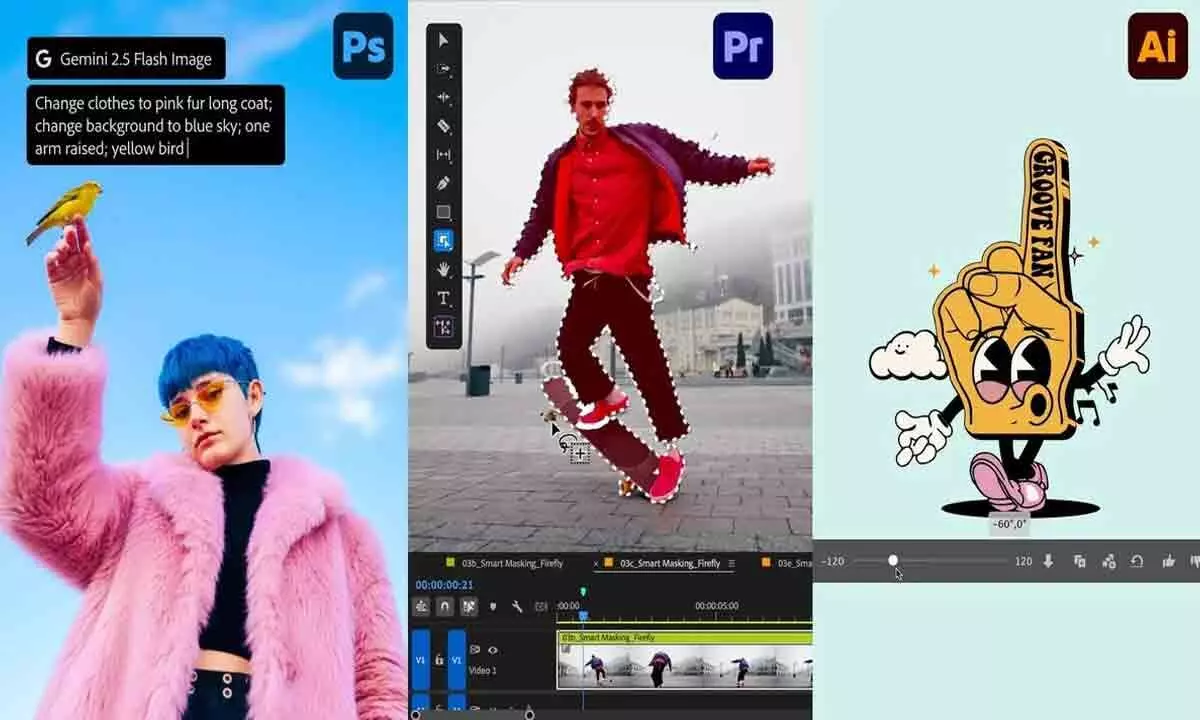
Adobe launches “Prompt to Edit” in Photoshop, enabling users to transform photos using natural language commands powered by Firefly Image Model 5.
Adobe has taken another major step into the future of creative design with the launch of its new AI Assistant in Photoshop. Introduced during the company’s annual Adobe MAX 2025 event, the feature—called Prompt to Edit—allows users to perform advanced image edits simply by describing them in everyday language.
Powered by Adobe Firefly Image Model 5, this conversational AI tool lets users modify existing images without needing to navigate complex tools or layers. Instead, users can type prompts like “remove the background,” “soften the lighting,” or “add a reflection”—and the AI automatically executes the edits while preserving other elements of the image.
Adobe explained that Prompt to Edit functions similarly to a text-to-image generator, but instead of producing new images, it enhances or modifies existing ones. For instance, users can type, “brighten the sky and make it sunset orange,” and Photoshop will intelligently adjust the lighting and colour while maintaining the integrity of the original composition.
According to Adobe, the goal behind this feature is to simplify creative workflows and make professional-level editing accessible to everyone—from designers and photographers to casual users. The move also reflects Adobe’s growing focus on agentic AI, a new generation of tools designed to streamline creation and collaboration across its software suite.
In addition to the new Photoshop upgrade, Adobe previewed Project Moonlight, a forthcoming conversational assistant that will work across Photoshop, Firefly, and other Adobe apps. This AI companion will offer real-time creative suggestions, content insights, and workflow support, helping users generate and refine ideas faster.
The underlying Firefly Image Model 5, which powers these new capabilities, is now available in public beta. Adobe claims it can handle complex, multi-layered image compositions with enhanced photorealism. The model can generate visuals in native 4MP resolution while maintaining consistent lighting, texture, and movement—critical for high-end design projects.
Adobe also announced several new features for its Firefly creative AI studio, which now combines image, video, and audio generation in one platform. Among the latest tools are Generate Soundtrack, which creates fully licensed AI-generated music, and Generate Speech, capable of producing natural-sounding voiceovers in multiple languages. Both are currently available in public beta and can be synced directly with video editing projects.
For video creators, Adobe unveiled a timeline-based AI video editor—currently in private beta—that merges traditional editing with generative features. This tool allows users to trim, arrange, and modify video clips through simple text commands.
Another exciting addition is Custom Models, a Firefly feature that enables creators to train their own AI models based on unique styles or brand guidelines. This ensures consistent outputs across creative projects. Adobe revealed that it is partnering with Google, OpenAI, ElevenLabs, and Topaz Labs to expand its AI ecosystem.
The company also introduced updates to Firefly Boards, an AI-powered ideation tool, adding capabilities like 3D rotation, preset generation, and bulk export for faster collaboration.
Most of these innovations are being released in phases. The Prompt to Edit feature and Firefly Image Model 5 are already available, while the new video, audio, and custom model tools will begin rolling out to early-access users next month.
With these advancements, Adobe continues to bridge the gap between creativity and AI, making design more intuitive, faster, and accessible than ever before.