2026 Is the New 2016: Innovations That Still Define Everyday Life after a Decade

A decade later, the breakthroughs of 2016 still power how we live, move, and connect in 2026. From wireless audio to smart homes and creator tools, these innovations quietly became everyday essentials
In an era obsessed with what is next, many of today’s defining habits, like how we groom, drive, create content, shop, and interact with technology, were shaped a decade ago. People are calling 2026 the new 2016, and the comparison is more than a passing trend.
What made 2016 significant was the combination of practicality, design, and technology that felt accessible while still being forward-thinking. We saw various innovations disrupting their respective industries. Ten years later, its impact is still visible in the products and innovations we rely on every day.
Below are 8 iconic products and innovations from 2016 that didn’t just survive the hype cycle, but they defined the next decade
1. Dyson Supersonic Hair Dryer
Engineering reshaped beauty routine
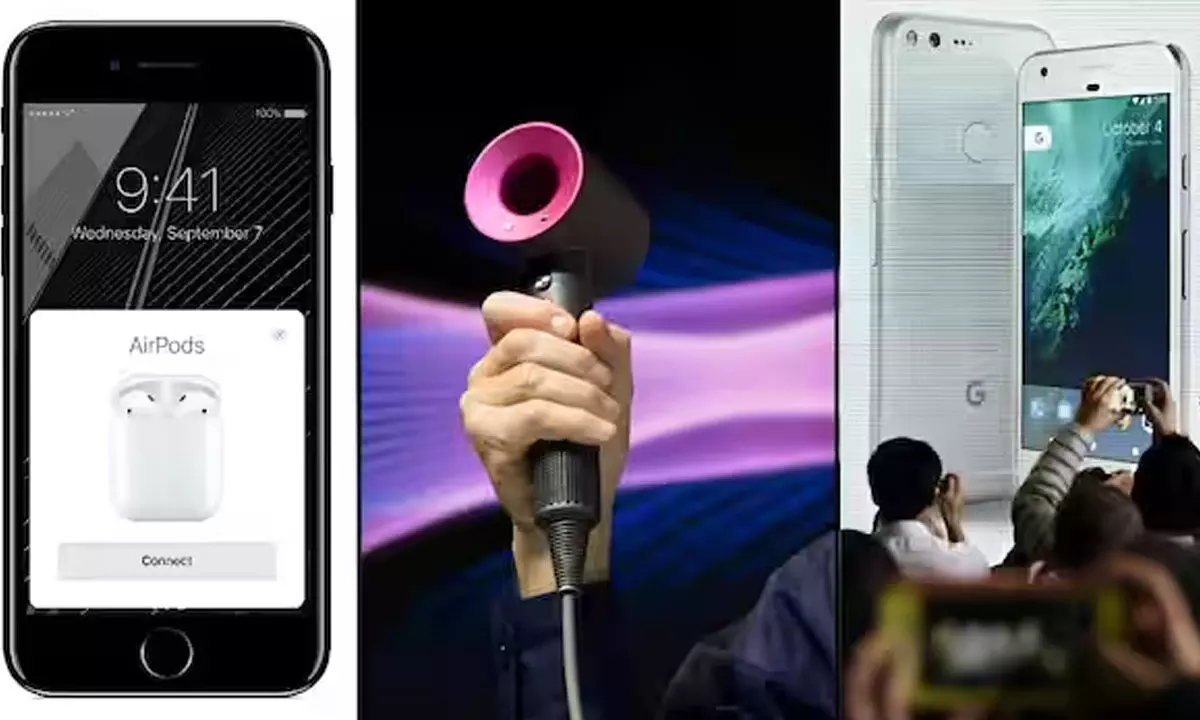
When Dyson introduced the Supersonic in 2016, it challenged what a hair dryer was supposed to be, for the first time in over two decades. The motor was no longer in the head. Heat was controlled rather than extreme. Noise was reduced through acoustic engineering. Airflow became precise, digitally balanced, and deliberately directed. Drawing on five years of research and hundreds of prototypes, Dyson applied its digital motor technology and intelligent heat control to rethink a category that had seen little meaningful design evolution in over 22 years. As James Dyson noted at launch, the goal was simple but radical, to solve everyday hair problems through engineering, not styling shortcuts. Today, it is no longer a novelty; it is a benchmark.
Why it’s iconic: It created the beauty tech category, proving that consumers will invest in performance, not just promises.
2. Apple iPhone 7 and AirPods
The most hated decision everyone copied
When Apple removed the headphone jack with the iPhone 7, the backlash was immediate. Many called it unnecessary. But that single decision accelerated the shift to wireless audio. Soon after, AirPods arrived, offering a seamless, cord-free experience that redefined everyday listening. What initially felt disruptive quickly became the norm. Today, wireless earbuds are standard, and entire accessory ecosystems exist because of this shift.
Why it is iconic: It reshaped consumer behaviour and pushed the industry into the wireless era faster than anyone expected.
3. Google Pixel
Software and hardware, built together
Google’s first in-house smartphone combined Android software with proprietary hardware, delivering features like a standout camera, Google Assistant, and fast updates. It set a benchmark for phones designed by software companies and raised expectations for how software integration could enhance daily device use.
Why it’s iconic: It influenced modern smartphones’ cameras, AI, and software design.
4. Amazon Echo & Alexa
The first time talking to tech felt normal
Alexa wasn’t the first voice assistant, but it was the first people invited into their homes. By making voice interaction casual and ambient, Amazon changed how we interact with technology altogether. Today, voice interfaces are everywhere from homes to cars to workplaces.
Why it’s iconic: It introduced voice as a daily interface, not a gimmick
5. Tesla Autopilot Goes Mainstream
The moment driving stopped being just driving
While autonomous driving existed before, Tesla Autopilot was the first system ordinary people used in real-world conditions. It shifted public imagination from “someday” to “this is already happening.” By 2026, driver assistance systems are standard, but Tesla made the idea culturally acceptable first.
Why it’s iconic: It reframed cars as software platforms, not just machines.
6. Nike HyperAdapt 1.0
Sci-fi you could actually wear
Straight out of Back to the Future, Nike’s self-lacing shoes felt excessive and that was the point. They weren’t meant to be mass-market immediately; they were a statement of intent. Today, adaptive fit, smart apparel, and connected wearables owe a nod to this bold experiment.
Why it’s iconic: It blurred the line between fashion, sport, and technology.
7. GoPro Hero5 Black
The birth of the creator-first camera
Waterproof without a case, voice-controlled, and capable of 4K, the Hero5 was built for moments, not manuals. It empowered users to document life as it happened. Even as smartphones improved, GoPro retained its place by owning a specific kind of storytelling.
Why it’s iconic: It made everyone a creator, long before “creator economy” was a buzzword.
8. Instagram Stories
The feature that changed how the internet communicates
In one move, Instagram reshaped content creation, brand storytelling, and news consumption. Stories prioritised authenticity, speed, and impermanence values that still dominate social media today.
Why it’s iconic: It changed how stories are told, not just where.
A decade on, these innovations remain relevant not because they were first, but because they were right. Each addressed real behaviours rather than imagined futures. Their longevity is a reminder that impact is defined by how seamlessly technology fits into everyday life.