Sundar Pichai Says ‘Vibe Coding’ Is Transforming App Development

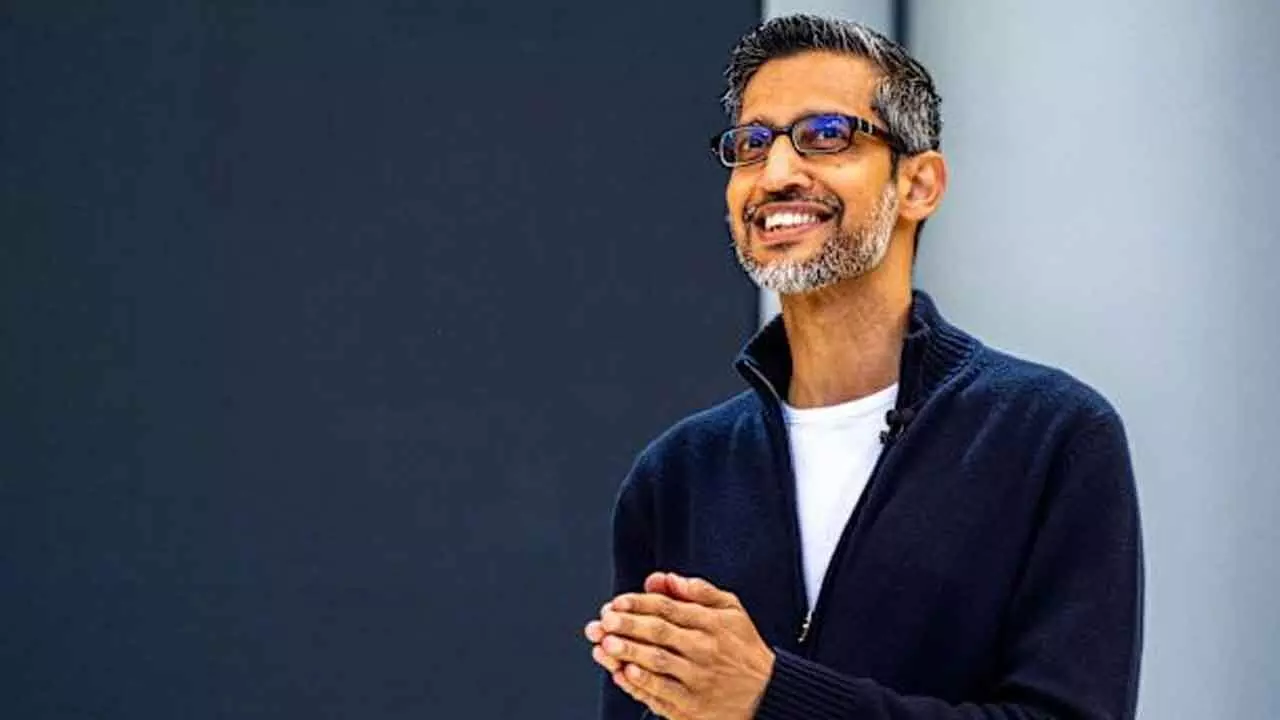
Vibe coding is enabling non-engineers to build apps through simple descriptions, but Sundar Pichai warns it’s not ready for complex systems.
Google’s long-standing mission to make technology accessible to everyone appears to be turning into reality, and at a scale the company once only imagined. In a recent episode of the Google for Developers podcast, CEO Sundar Pichai revealed that a quiet but powerful shift is underway in the world of software creation. According to him, people with no traditional coding background are now building apps simply by describing what they want—ushering in a new wave of “vibe coding.”
Pichai said AI-assisted development tools have matured enough that someone working in HR, finance, or any non-technical field can start experimenting with app ideas within minutes. Drawing a parallel with the early age of digital content, he recalled how blogging and YouTube turned ordinary individuals into global creators. In the same spirit, he believes vibe coding is opening new avenues for creativity, careers, and entrepreneurship.
The Google CEO pointed out that platforms such as ChatGPT, Google’s Gemini, Claude, and Replit are lowering the barriers to app building. “It’s making coding so much more enjoyable… things are getting more approachable, it’s getting exciting again,” he said. The most promising part, he added, is that the technology “will only get better” from this point onward.
One of the biggest advantages of vibe coding, Pichai explained, is the ability to show ideas visually instead of relying solely on verbal descriptions. Traditionally, non-engineers would try to explain features to developers and hope the final product matched their vision. Now, he said, people can create a basic version themselves. “In the past, you would have described it. Now, maybe you’re kind of vibe coding it a little bit and showing it to people,” he noted.
This trend isn’t confined to amateurs. Within major tech giants, vibe coding has become a popular way to test concepts quickly. Pichai shared that Meta’s product managers have used it to build prototype apps and present them to Mark Zuckerberg. Inside Google too, more employees—many writing code for the first time—are submitting small changelists that fix bugs or introduce simple features.
However, Pichai cautioned against assuming that AI-driven coding is ready for every scenario. He emphasized that vibe coding is not suited for complex, large-scale, or highly sensitive systems that require rigorous security and precision. “I’m not working on large codebases where you really have to get it right, the security has to be there,” he said, underscoring the continued importance of experienced engineers in mission-critical software.
Despite the limitations, Pichai described this moment as both thrilling and foundational. Watching people experiment with AI, he said, feels like witnessing the beginning of something transformative. “It’s both amazing to see, and it’s the worst it’ll ever be,” he remarked, suggesting the coming years will reshape software development even further.
Reflecting on Google’s journey, Pichai reminded listeners that the company began preparing for an AI-first world years ago. The shift traces back to his 2016 vision, supported by earlier milestones such as Google Brain (2012), the DeepMind acquisition (2014), the breakthrough AlphaGo victory, and the development of tensor processing units. These efforts, he said, built the foundation for today’s rapid progress.
For now, vibe coding stands as an experimental yet powerful tool—one that encourages creativity, sparks curiosity, and gives more people the chance to bring their ideas to life.