New AI Hack Uses Radar to Eavesdrop on Phone Calls from 10 Feet Away

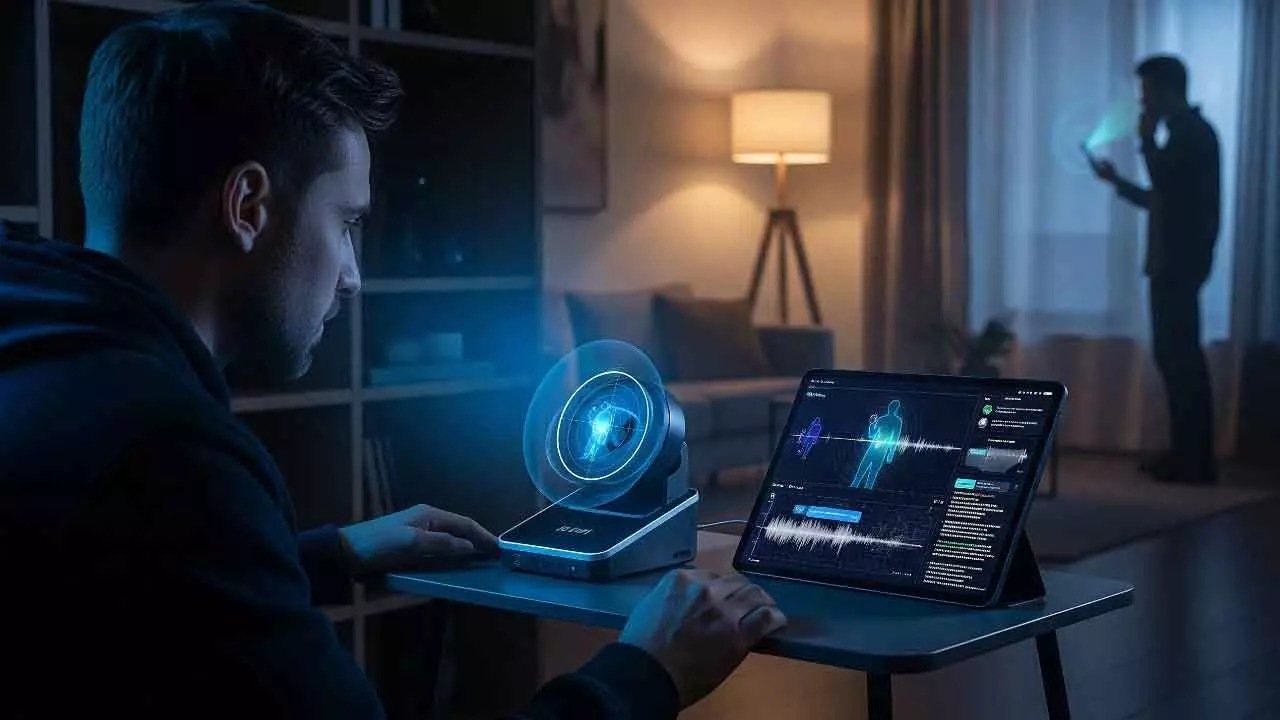
Penn State researchers develop an AI-radar system that can transcribe phone calls from 10 feet away, raising alarming privacy concerns.
Artificial intelligence continues to be a double-edged sword—unlocking revolutionary possibilities on one hand, while raising serious security threats on the other. A new study by researchers at Penn State University has now brought to light an unsettling development: an AI-powered wireless-tapping system capable of eavesdropping on private phone conversations from as far as 10 feet away.
The research was presented at the 18th ACM Conference on Security and Privacy in Wireless and Mobile Networks (WiSec 2025) and has since stirred concerns about the future of privacy in an AI-driven world.
How the system works
The experimental setup, described as “wireless-tapping,” uses radar signals to detect the minute vibrations produced by a smartphone’s earpiece during a phone call. These vibrations, though imperceptible to the human eye or ear, carry enough information for AI models to reconstruct parts of the spoken conversation.
“Whenever we talk on the phone, a caller’s voice is played through the earpiece speaker, creating tiny vibrations across the phone’s surface. If we capture these same vibrations using remote radars and bring in machine learning to help us learn what is being said, we can determine whole conversations,” explained Suryoday Basak, a doctoral researcher at Penn State’s College of Engineering.
The team used a millimetre-wave radar sensor—commonly found in 5G networks, motion detectors, and self-driving cars—to capture these subtle surface movements. Positioned a few meters away from the target device, the radar was able to pick up vibration data, which was then processed using an AI tool.
Whisper AI with a twist
For speech recognition, the researchers turned to Whisper, an open-source AI model created by OpenAI. Instead of retraining the entire model, they applied a technique known as low-rank adaptation, tweaking just 1 percent of Whisper’s parameters. This adjustment enabled the AI to make sense of noisy, radar-based input, which differs significantly from the clean audio Whisper is typically trained on.
The results, while not flawless, were startling. The AI system successfully reconstructed phone call transcripts with about 60 percent accuracy when tested against a vocabulary set of 10,000 words. While incomplete, these transcripts were detailed enough to capture identifiable phrases, raising serious questions about potential misuse.
Privacy risks and the road ahead
Though the Penn State team emphasized that their project was created purely for academic exploration, the implications are clear. As radar sensors become smaller and more affordable, and AI transcription tools continue to advance, the risk of covert wireless spying grows exponentially.
The researchers even pointed out that radar chips could eventually be embedded into everyday objects—like pens, smart home devices, or office gadgets—making hidden surveillance far easier to deploy.
While the current technology is still experimental and not yet practical for widespread use, this study serves as a wake-up call. As AI continues to intersect with emerging sensor technologies, the need for stronger privacy protections and awareness has never been more urgent.