From Caution to Concern: The Impact of Back-to-Back PSLV Failures on ISRO

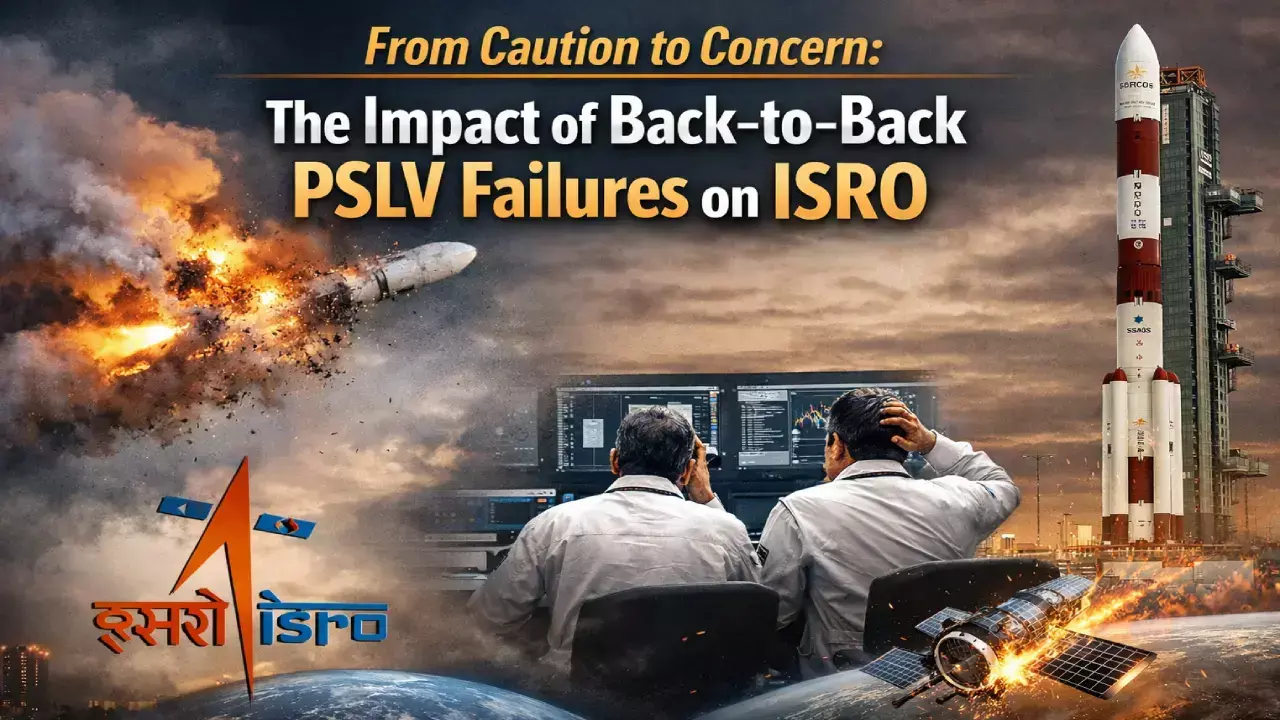
ISRO‘s dependable “workhorse” rocket suffered an anomaly during its very first launch of 2026 on Monday.
Though opinions varied between those who wouldn’t call it a failure, those who shrugged it off stoically and those who wanted answers if critical missions were being risked, the general consensus was one of hope.
India’s premier rocket endured “disturbances” near the conclusion of its third stage and was pessimistic that the EOS-N1 Earth-observation satellite as well as a group of commercial satellites will not reach their intended orbit.
India’s space program can regroup, learn and bounce back stronger next time ISRO launch failure analysis satellites to higher orbits, many across India’s space community seem to believe.
The PSLV-C62 rocket lift-off with its payload occurred at 10: 18 am from the Satish Dhawan Space Centre in Sriharikota. It was stacked with numerous payloads onboard its 44.4-metre-tall and four-stage vehicle including EOS-N1 Earth observation satellite, a small strategic hyperspectral surveillance satellite named Anvesha and a Kestrel Initial Technology Demonstrator (KID) capsule that is designed to return to Earth.
Anomalies occurred near the end of the rocket’s third stage. ISRO Chief V. Narayanan took to Twitter shortly after the launch to explain what happened.
“PSLV failure ISRO is a four-stage launch vehicle with two solid & two liquid stages. The flight till the end of the third stage was normal. Close to the end of third stage, we noticed some disturbances and the flight path deviated from what was originally planned. We are working on analysing the data, and we shall come back at the earliest,” he tweeted.
India’s new heavy-lift rocket Launch Vehicle Mark-3 did successfully launch last month from the same Sriharikota pad and still sports a pristine record.