Driving the Evolution of AI in HR: The Scholarly Impact of Kranthi Kumar Routhu

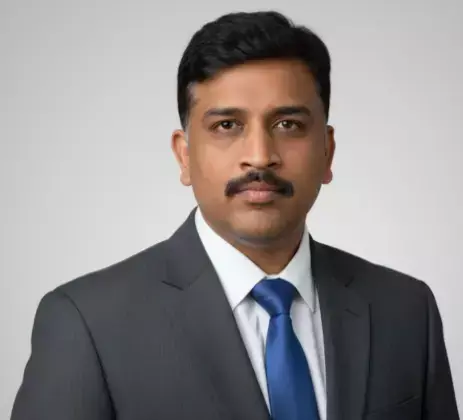
Explore how Kranthi Kumar Routhu is driving the evolution of AI in human resources through impactful research, innovation in HR analytics, and advancements in intelligent workforce management systems.
In an era where organizations are racing to embed artificial intelligence into core business functions, a new generation of HR innovators is emerging-researchers who view workforce transformation not as an operational upgrade, but as a strategic reinvention of how enterprises function. Among the most influential voices in this movement is Kranthi Kumar Routhu, whose deep portfolio of peer-reviewed publications is shaping the global discourse on AI-powered Human Capital Management. His work is exploration of automation in HR systems, yet extends far beyond task automation to redefine the intelligence layer that drives modern workforce strategy.
Across multiple journals, Routhu’s research consistently argues that HR is entering a new age-one in which the traditional gap between data and decision-making is bridged through predictive modeling, machine learning, AI-driven engagement frameworks, and next-generation Oracle HCM Cloud capabilities. His publication “Beyond Automation: AI-Powered Employee Engagement Journeys in Oracle HCM Cloud” introduces a decisive shift from episodic surveys and fragmented HR touchpoints to continuous, adaptive, and AI-orchestrated engagement ecosystems. As shown in the figures and models throughout the article, Routhu illustrates how generative AI, natural language processing, and personalized journey orchestration are reshaping the employee experience by embedding intelligence directly into the flow of work.
Many of Routhu’s papers focus on a fundamental truth: organizations have more workforce data than ever before, yet struggle to convert that data into meaningful intelligence. His works-such as “Next-Generation Workforce Planning: AI-Enabled Forecasting,” “From Reactive to Predictive: Attrition Analytics with Oracle 23AI,” and “AI-Driven Skills Forecasting in Oracle HCM Cloud”-demonstrate how predictive probability models, machine learning–based risk scoring, and AI-derived skills evolution patterns can transform HR from a reactive service function into a forward-looking strategic engine. By modeling talent risks, succession vulnerabilities, and future skill gaps, his research provides enterprises with the tools to anticipate workforce challenges months or even years before they surface.
One of the defining themes in Routhu’s publications is the argument that automation alone cannot solve HR’s most persistent challenges. Instead, he advocates for AI-embedded decision systems that enhance-not replace-human judgment. Routhu emphasizes the need for strong frameworks, trust-building mechanisms, and ethical safeguards when deploying AI within HR environments. His work on fairness-driven DEI analytics, conversational AI–based HR support models, and intelligent compensation optimization showcases a commitment to responsible, transparent, and human-centered innovation.
Routhu’s journals also devote significant attention to predictive workforce design-detailing how organizations can evolve from static competency models toward dynamic, machine-learning-based frameworks that adapt as markets, technologies, and employee expectations shift. His research on AI-powered engagement journeys shows that personalized experiences, real-time sentiment insights, and adaptive learning recommendations are now essential capabilities within Oracle HCM Cloud, as highlighted through diagrams and models in the published article.
These findings closely align with the wider industry shift, where automation is no longer viewed merely as an efficiency tool but as a foundational pillar for strategic HR transformation.
What sets Routhu apart is the architectural precision behind his ideas. His papers consistently blend deep Oracle Fusion HCM Cloud system knowledge with modern AI techniques, demonstrating how predictive dashboards, metadata-driven integration frameworks, machine-learning optimization engines, and cross-cloud architectures can be deployed at scale. This fusion of research and practical platform expertise positions him among the small but influential group of global researchers steering the future of enterprise HR technology.
As organizations navigate hybrid workforces, global skill shortages, rising mobility, and heightened expectations for personalization, Routhu’s research provides a roadmap for building resilient, intelligent workforce systems. His publications highlight a future where HR decisions are informed by predictive models, employee engagement is guided by AI-generated pathways, and workforce strategies evolve dynamically alongside organizational goals.
In a field historically dominated by administrative workflows, Kranthi Kumar Routhu represents the next frontier: a researcher redefining HR as a predictive, intelligence-driven, cloud-powered function. His body of work offers enterprises a compelling vision of what the future of human capital management can-and must-become as AI accelerates into the mainstream. Routhu’s contributions stand as a blueprint for the next evolution: AI-enabled workforce ecosystems built on strategy, intelligence, and design-driven transformation.