
Android’s Emergency Location Service Goes Live in India, Starting with Uttar Pradesh

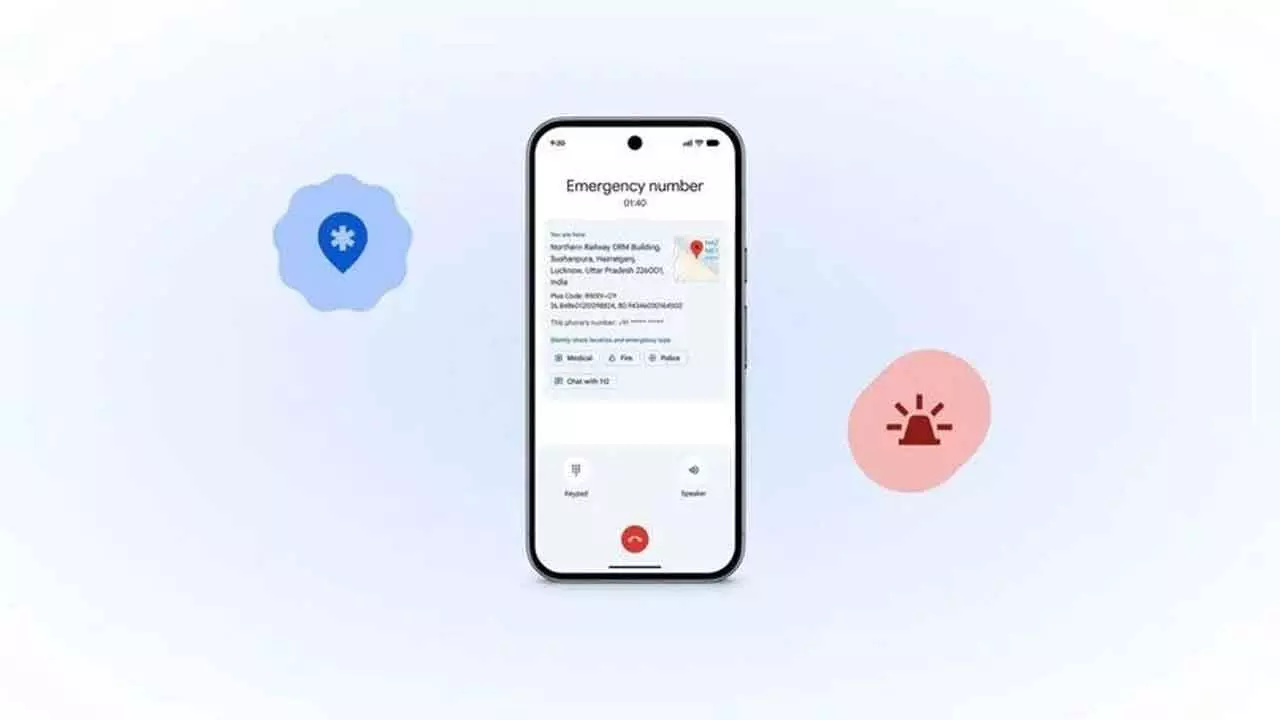
Google’s Emergency Location Service launches in India, enabling Android phones to automatically share precise locations with emergency responders during distress calls.
Google has introduced a potentially life-saving feature for Android users in India by rolling out its Emergency Location Service (ELS), beginning with Uttar Pradesh. The move marks an important step in strengthening emergency response systems in a country where reaching help quickly can often be challenging.
Emergency situations are rarely calm. People may be injured, panicked, disoriented, or unable to clearly describe where they are. Android’s Emergency Location Service is designed specifically for such moments. Once an emergency call or message is placed, the system automatically sends the caller’s precise location to emergency responders, removing the need for manual explanations when every second matters.
Although ELS has been available in several countries for years, its activation in India depends on cooperation from state authorities and emergency infrastructure providers. Uttar Pradesh has now become the first state to fully enable the service by integrating it with the emergency response number 112. This backend integration is critical, as ELS does not function automatically unless local emergency systems are prepared to receive and process the location data.
When an Android user in an enabled region dials or messages 112, ELS activates in the background without requiring any manual setup. The phone calculates the user’s location using a combination of GPS signals, nearby Wi-Fi networks, and cellular towers. By blending these inputs, the system can identify a caller’s location with an accuracy of up to around 50 metres. This information is then transmitted directly to emergency responders, helping them reach the scene faster and with greater confidence.
Google has emphasised that the service is free and operates strictly during emergencies. ELS does not track users during regular phone usage and shuts off automatically once the emergency interaction ends. Location sharing is triggered only when an emergency number like 112 is contacted from an Android device.
From a device perspective, ELS supports a wide range of smartphones. According to Google, the feature works on all compatible Android phones running Android 6.0 or newer. This means a large majority of active Android users in India already have access to the feature, provided their state has enabled the necessary emergency system integration.
Privacy concerns, often raised around location-based services, have also been addressed. Google says that precise location data generated through ELS is not collected or stored by the company. Instead, the information is sent directly from the user’s device to authorised emergency service providers and is accessible only for handling that specific emergency.
Globally, Android’s Emergency Location Service has already assisted in more than 20 million emergency calls and messages. One of its key strengths is reliability in difficult conditions. Even if an emergency call drops within seconds—a common issue in areas with weak network coverage—the system can still transmit location data to responders.
ELS is powered by Google’s machine learning-driven Android Fused Location Provider, which helps improve accuracy in complex environments. Alongside this rollout, Google continues to expand emergency-focused Android features, including Emergency Live Video, which allows users to share a real-time camera feed with responders after receiving a request and giving consent.
With Uttar Pradesh leading the way, the rollout of Android’s Emergency Location Service could pave the path for wider adoption across India, potentially saving countless lives.








