Altman–Amodei AI Clash Intensifies as Pentagon Deal Fuels Industry Debate

Rising tensions between OpenAI and Anthropic spotlight deep disagreements over government power, AI safety safeguards, and military use of artificial intelligence.
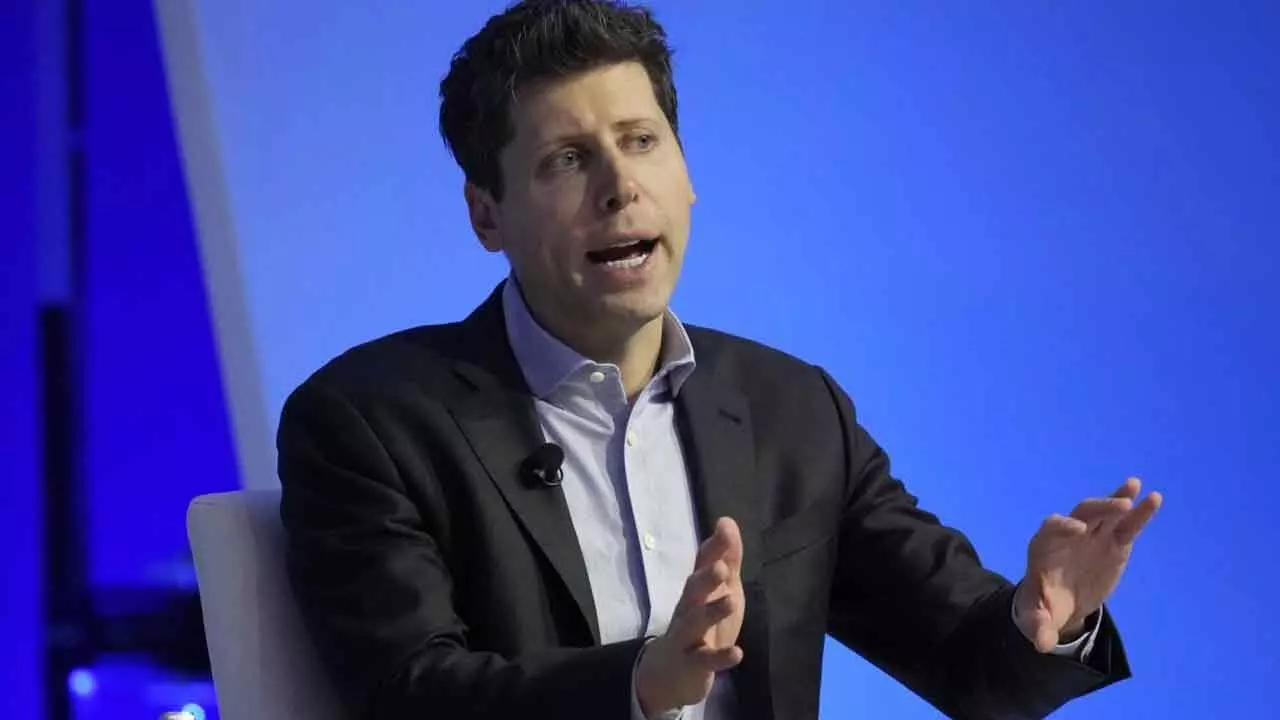
Tensions between leading artificial intelligence companies have escalated after Sam Altman, CEO of OpenAI, responded to remarks made by Dario Amodei, CEO of Anthropic, during a recent technology conference.
Speaking at the Morgan Stanley Technology, Media & Telecom Conference, Altman emphasized that governments must remain more powerful than private corporations, especially as artificial intelligence continues to reshape industries and public life. He also cautioned that it would be dangerous if companies abandoned their commitment to democratic principles simply because they disagreed with the current political leadership.
Altman’s remarks come at a time of growing friction between the two AI companies. The dispute intensified after Amodei criticised Altman’s ties with the administration of Donald Trump. Amodei also argued that Anthropic had not engaged in what he described as “dictator-style praise,” while suggesting that Altman had.
The disagreement between the companies follows weeks of tension between Anthropic and the United States Department of Defense over how AI technologies should be deployed in national security contexts.
The situation escalated further when Pete Hegseth, the U.S. Defense Secretary, labeled Anthropic a “Supply-Chain Risk to National Security.” Shortly afterward, President Trump directed federal agencies to immediately stop using Anthropic’s technology.
Only hours after that decision, OpenAI revealed it had secured its own agreement with the Pentagon. Altman acknowledged that the timing of the announcement appeared sudden, describing it as “opportunistic and sloppy,” but said the move was meant to ease tensions rather than escalate them.
Amodei has since criticized OpenAI’s defense contract. According to a report by a famous publication, he sent a memo to Anthropic employees expressing concern about the deal. In the memo, Amodei stated that the main reason OpenAI accepted the Pentagon’s terms while Anthropic did not was because, “they cared about placating employees, and we actually cared about preventing abuses.”
Anthropic had reportedly been negotiating with the Defense Department but ultimately failed to reach an agreement. The company objected to the Pentagon’s request for unrestricted access to its AI systems.
Despite already holding a $200 million military contract, Anthropic insisted on safeguards that would block the use of its AI for domestic mass surveillance or autonomous weapon systems. The Pentagon declined those restrictions and later finalized its agreement with OpenAI.
The dispute highlights the broader debate within the AI industry about how powerful technologies should be governed and deployed, particularly in military and national security settings.
Meanwhile, the competition between the two companies continues to intensify. OpenAI recently announced a massive $110 billion funding round that values the company at approximately $730 billion. Its flagship AI platform, ChatGPT, has reportedly surpassed 900 million weekly active users.
Anthropic is also experiencing rapid growth, with its annual revenue run rate exceeding $19 billion. The numbers reflect not only the scale of the AI boom but also the fierce race among companies competing to shape the future of artificial intelligence.