AI Will Mint More Millionaires in 5 Years Than Internet Did in 20: Nvidia’s Jensen Huang

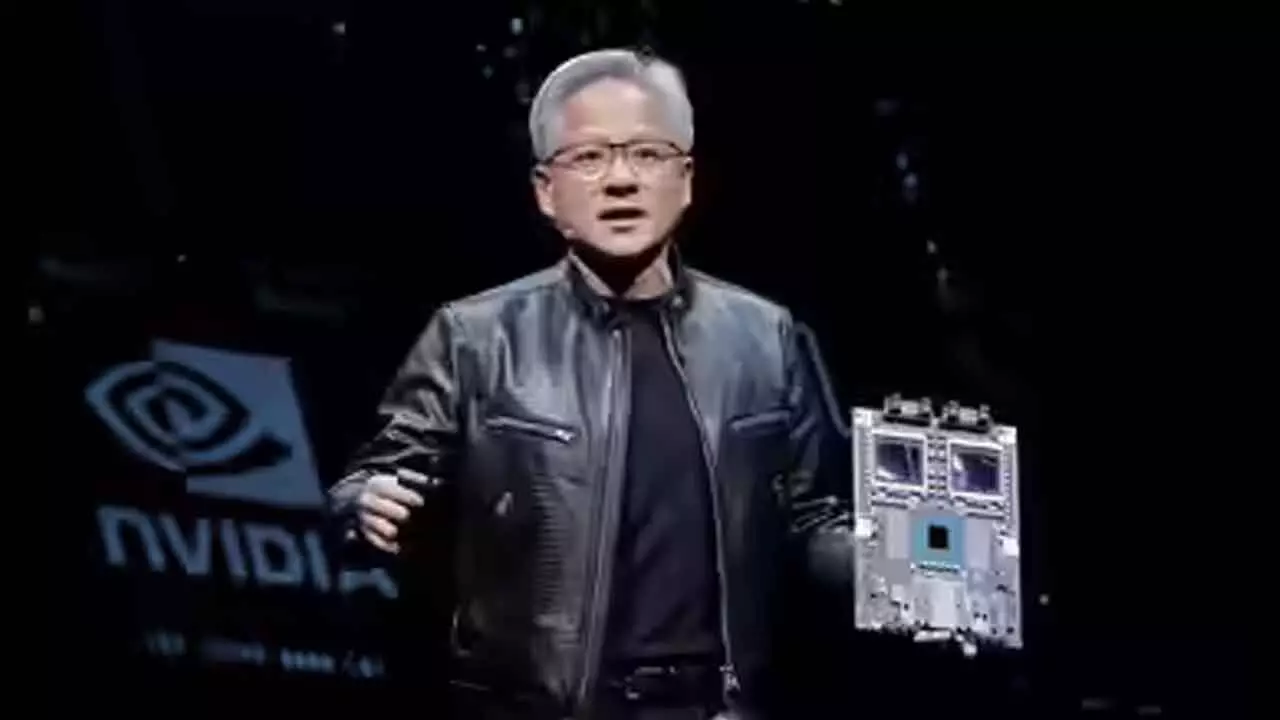
AI is reshaping industries and careers, and Nvidia CEO Jensen Huang believes it will create more millionaires than the internet ever did.
Nvidia CEO Jensen Huang has made a bold prediction: artificial intelligence (AI) will create more millionaires in the next five years than the internet did over the past two decades. Speaking on the All In podcast hosted by venture capitalist Chamath Palihapitiya, Huang joined fellow industry leaders Chase Lochmiller and James Latinsky to discuss the seismic impact AI is set to have on the global economy.
Leading a trillion-dollar company at the center of the AI revolution, Huang is in a unique position to understand the technological roadmaps of some of the biggest players in the space. He’s privy to early developments at companies led by the likes of Mark Zuckerberg, Elon Musk, and Sam Altman—insider insight that fuels his confident projections.
On the issue of AI and job displacement, Huang offered a perspective that counters the typical narrative of machines replacing humans. “AI in my case is creating jobs; it causes people to create things that other people would like to buy. It drives more growth, more jobs, and all that goes together. AI is the greatest technology equaliser of all time,” he said.
His optimism is rooted in the idea that AI democratizes access to technology and creativity. According to Huang, we are at a point where anyone can be a programmer. Traditionally, programming required knowledge of languages like C++ or Python, but today, Huang believes, “they just need to talk to AI.” The barrier between having an idea and executing it has collapsed, he noted.
“Everybody is an artist now; everybody is an author now,” Huang emphasized, highlighting the merging of creative and technical roles in the AI era. However, he also issued a cautionary note: “Anybody who is not using AI is going to lose their jobs to someone with knowledge of AI.”
Taking his vision further, Huang suggested that the future of every company will include two distinct operational arms—one for the physical product, and the other for the AI systems that power it. “Tesla, for example, has separate factories for cars and for AI. This will become the norm for every industrial company, not just tech,” he said.
On the infrastructure front, Nvidia is preparing to manufacture AI supercomputers worth nearly half a trillion dollars over the next four years in Arizona and Texas. Huang believes this foundational tech will catalyze trillions of dollars in AI-driven industry value.
He also pointed to the immense productivity of small AI research teams. Highlighting the example of DeepSeek or OpenAI, he noted that “150 researchers can create $20 to $30 billion in value—that’s nearly $200 million per person.”
“No industry in history has ever had this kind of leverage,” Huang concluded, underscoring the unparalleled economic impact AI is poised to deliver.