Shocking Range! The Best Electric Scooters on Mera Gadi That Cost Pennies to Run

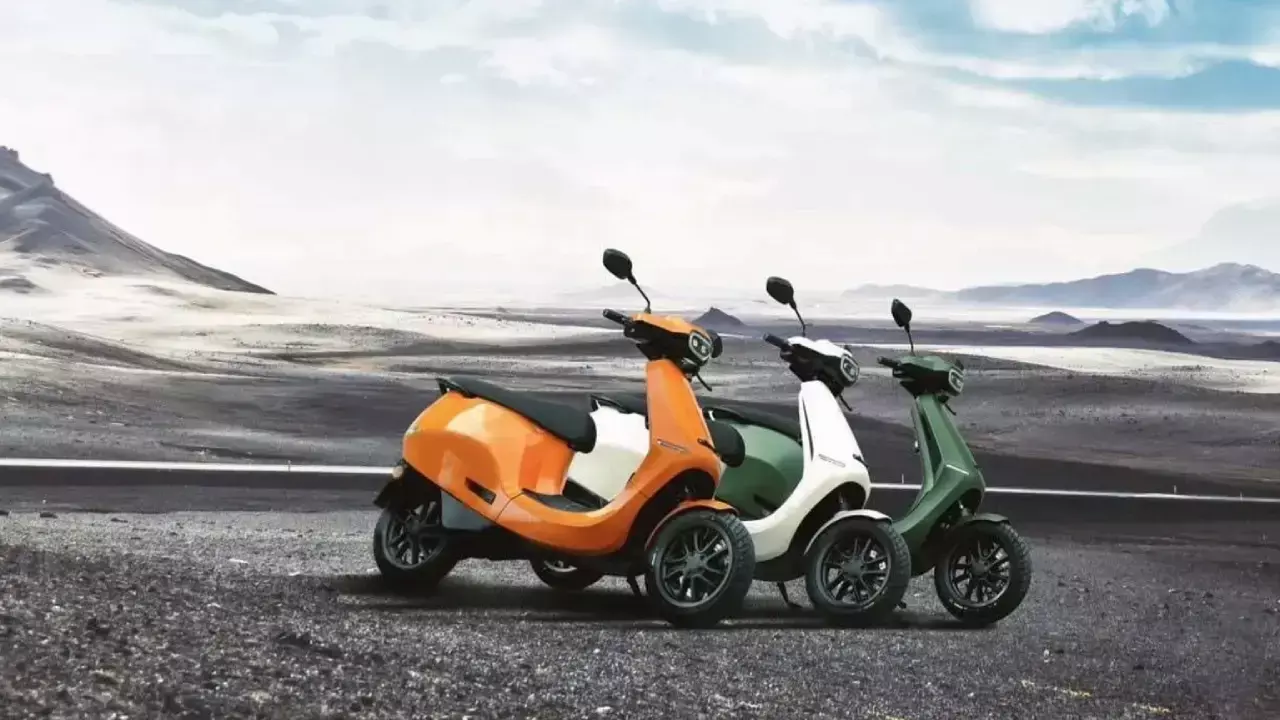
Discover the best electric scooters on Mera Gadi with shocking range and ultra-low running costs. Explore top models that deliver performance, savings, and eco-friendly commuting at a price that fits your budget.
2026 has now officially been recognized as the “tipping point” for the Indian two-wheeler market. While petrol prices continue to remain at painfully high levels, a new generation of electric scooters has now emerged, boasting ranges that were hitherto unimaginable just a few years ago. As a two-wheeler enthusiast, the move is no longer just about saving the planet, it is now about saving a significant amount every month. At Mera Gadi, we are witnessing a massive interest in scooters that now promise to deliver over 100 kilometers on a single charge, for a price that is literally cheaper than a bag of chips!
The Math of the "Penny-Ride"
In order to understand the reason behind the shock value of these scooters, it is important to analyze the operating costs first. The cost of petrol in India is around ₹105/litre on average in early 2026. The real-life mileage that a 110cc petrol scooter, such as the Honda Activa 6G, offers is around 45 km/l, and its operating cost is around ₹2.33/km.
In contrast, the top 10 EV scooty under 1 lakh now feature high-efficiency motors that consume about 0.03 to 0.04 kWh per kilometer. With domestic electricity rates averaging ₹8 per unit, the "fuel" cost for an EV drops to a staggering ₹0.25 to ₹0.40 per km. When you add in the reduced maintenance costs—no oil changes, no air filters, and fewer moving parts—you are looking at a vehicle that pays for its own purchase price through savings in less than three years.
Range Kings: Models That Defy the Budget
If you experience "range anxiety," the March 2026 lineup is intended to alleviate your concerns. The following are the notable artists presently available on the market:
Scooter Model | Claimed IDC Range | Real-World Expectation | Efficiency Rating |
Ola S1 X (4kWh) | 190 km | 150 - 160 km | Exceptional |
Bajaj Chetak 2501 | 113 km | 85 - 95 km | High (Metal Build) |
Ather Rizta (S) | 123 km | 100 - 105 km | Best for Families |
Hero Vida V1 Plus | 142 km | 100 - 110 km | Removable Battery |
Ampere Magnus EX | 121 km | 90 - 100 km | Value for Money |
The New Benchmark: Bajaj Chetak 2501
One of the models that has received a lot of attention this month is the Bajaj Chetak 2501. Priced competitively at ₹91,399, it is a model that offers a perfect blend of "Legacy Trust" and "Modern Range."
What is shocking about this variant of the 2501 is not just its 113 km range on a single charge, but its charging efficiency too. The model can go from 0 to 80% charge in just 2 hours and 25 minutes. If a commuter has forgotten to charge his/her scooter overnight, a quick one-hour charge during breakfast is enough to get a 40 km office run. With its signature all-metal body, it is a "penny-pincher" that does not feel cheap.
High-Performance Savings: Ola and Ather
For those who need maximum range, the Ola S1 X (4kWh) model is the undisputed range champion in the sub-1 lakh category. This has an IDC range of 190 km, which translates to almost a week’s commuting on a single full charge.
Meanwhile, the Ather Rizta has established itself as the "SUV of Scooters" and offers a "shocking" amount of storage space, along with a "very respectable" 123 km of range. It’s the perfect scooter for families who need to transport groceries, bags from school, and a pillion rider, without worrying about the battery running out of charge in the middle of the day.
Technical Specs: Why 2026 Batteries are Better
The reason for these improved range figures lies in the 2026 battery technology. Most top-tier scooters under 1 lakh now use Lithium-ion NMC (Nickel Manganese Cobalt) or LFP (Lithium Iron Phosphate) cells with advanced Battery Management Systems (BMS).
- IP67 Rating: Almost all models are now "monsoon-proof," allowing for safe riding through water-logged streets.
- Regenerative Braking: Every time you slow down, the motor acts as a generator, feeding small amounts of power back into the battery. This "free energy" can extend your range by up to 5-8% in stop-and-go traffic.
- Smart Eco-Modes: Intelligent software now limits power consumption when the battery drops below 15%, ensuring you always have enough "limp home" range to reach a plug point.
Comparing the Total Cost of Ownership (TCO)
If we consider a period of five years, the savings are just enormous. A petrol scooter doing 1,000 km a month is estimated to cost around ₹1.4 Lakh in terms of fuel and service costs for a period of 60 months. An electric scooter like Chetak 2501 or Ola S1 X is estimated to cost around ₹22,000 in terms of electricity and service costs for a period of 60 months. That is a saving of over ₹1.1 Lakh, which is even more than the original cost of the scooter!
Conclusion: Is the Wait Over?
If you have been waiting for EVs to become "practical," then the data for 2026 indicates that the wait is officially over. With ranges extending over 100 km and charging times dipping under 3 hours, these scooters are no longer just for "short neighborhood trips." They are full-fledged petrol killers.
While it may be the ruggedness of the metal body of the Bajaj Chetak 2501 or the tech-savvy features of the Ola S1 X that draws your attention, the common factor in both cases is that it will mean more money in your pocket and a quieter, smoother ride. Keep an eye on Mera Gadi for the latest in price cuts and government subsidy announcements as yet more "shocking" models hit the showroom floors this summer.