






Who Is Above the Supreme Court? Can Governments Violate SC Orders and Do What Suits Them
In Short
What the Tamil Nadu government did today by preventing lighting of the Karthigai Deepam at the stone pillar, despite the orders of the apex court, has raised the issue of not only hurting Hindu sentiments but also “deliberately” violating the court's orders.

Share :
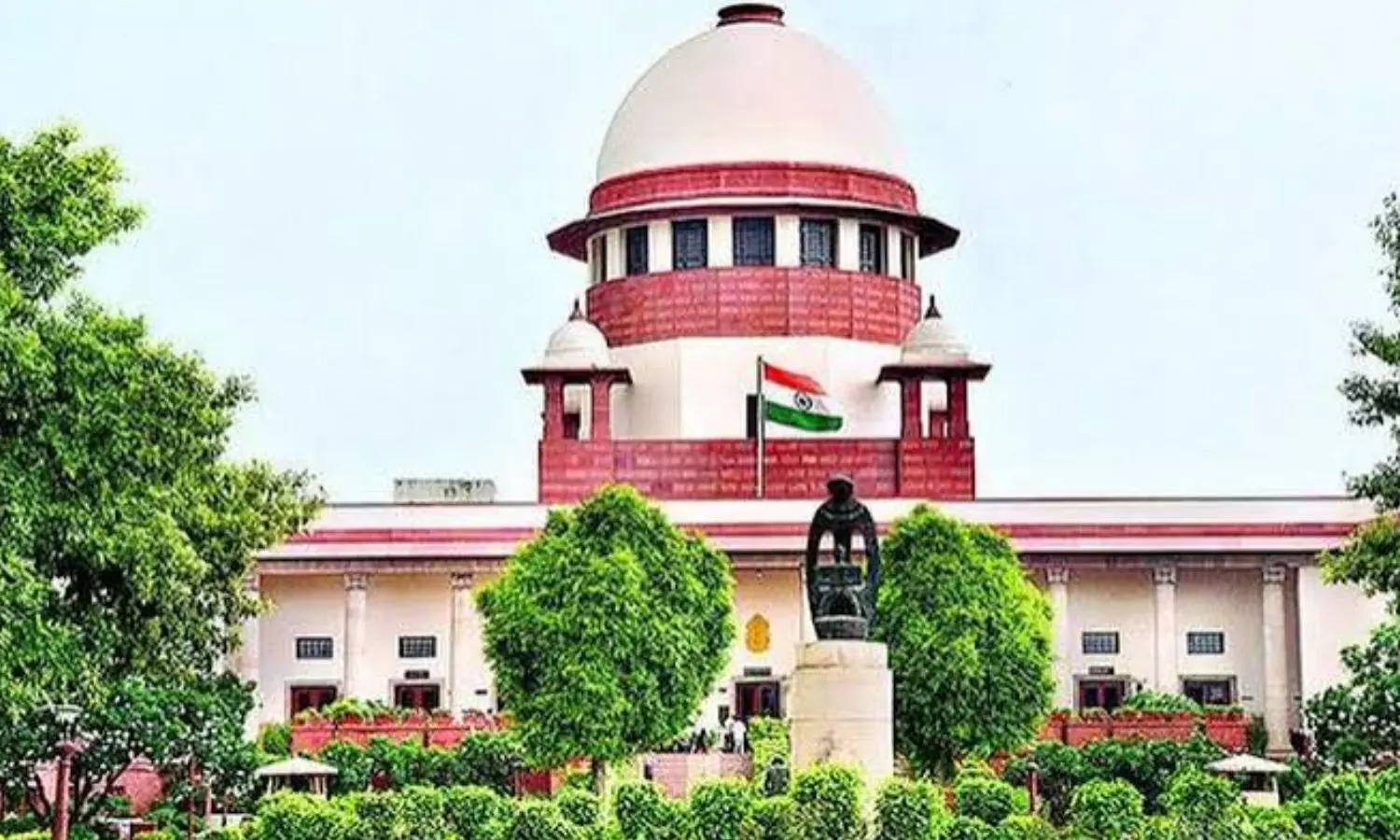
Governments Violate SC Orders and Do What Suits Them
Are state governments above the Courts? Can they violate the court directions citing administrative reasons like a possible threat to law and order?
What the Tamil Nadu government did today by preventing lighting of the Karthigai Deepam at the stone pillar, despite the orders of the apex court, has raised the issue of not only hurting Hindu sentiments but also “deliberately” violating the court's orders.
The Supreme Court expressly permitted the Tamil Nadu government to facilitate the lighting of Karthigai Deepam at the Deepathoon (stone pillar) on Thiruparankundram Hill on November 24, 2026.
There has been a systematic denial of the rights of the devotees, and the lamp was lit at the traditional spot, the mandapam of the Uchi Pillaiyar Temple.
As the time for lighting the lamp approached, tensions escalated, and several BJP leaders and those belonging to other Hindu outfits were placed under house arrest. The VHP threatened to light the lamp at the stone pillar every day if the government went ahead with its decision to defy the Supreme Court's order.
They questioned why Hindus had to beg for the right to observe their traditional religious rituals. Hindu organisations are now preparing to approach the apex court, seeking stern action against the government for contempt of court. They quoted Sonia Gandhi, who once said, “Majority Authoritarianism be kept at bay. But the Congress says lighting of Karthigai Deepam is not a religious issue. This is something ridiculous.
The BJP said it was unfortunate that Hindus were being placed in a situation where they had to plead for permission to celebrate their religious traditions. The party feels that such a situation arises because the judiciary does not impose stringent punishments for contempt of court. If a government can disregard the Supreme Court's directions by citing one excuse or another, how can ordinary citizens be expected to follow court orders? Is this not a dangerous trend, the BJP asked. It demanded strong action against the government. They said all the Hindu’s and their faith is being put to the test.
Earlier, when the DMK government allegedly defied the court's directions, the Madras High Court initiated contempt proceedings over alleged wilful disobedience. It summoned senior police and revenue officials and sought explanations from the District Collector and the Deputy Commissioner of Police.
Justice Swaminathan warned the officials that they could face contempt charges if they failed to explain their conduct. Interestingly, the DMK government maintained even today that it had the resolve to prevent the lighting of the lamp at the stone pillar, arguing that maintaining law and order was its top priority.
The latest violation of the Supreme Court's directions has triggered another round of political controversy in Tamil Nadu. BJP leader and former Telangana Governor Tamilisai Soundararajan said the courts must assert their authority as one of the pillars of democracy and should not allow any government to disregard their orders on flimsy pretexts. If the state government cannot provide the necessary security and prevent untoward incidents, it has no right to remain in power, she argued.
The DMK and the TVK governments have once again demonstrated their opposition to Sanatana Dharma, BJP and VHP leaders alleged. The Congress, too, must share the blame, they said, as it is part of the TVK government. While Leader of the Opposition Rahul Gandhi speaks about Shiva Tandava, the Karthigai Deepam — associated with Lord Shiva's son, Lord Karthikeya — was not allowed to be lit at the stone pillar despite the court's directions. The Congress, meanwhile, has refused to take a stand on the issue. This is highly condemnable, the BJP and VHP leaders said.


